🔎 TL;DR
- From the Progreso cruise port you reach the Yucatán state cenote belt in 45–90 minutes — a completely different cenote universe than Tulum, smaller, less commercial, and accessible by road from Mérida.
- Top snorkel-only picks: Cuzamá's three-cenote horse-cart circuit (Chelentun, Chacsinikche, Bolonchojol), Homún cluster (Yaxbacaltún, Santa Rosa, Bal-Mil, Hool-Kosom), Yokdzonot and Santa Bárbara — all featured in this guide.
- Water is a steady 24–26 °C year-round, near-zero salinity. Vests are required for non-strong-swimmers at every ejido-managed site under CONANP framework.
- Entrance fees range $80–$300 MXN (≈ $5–$18 USD) per cenote — about half what Tulum-area cenotes charge, plus $250 MXN horse-cart at Cuzamá.
- What you actually see: vertical stalactite chambers, light beams, freshwater fish (mollies, Mayan cichlids, blind cave catfish), bats overhead in semi-enclosed sites like Bolonchojol, and the famous turquoise-floor sinkholes of Cuzamá that look painted.
- Operated by Yucatec-Maya ejido cooperatives (Cuzamá, Homún, Yokdzonot, Santa Bárbara) under federal CONANP and INAH heritage rules — biodegradable sunscreen mandatory, no touching formations, no jumping in cavern entries.
Why the Yucatán cenote belt is different from Tulum — and why that matters from Progreso
If you have read about cenotes online, the names you remember are Tulum names: Gran Cenote, Dos Ojos, Ik Kil. Those are in Quintana Roo state. Progreso sits in Yucatán state on the Gulf coast, 40 minutes north of Mérida, and the cenote network within day-trip range is geologically the same karst aquifer but commercially a completely different world: smaller cooperatives, fewer tour buses, lower prices, deeper vertical sinkholes and a heavier balance toward semi-cavern morphology.
The Quintana Roo Speleological Survey (QRSS) has mapped over 1,600 km of flooded passages on the eastern side of the peninsula. The western Yucatán side, by contrast, is the Anillo de Cenotes ("ring of cenotes") — a roughly 180 km arc of sinkholes that traces the underground rim of the Chicxulub impact crater. The cenotes of Cuzamá, Homún, Yokdzonot and Santa Bárbara all sit on that ring. They tend to be vertical chambers with narrow surface openings, not the wide open-sky lagoons of the Tulum coast. The result for snorkelers is a markedly more dramatic, cathedral-like visual.
Federal protection applies the same way: most sites operate under CONANP management together with the ejido cooperative that holds the surface land, and INAH oversees archaeological context (many of these cenotes were Maya ceremonial sites with submerged offerings still being inventoried). Vest rules, biodegradable-sunscreen rules and no-touching-formations rules are the same as in the Riviera Maya.
This guide ranks the seven cenote experiences that work best for snorkel-only visitors from a Progreso or Mérida base.
Yucatán-state cenote snorkel comparison table
| Cenote | Type | Max snorkel depth | Fish & wildlife | Entrance fee | Kid-friendly |
|---|---|---|---|---|---|
| Chelentun (Cuzamá) | Vertical chamber, semi-open | 2–6 m (40 m total) | Mollies, mojarras, small catfish | $250 MXN cart + $80 entry | Good (vest required) |
| Chacsinikche (Cuzamá) | Semi-cavern, narrow mouth | 3–5 m (40 m total) | Mollies, blind catfish at depth | included in Cuzamá circuit | Older kids (8+) |
| Bolonchojol (Cuzamá) | Fully enclosed cavern + air dome | 2–6 m | Roosting bats overhead, mollies, mojarras | included in Cuzamá circuit | Older kids (10+) |
| Yaxbacaltún (Homún) | Open-sky with platform | 1–4 m | Mollies, Mayan cichlids, turtles | $80 MXN | Excellent |
| Santa Rosa / Bal-Mil (Homún) | Semi-cavern with stairs | 2–8 m | Mollies, mojarras, bats overhead | $80 MXN each | Good (vest required) |
| Yokdzonot | Open-sky vertical sinkhole + platform | 2–5 m (40 m total) | Mollies, mojarras, occasional turtle | $120 MXN | Excellent |
| Santa Bárbara (Homún) | 3-cenote ejido circuit (Cascabel, Chaksikin, Xooch) | 2–6 m | Mollies, mojarras, bats overhead | $300 MXN includes all 3 | Very good |
Cuzamá three-cenote horse-cart circuit — the Yucatán classic
The town of Cuzamá sits 45 minutes south-east of Mérida (about 75 minutes from Progreso port) on the old Hacienda Chunkanán rail bed. The cenote experience here is unlike anything else in Mexico: visitors ride a truk (small horse-drawn rail cart) along the abandoned 19th-century henequén railway through dry scrub for 3 km between each cenote stop. Three cenotes in one half-day, two hours of horse-cart travel total. The circuit was originally maintained by sisal workers; now operated by the local Maya ejido cooperative.
Chelentun is the first stop and the most family-friendly. You descend a wooden staircase into a vertical chamber with a roughly 6 m surface opening at the top; the water below is 40 m deep, but the snorkel zone is the top 6 m where light bounces off white limestone walls and the bottom is visible through gin-clear water. Stalactites hang from the rim above the waterline.
Chacsinikche is the second stop and the most photogenic. The entry is through a vertical narrow shaft into a wider chamber; light streams down from a single opening, hitting the water in a perfect column. Snorkelers swim in a roughly 20 m diameter pool surrounded by stalactite walls; the depth drops to 40+ m below. Kids 8+ usually do well here; younger swimmers may find the descent stairs and dim light overwhelming.
Bolonchojol is the third stop and the most cavernous. You enter through a roughly 3 m diameter ground-level hole via a wooden ladder, drop into a fully enclosed chamber with an air dome above and bats roosting along the ceiling. The water below is dark turquoise; visibility is excellent with a torch. Vest mandatory, no jumping, no fins on the descent. Recommended for older kids (10+) and confident swimmers.
Total Cuzamá circuit: $250 MXN horse-cart fee + $80 MXN entry per cenote (often bundled at $400 MXN total). Cash only. Allow 4 hours from arrival to departure.
Homún cenote cluster — the village with 30 cenotes in walking distance
Forty minutes south-east of Mérida (60 minutes from Progreso), the town of Homún sits on top of more than 30 documented cenotes within a 5 km radius. The ejido has organised perhaps a dozen of these for visitors; the other 20+ remain on private agricultural land. For travellers, this means you can rent a tricitaxi (motorised tricycle, ~$250 MXN for 3 hours) and visit four or five cenotes in a single half-day at your own pace, without joining a tour.
Yaxbacaltún is the headliner. An almost-perfect open-sky vertical sinkhole roughly 25 m diameter, depth 2–4 m at the centre, with a wooden platform and stairs. The water has the cobalt-blue colour cenote photos are famous for; visibility is essentially infinite on a calm day. Excellent for kids — shallow enough to wade in places, no overhead, vest available.
Santa Rosa and Bal-Mil are sister cenotes 800 m apart, both semi-cavern sites with vertical staircase descent. Santa Rosa has a particularly photogenic single-shaft light beam between 11 AM and 1 PM. Bal-Mil has a deeper pool (8 m at centre) with stalactite walls. Both have vests, no jumping rules, biodegradable sunscreen mandatory.
Hool-Kosom is the rarely-visited fourth recommendation: a small ejido cenote 3 km north of town with a wooden platform and a single freshwater pool of perhaps 12 m diameter. It is the cenote you go to if your other Homún stops felt crowded — it almost never is.
Homún cluster cost: $80 MXN per cenote entry, $250 MXN tricitaxi for half day. For three cenotes in 4 hours, plan ~$500 MXN per person.
Ready to snorkel the Yucatán cenote ring from Progreso? Book Progreso cenote snorkel →
Yokdzonot — the women-run ejido cenote
Halfway between Mérida and Chichén Itzá, the small town of Yokdzonot operates a single cenote run entirely by a women's ejido cooperative formed in 2007 (the first of its kind in the region). Visiting here is part snorkel trip, part community-tourism project — the entry fee directly funds the cooperative and a small palapa restaurant that serves Yucatec lunch (cochinita pibil, sopa de lima, panuchos) on-site.
The cenote itself is a 40 m deep vertical sinkhole roughly 35 m in diameter with vines and roots hanging from the lip, similar in profile to Ik Kil but only a quarter the visitor traffic. Snorkel depth is functional in the top 5 m; the pool below drops 35 m and is home to a population of small black catfish. A wooden platform with stairs gives easy entry. Vest mandatory for all swimmers regardless of skill.
Yokdzonot is the cenote you go to if you are already driving from Mérida to Chichén Itzá; it adds 30 minutes to the route and delivers a meaningful cenote-snorkel session plus a hot lunch for $120 MXN entry plus ~$150 MXN food. The cooperative reinvests in school programs and a women's health clinic — a rare model in cenote tourism.
Santa Bárbara — three cenotes in one ejido circuit
Twelve kilometres south-east of Homún, the Santa Bárbara ejido operates a self-contained three-cenote circuit with a single entry fee ($300 MXN) and transport between sites by bicycle-rickshaw included. The three cenotes are Cascabel (open-sky, family-friendly, with wooden platform), Chaksikin (semi-cavern, deeper, stalactites) and Xooch (semi-enclosed cavern with bats roosting overhead).
The circuit is the closest thing in Yucatán state to the Cuzamá experience without the horse-cart (the rickshaw replaces the truk). It is cleaner, less crowded, and more polished than Cuzamá — but loses the henequén-railway nostalgia. Travellers who want a single all-day cenote site they can recommend to anyone usually pick Santa Bárbara over Cuzamá. Families with kids 6+ have a particularly good time here because Cascabel is open-sky and shallow.
Santa Bárbara includes a small palapa restaurant and changing rooms. Allow 3–4 hours for the full circuit. Vests and biodegradable sunscreen mandatory, enforced at entry rinse stations.
What you actually see in a Yucatán-state cenote
The Yucatán-state cenote snorkel experience differs in important ways from the Riviera Maya cenotes. The biology is similar — same freshwater karst aquifer — but the morphology is more vertical and dramatic, and the visual emphasis is on geology rather than fauna.
- Freshwater fish — Mayan cichlids (Mayaheros urophthalmus), mollies (Poecilia spp.), small black catfish, mosquitofish. Modest in colour, abundant in numbers. Documented across the regional aquifer by CONANP biodiversity surveys.
- Roosting bats — semi-enclosed cenotes like Bolonchojol (Cuzamá), Xooch (Santa Bárbara) and several Homún cenotes host roosts of Mexican free-tail bats and lesser mustache bats. They are inactive during snorkel hours but visible on the cavern ceiling.
- Light beams — between 11:00 AM and 13:00, sun penetrates narrow vertical shafts at maximum angle, creating laser-bright columns. Chacsinikche (Cuzamá), Santa Rosa (Homún) and Yaxbacaltún (Homún) are the standout sites for this.
- Freshwater turtles — Mesoamerican slider turtles (Trachemys scripta venusta) are present in Yaxbacaltún and a few Homún cenotes; sightings are less reliable than in Tulum-area cenotes, perhaps 1 in 4 visits.
- Stalactites and stalagmites — formations that grew during the last ice age when these cenotes were dry caves. Touching is forbidden under both PADI conservation standards and CONANP rules.
- Maya archaeology — INAH has inventoried submerged ceramic offerings in multiple cenotes in the Anillo region (most famously the dredged offerings of Chichén Itzá's sacred cenote, displayed at Mérida's Gran Museo del Mundo Maya). At active cenote sites, artefacts remain underwater and untouched.
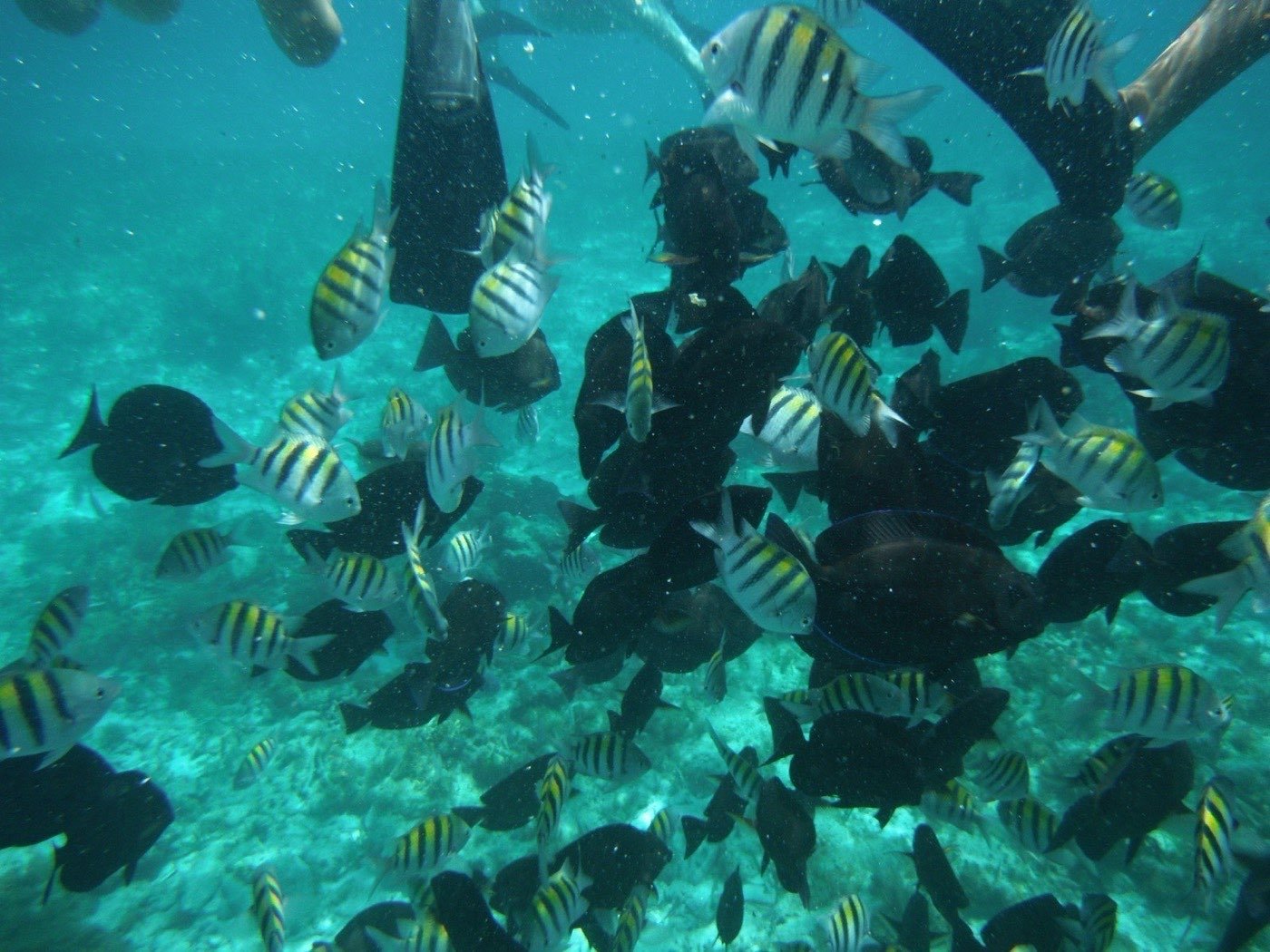
- What you will NOT see: colourful tropical fish, coral, rays, octopus. Cenotes are nutrient-poor freshwater systems — the food chain is short. For colourful saltwater fish, you would need a Gulf reef boat tour (see Progreso yacht charter guide).
Picking the right cenote from Progreso — by goal
If you have one cenote-snorkel slot during your Progreso or Mérida stay, pick by what matters most:
- "I want the Yucatán-classic horse-cart experience" → Cuzamá three-cenote circuit. Heritage, drama, photos.
- "I have kids 4–8" → Yaxbacaltún (Homún) or Cascabel (Santa Bárbara). Open-sky, shallow, no overhead.
- "I want the most cenotes per day" → Homún cluster with a tricitaxi — four cenotes in half a day.
- "I want community tourism with social impact" → Yokdzonot (women's cooperative) or Cuzamá / Santa Bárbara (ejido-run).
- "I am combining with Chichén Itzá" → Yokdzonot (30 min from Chichén) or Ik Kil (5 min, but in Quintana Roo).
- "I am a cruise passenger with 5 hours" → Cuzamá circuit only — closest to Progreso with the strongest visual payoff. See our half-day cruise itinerary.
If you have two cenote days from Progreso: Cuzamá on Day 1 (heritage + drama), Homún cluster on Day 2 (variety + slower pace + a Yucatec lunch). Add Yokdzonot on a third day if combining with Chichén Itzá.
Rules that apply at every Yucatán cenote (CONANP + ejido framework)
- Biodegradable reef-safe sunscreen only — oxybenzone, octinoxate and octocrylene are banned. Entry rinse stations at Cuzamá, Homún, Yokdzonot and Santa Bárbara enforce this.
- No glass containers, no food, no smoking inside the cenote zone — fines apply at most ejido-managed sites.
- No touching formations — stalactites and stalagmites have a fragile calcite skin that fingerprints permanently mark.
- Life vest mandatory for all swimmers at semi-cavern and vertical-sinkhole sites (Cuzamá's Chacsinikche and Bolonchojol, Yokdzonot, Homún's Santa Rosa/Bal-Mil, Santa Bárbara's Xooch). Optional at open-sky sites for strong swimmers.
- No jumping into cavern entries — only at designated jump points marked by the operator (rare in Yucatán-state cenotes; most have no jump zone).
- No artefact handling — INAH protects submerged Maya ceramic and bone fragments under federal heritage law.
- Respect ejido staff direction — cooperative members are the legal authority on-site; their no-fins, no-jumping or time-limit calls are non-negotiable.
Related guides on AquaCore
- Cenote Snorkel Season From Progreso — Water Temp & Crowds
- Cenote vs Gulf Ocean Snorkel From Progreso
- Cenote Snorkel With Kids From Progreso
- Half-Day Cenote Snorkel From Progreso — Cruise Plan
- Riviera Maya cenotes (compare with Yucatán)
- Celestún biosphere kayak
- Progreso vs Cancún — which coast
- Progreso Cenote Snorkeling — service page
- Progreso Cenote Diving — service page
- All Snorkeling Tours
Frequently asked questions
How far are the cenotes from Progreso cruise port?
Cuzamá is the closest: 75 minutes by road (Progreso → Mérida ring road → Cuzamá highway). Homún is 90 minutes. Yokdzonot is 2 hours (if combining with Chichén Itzá the route makes sense). All by paved road, easy in a rented car or with a tour van.
Which cenote is best for first-time snorkelers?
Yaxbacaltún in Homún or Cascabel in Santa Bárbara — both are open-sky, shallow at the edges, with wooden entry platforms and life vests available. No overhead, no cavern, no dramatic vertical descent. After that confidence-builder, Cuzamá or Bolonchojol become a great second cenote.
What is the difference between Yucatán cenotes and Tulum cenotes?
Tulum cenotes (Quintana Roo) tend to be wide open-sky lagoons with extensive horizontal cave systems below, and are heavily commercialised. Yucatán cenotes (Cuzamá, Homún, Yokdzonot) tend to be narrow vertical shafts into chamber pools, ejido-run, less crowded, and cheaper. Geologically the same aquifer; commercially different worlds. See our Riviera Maya cenote guide for the eastern side.
Can I dive any of these cenotes if I have certification?
Yes — several Homún cenotes (Santa Rosa, Bal-Mil) and Cuzamá's Chacsinikche have established dive routes. Certification required (Open Water minimum, Cavern preferred for the deeper passages). See our Progreso cenote diving page for the dive product.
Is the water really cold?
It is a steady 24–26 °C year-round, freshwater. That sounds warm but freshwater cools your body faster than warmer saltwater would, so a 2 mm shorty wetsuit is recommended for sessions over 30 minutes. Without a wetsuit, expect to feel cold after 25–35 minutes in the water.