🔎 TL;DR
- The four snorkel sites at the tip of Baja California all sit inside the Cabo San Lucas Marine Park, a federally protected zone managed by CONANP since 1973 — biodegradable sunscreen only, no fishing, no anchoring.
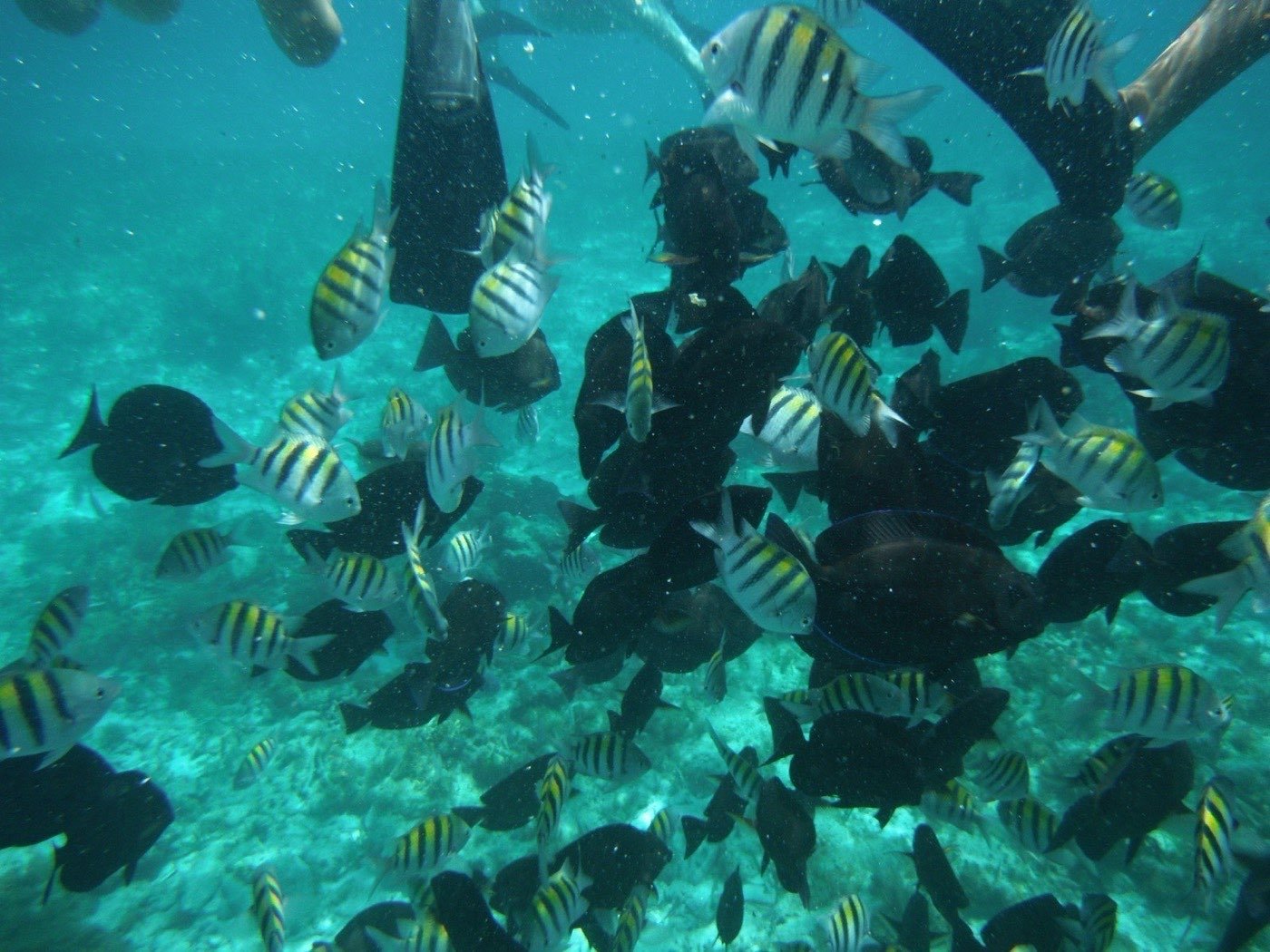
- Chileno Bay is the easiest entry: shallow (1–4 m on the inner reef), calm, sandy entry from the beach, parrotfish + surgeonfish + sergeant majors in your fin-tips, and the only Cabo snorkel site with a year-round lifeguard.
- Santa María Bay is a horseshoe cove — half reef, half sand bottom — quieter than Chileno because access is by boat or a long stair-walk; depths 1–8 m, visibility often clearer than Chileno on a calm morning.
- Pelican Rock at Land's End is a boat-only site: 3–6 m on the snorkel side, deeper for divers below; the sea-lion colony at the Arch is 5 minutes further along the rocks.
- Cabo Pulmo on the East Cape is the advanced add-on for serious snorkelers — a fully recovered no-take reserve, 2 hours by road, covered separately in our Cabo Pulmo guide.
- Water temp 21–29 °C across the year; a 3 mm shorty wetsuit Dec–Apr is the comfort line. NOAA sea-surface temperature data for the southern Gulf of California backs this up.
Why Los Cabos is a real snorkel destination, not a checkbox
Most travellers fly into San José del Cabo airport thinking of Los Cabos as a beach-and-cocktail destination with a marlin charter on the side. The snorkel scene gets framed as a "thing to do on a non-fishing day" — half-day boat ride, mediocre reef, sunburn, move on. That framing is wrong, and it's wrong because the operators selling the cattle-boat snorkel tours don't actually take you to the right sites.
The reality is that the southern tip of Baja California sits at the convergence of the Pacific Ocean and the Sea of Cortez (Gulf of California) — a body of water Jacques Cousteau famously called the "aquarium of the world", now listed as a UNESCO World Heritage site. Within a 20-minute panga ride of the Cabo San Lucas marina you can be floating over a healthy hard-bottom reef with parrotfish at arm's length, watching a sea-lion pup spiral past your mask, or drifting along a sandy-channel where stingrays sleep under the sand. The four sites we cover below are the ones any locally based operator will rotate through depending on wind, swell and which bay is running clean that day.
A note on protection. The cape sites all sit inside the Parque Nacional Cabo San Lucas, a federally decreed marine park established in 1973 and now managed by CONANP (Comisión Nacional de Áreas Naturales Protegidas). Park rules — no fishing, no anchoring on reef, no oxybenzone or octinoxate sunscreen, no feeding wildlife, no touching coral — are enforced by park rangers and reputable operators brief them at the dock. The reason the reef still looks alive is precisely that those rules have been on the books for fifty years.
Chileno Bay — the easiest, friendliest entry
Chileno Bay (Bahía Chileno) is where almost every first-time Cabo snorkeler should start. It sits on the Tourist Corridor between Cabo San Lucas and San José del Cabo — about 15 minutes by car from either town — and it is a CONANP-designated Zona de Refugio with year-round lifeguards, free public access, palapas, showers, and the rare-in-Mexico combo of a sandy gentle-slope entry plus a healthy fringing reef less than 30 metres from shore.
The inner reef sits in 1–4 metres of water and you can stand up at the entry. Float out 50 metres and the bottom drops to 6–8 m where the reef gets dense — encrusting hard coral, fan corals, big patches of staghorn-style branching coral, and the famous Cabo coloured-fish community. On a normal-conditions morning you will see Cortez angelfish, king angelfish, Moorish idols, several parrotfish species, sergeant majors by the hundred, panamic sergeant fish, blue-and-gold snapper, scrawled filefish, and — about one snorkel in three — a green sea turtle grazing on the algae. Sea turtle data for the eastern Pacific is tracked by the State of the World's Sea Turtles project; the species you'll likely see at Chileno is the Chelonia mydas agassizii (East Pacific green), listed as Endangered by the IUCN Red List.
Why Chileno works for first-timers and kids
- Sandy entry, no rock-walking. You can put your fins on standing in 30 cm of water.
- Inner reef in 1–4 m. A child with a lifejacket can see almost everything important without getting out of their depth.
- Lifeguard tower staffed daily — the only Cabo snorkel site with one.
- Current is mild, mostly parallel to the beach. The bay's geometry blocks the open-water Pacific swell.
- Gear rental + restrooms on the sand. Mask + snorkel + fins runs $10–15 USD/day. Lifejackets free with rental.
What Chileno asks of you
The site is loved to death in peak season (Christmas, Spring Break, Easter, mid-July to mid-August). Park rangers regulate the boat-anchor zone and operator capacity, but the beach itself fills up by 10 am. Go before 9 am for the calmest water and the clearest viz. The reef bottom is shallow enough that fins kicking into coral is a real problem — wear them but kick from the hip, not the knee, and don't stand on the reef. Reef-safe sunscreen is mandatory; operators will check.
Santa María Bay — the quieter horseshoe
Five kilometres east of Chileno, Santa María Bay (Bahía Santa María) is the other Tourist Corridor snorkel cove. Geometrically it's a near-perfect horseshoe: cliffs on both sides, a narrow sand beach at the back, reef along the rocky walls on the left and right, and a mostly-sand bottom in the middle. The shape blocks Pacific swell almost completely — Santa María is often calmer than Chileno on the same day, especially in winter when the Pacific runs choppy.
Access is the trade-off. There's a public stair-down trail from the highway (steep, 5–10 minutes), and most visitors arrive by boat from Cabo San Lucas (15–20 minutes by panga). Because the only easy access is by boat, Santa María tends to be visited by smaller snorkel-tour groups and feels less crowded than Chileno from the water.
Depth structure: 1–3 m on the sand bottom in the middle, 2–8 m along the rocky walls where the reef sits. The right-hand (eastern) wall is the most productive for fish — schooling sergeant majors, parrotfish, surgeonfish, Cortez damselfish, occasional eagle rays patrolling deeper, and stingrays buried in the sand near the wall transition. Visibility on a calm morning regularly hits 15–20 m, slightly better than Chileno on average because the cove geometry settles sediment.
Who Santa María is for
- Snorkelers who want the same fish quality as Chileno without the beach crowd.
- Couples / honeymooners on a boat snorkel + lunch combo.
- Photographers — the cliff walls make for dramatic over/under shots.
- Anyone visiting in Jan–Mar when Pacific swell makes Chileno's outer edge bumpy; Santa María stays glassy.
Pelican Rock and the Arch — the iconic boat-only site
Pelican Rock is the site every Cabo postcard photographer has shot. It sits 5 minutes by boat from the Cabo San Lucas marina, a single rock outcrop named for the pelicans that perch on it. For divers it's a wall site descending to 35 m; for snorkelers it's a 3–6 m shelf along the rock's shallow side with surprisingly rich life given the site's traffic.
Why so much life on a busy site? The rock structure is part of the Cabo Canyon — a submarine canyon that plunges to 1,000 m+ within a few kilometres of shore. Nutrient-rich water upwells along the canyon walls, feeding the entire food pyramid. Snorkelers float over a shallow shelf and watch schooling yellowtail surgeonfish, king angelfish, Cortez angelfish, panamic green moray eels in the rock crevices, spotted boxfish, scrawled filefish, and — if you push your face down toward the wall — flashes of bigger fish in the blue.
Five minutes further along the rocks brings you to Lover's Beach (Playa del Amor) at the very base of the Arch, and the sea-lion colony just past it. The colony is a year-round resident group of California sea lions (Zalophus californianus) — usually 100–200 animals depending on season, with pups born June–August. Most snorkel operators will drop you in the water at the colony perimeter so the sea lions can come to you on their terms; pups are curious and playful, adult bulls are best given a wide berth. We cover sea-lion etiquette in detail in our safety and etiquette guide.
Conditions at Pelican Rock + Arch
- Depth (snorkel zone): 3–6 m along the rock's shallow shelf.
- Current: mild to moderate, can pick up in the channel between the rock and Lover's Beach.
- Visibility: 8–18 m depending on swell, slightly less than Chileno or Santa María because of boat traffic.
- Kid-friendliness: moderate — lifejackets required for under-12s; ages 8+ confident in the water are fine. Not the place for an absolute beginner first ever snorkel.
Cabo Pulmo — the advanced day-trip site
Two hours northeast of Cabo San Lucas, on the East Cape, the Parque Nacional Cabo Pulmo is in a different category from the corridor sites. It's a 71 km² no-take marine reserve that recovered from near-collapse since 1995, with biomass increases of 460% documented in peer-reviewed studies. The hard coral here is among the healthiest in Mexico, and the fish schools — particularly the big bigeye jack tornadoes — are world-class.
For snorkelers specifically, Cabo Pulmo works as a full-day boat trip: you swim from a panga onto sites like El Cantil, El Bajo and the sea-lion colony at Los Islotes, in 2–10 m of water. It is more remote, more committed, and the visibility/conditions are sometimes more variable than the corridor sites — but if you have one day in Los Cabos and you want the best reef of your life, Cabo Pulmo is the answer. We cover it in depth in our Cabo Pulmo guide.
Sites at a glance
Numbers below are operational ranges used by snorkel operators based in Cabo San Lucas, reconciled against NOAA ocean data for the southern Gulf of California and CONANP park documentation.
| Site | Access | Depth | Current | Viz | Kid-friendly | Best for |
|---|---|---|---|---|---|---|
| Chileno Bay | Beach + boat | 1–8 m | Mild | 10–18 m | Yes (4+) | First-timers, families |
| Santa María Bay | Stairs + boat | 1–8 m | Mild | 12–20 m | Yes (6+) | Quieter day, photography |
| Pelican Rock | Boat only | 3–6 m | Mild–mod | 8–18 m | Limited (8+) | Iconic Arch + sea lions |
| Lover's Beach / Arch | Boat / water taxi | 1–4 m | Variable | 6–15 m | Yes with jacket | Postcard moment |
| Cabo Pulmo (East Cape) | Day trip + boat | 2–10 m | Mild–mod | 10–25 m | Yes (8+) | Best reef of your trip |
Pick the right Cabo site for your group. Book Los Cabos snorkeling →
Gear, sunscreen and what to bring
The cape is the most logistically friendly snorkel zone in Mexico. You don't need much, but the bits you do need are non-negotiable.
Wetsuit guidance
- Dec–Apr (water 21–24 °C): 3 mm shorty wetsuit or full 2 mm. Most rentals on Médano Beach stock both.
- May–Jul (water 24–27 °C): rash guard plus board shorts is enough for most adults. Kids get cold faster — bring a 2 mm shorty.
- Aug–Nov (water 27–29 °C): rash guard for sun protection, no wetsuit needed.
For why the Sea of Cortez runs colder than the Caribbean, see our side-by-side comparison.
Sunscreen rules
Inside the marine park, oxybenzone and octinoxate are restricted. Bring a mineral / reef-safe sunscreen (zinc oxide or non-nano titanium dioxide). The NOAA ocean service publishes the reasoning: those two chemicals contribute to coral bleaching at concentrations as low as parts per trillion. Reef-friendly sunscreen also keeps you on the right side of CONANP rangers and reputable operators.
Mask and fins
- Bring your own mask if you have one — fit matters more than brand.
- Cheap fins are fine for the corridor sites. For Cabo Pulmo where there can be a working current, bring stiffer blade fins or rent from the dive shops.
- A snorkel keeper / dive flag float on a line is a good idea on boat sites (Pelican Rock, Arch) where panga traffic is real.
What kids should bring
- Lifejacket (operators provide; bring your own size-small if your kid is between 4–7).
- Rash guard with UPF 50+ — Cabo sun is intense even when the water is cool.
- A bottle of water and a snack for the boat. Most tours include drinks but snack timing is unpredictable.
Choosing the right operator (and avoiding the cattle boat)
The biggest decision isn't which site — it's which boat. Cabo's marina runs everything from private 6-passenger pangas to 200-person party catamarans with DJs and open bars. The catamarans are fun if you came for the party. They are not, in any sense of the word, a snorkel tour.
Red flags
- Boat capacity 50+ with "open bar" before 11 am. The math doesn't work for actual snorkeling — too many people in the water, too short at each site.
- Price under $40 USD all-inclusive. You are paying for the boat ride, not the marine experience.
- Same itinerary regardless of wind — operators with experience switch sites daily depending on conditions.
- No briefing on park rules or marine etiquette. CONANP-aware operators always brief.
Green flags
- Group size capped at 12–16 guests per boat.
- Wind/swell-aware site selection — you book Chileno but the captain calls Santa María because conditions are better.
- Reef-safe sunscreen provided or sold on board.
- Bilingual guide who points out what species you're looking at.
- Itineraries you can also see elsewhere on the site — for example our one-day Cabo snorkel itinerary is structured around small-group logistics.
If you want the same logic applied to the Caribbean side, our Snorkeling Cancún — Beyond the Tours walks through the same red/green flags for Mesoamerican Reef diving operators.
Frequently asked questions
Which Los Cabos snorkel site is best for kids?
Chileno Bay is the clear answer for kids aged 4 and up. The entry is gentle sand, the inner reef sits in 1–4 m of water (a child with a lifejacket can see everything important without ever being out of their depth), there is a year-round lifeguard, and the current is mild. Santa María is also good for ages 6+, particularly if you arrive by boat. Pelican Rock and the Arch are doable from 8+ with a confident swimmer and a lifejacket, but they are not the place for an absolute first snorkel.
Do I need a wetsuit to snorkel Los Cabos?
It depends on the month. From Dec–Apr the Sea of Cortez can drop to 21–24 °C and most adults will want a 3 mm shorty wetsuit; without one you will get out of the water cold within 30 minutes. From May–Jul a rash guard plus board shorts is comfortable for most adults. From Aug–Nov the water is 27–29 °C and you only need a rash guard for sun protection. Kids get cold faster than adults — add a layer in any winter month.
Is reef-safe sunscreen really required?
Yes. The Cabo San Lucas Marine Park is a CONANP-protected zone, and sunscreens containing oxybenzone and octinoxate are restricted. Park rangers and reputable operators check at the dock. Bring a mineral / reef-safe sunscreen (zinc oxide or non-nano titanium dioxide is the standard). The science is well-documented by NOAA — those two chemicals contribute to coral bleaching at very low concentrations.
Will I see sea turtles snorkeling in Cabo?
Chileno Bay has occasional East Pacific green turtles grazing on the algae beds — realistic probability roughly one in three snorkels in season, lower in winter. Santa María also has sightings but less frequently. For higher-probability turtle encounters, the Caribbean side (Akumal, Tulum) is the more reliable destination — see our Cancún snorkeling guide. The species you might see here is Chelonia mydas agassizii, listed as Endangered on the IUCN Red List.
Can I snorkel with the sea lions at the Arch?
Yes, but with rules. The year-round sea-lion colony just past Lover's Beach is open to snorkelers with a permitted operator. Etiquette: stay calm and still, do not approach, never chase or touch, give pups and mothers space, and avoid the bull's territory at the colony edge. We go into the etiquette in detail in our safety and etiquette guide. The sea-lion encounter is the moment most people remember from their Cabo trip — it works because the colony tolerates respectful visitors.
Want help picking the right Cabo snorkel day?
Tell us your group, dates and how the kids swim — we recommend the site and the right size of boat.