🔎 TL;DR
- Akumal Bay — best for guaranteed green-turtle encounters; mandatory CONANP-licensed guide + life vest; entry fee around 100–150 MXN per person plus tour cost.
- Yal-ku Lagoon — brackish coastal lagoon, no waves, no current; ~80 fish species in a sheltered pocket; ideal for first-time snorkelers and kids 4+.
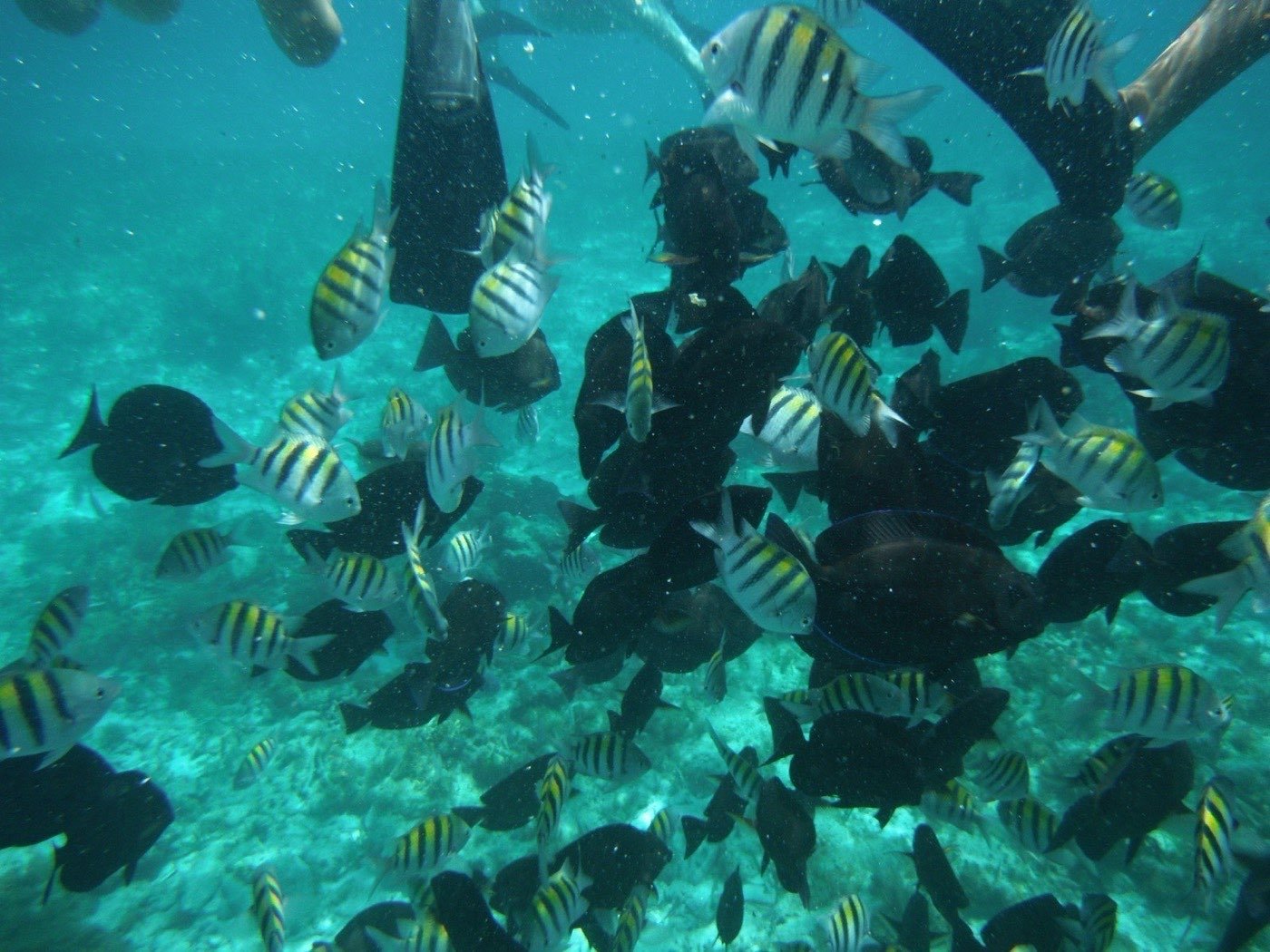
- Xpu-Ha — quieter reef belt 2 km offshore; angelfish, parrotfish, sergeant majors and the occasional spotted eagle ray; from-shore is mediocre, boat is the play.
- Puerto Morelos — federally protected park inside the Mesoamerican Barrier Reef; shallow patch reef 600 m from shore, calmest conditions in the Riviera Maya.
- Every site sits inside a federal protected area regulated by CONANP: reef-safe sunscreen, no-touch, no-feeding.
- Best months: November–April for clearest water, lowest sargassum, calmest seas.
Four sites, four very different snorkels
The Riviera Maya coastline between Puerto Morelos and Tulum sits on top of the Mesoamerican Barrier Reef System, the largest barrier reef in the Western Hemisphere. According to NOAA's Ocean Service, this reef system spans nearly 1,000 km from the tip of the Yucatán down to Honduras, and the section that runs off Quintana Roo is one of the most accessible reef walls on Earth — you can swim to it from a beach.
What surprises most visitors is how different these four flagship spots actually are. Akumal is famous for turtles. Yal-ku is a lagoon, not a reef. Xpu-Ha needs a boat to be worth your morning. Puerto Morelos is the calmest entry point in the whole Riviera. We'll walk through each one with honest expectations — what you actually see, how deep it is, how much current, who it suits.
Sites comparison at a glance
| Site | Reef type | Depth | Current | Kid friendly | Entry / extra fee | Star species |
|---|---|---|---|---|---|---|
| Akumal Bay | Seagrass + patch reef | 1–4 m | Low | Yes (5+, vest) | ~100–150 MXN bay + guide | Green sea turtle |
| Yal-ku Lagoon | Brackish lagoon | 1–6 m | None | Excellent (4+) | ~250 MXN adult / 150 child | Parrotfish, snapper, barracuda juveniles |
| Xpu-Ha (boat) | Fore-reef + sand channels | 4–10 m | Mild | Yes (7+, vest) | Included in tour | Angelfish, eagle ray, occasional turtle |
| Puerto Morelos | Patch reef inside marine park | 2–6 m | Very low | Excellent (5+) | ~50 MXN park fee + boat | Sergeant major, parrotfish, queen angel |
The "entry / extra fee" column changes year to year — CONANP updates rates and Akumal's local cooperative renegotiates the bay access tariff. Treat these as ballparks; your operator will collect the exact amount on the day.
Akumal Bay — turtles, rules and what's really going on
Akumal is the most famous snorkel name on this coast for one reason: a year-round resident population of green sea turtles (Chelonia mydas) grazing on the seagrass beds inside the bay. The IUCN Red List currently classifies the green turtle as endangered, and the Riviera Maya population is one of the more closely studied in the Caribbean basin thanks to nesting beaches at Akumal, X'cacel and Xel-Ha. The State of the World's Sea Turtles network has documented this stretch of coast as one of the priority green-turtle nesting and feeding habitats in the Western Caribbean.
The snorkel experience itself is honestly modest in reef terms — much of what you swim over is seagrass and sand, with patch reef toward the south end of the bay. People come for the turtles, not the coral. Sightings are around 90–95% reliable in the morning before the bay gets stirred up. Sometimes you also pick up southern stingrays, the occasional spotted eagle ray cruising the entry channel, and on lucky days a nurse shark resting under a ledge.
Since 2016 access is regulated. You enter only with a CONANP-licensed guide, you wear a life vest (mandatory — it keeps fins out of the seagrass), and the typical group is six guests per guide with a 45-minute water cap. There are fines for guests caught entering without a licensed guide. Our companion piece Akumal turtle snorkel — rules and season goes deep on the legal side.
Yal-ku Lagoon — the easy first snorkel
Yal-ku is 1 km north of Akumal Bay. It's a cenote-fed coastal lagoon, meaning freshwater from the inland aquifer mixes with seawater in a sheltered basin before pouring into the Caribbean. The result is a strange, beautiful environment: no waves, no current, water that ranges from 4 °C cooler than the open sea (cenote inputs) to bath-warm in the back pools.
For kids and first-time snorkelers, Yal-ku is honestly the best introduction on this coast. The lagoon has a fenced perimeter, lifeguards, rental gear, lockers, restrooms and shade. Visibility is 8–15 m depending on rain in the previous days. Fish density is high because the lagoon shelters juveniles — you'll see parrotfish, sergeant majors, French grunts, schoolmaster snapper, the occasional juvenile barracuda hanging mid-water like a silver pencil.
What you don't get at Yal-ku is reef. The substrate is rocky limestone and seagrass. Nobody comes here for coral. Come here because it's painless, photogenic, and a great gear-test before booking something more ambitious like Puerto Morelos or Xpu-Ha.
Xpu-Ha — the reef most people skip
Xpu-Ha is a long, gorgeous, sandy beach south of Akumal. The from-shore snorkel here is honestly not great — sand bottom and patchy seagrass for the first 300 m. Where Xpu-Ha gets interesting is 2 km offshore, on the fore-reef belt. That stretch of reef is in better shape than the over-trafficked Akumal–Tulum corridor because it doesn't get day-tripper foot traffic; you need a boat.
On a proper Xpu-Ha snorkel boat tour you'll typically anchor at 4–8 m on a sand patch next to the reef wall. The reef itself runs from 4 m at the crest down to 12 m at the sand. Fish life is what a healthy Mesoamerican Reef diving should look like: queen angelfish, French and gray angelfish, rainbow parrotfish, midnight parrotfish, schools of blue tang, the occasional southern stingray on the sand, and — about one trip in four — a spotted eagle ray cruising the edge. Turtles are uncommon here compared to Akumal, but possible.
Conditions are mild most mornings, slightly more current than Puerto Morelos, slightly less than the Tulum reef. We'd send a confident swimmer or family with 7+ kids in life vests. If you want the same coast but flatter, go Puerto Morelos.
Pick the right Riviera reef for your group. Book Riviera Maya reef snorkel →
Puerto Morelos — the protected park version
Puerto Morelos is technically the northern gateway of the Riviera Maya (35 minutes south of Cancún airport), and the snorkel inside the Parque Nacional Arrecife de Puerto Morelos is, in our opinion, the calmest, most kid-suitable reef snorkel on the entire coast. The park was created in 1998 to protect a 9,066-hectare slice of the Mesoamerican Barrier Reef and is co-managed by CONANP and local cooperatives.
The reef sits 600–800 m offshore. Most operators run a 15-minute panga ride out to one of three permitted snorkel sites — La Bocana, Bonanza or Jardines — and drop you in 2–6 m water on a patch reef. Visibility is consistently good (15–25 m most mornings) and conditions are calm because the reef itself blocks open-Caribbean swell.
Species are textbook: queen angelfish, French angelfish, sergeant majors swarming the snorkelers, blue tang, stoplight parrotfish, spotted drum tucked under ledges, the odd nurse shark snoozing in a sand patch. Turtles less common than Akumal but they do show. The Puerto Morelos snorkel is also where many of the Cancún-based tours operate from — see our honest guide to Cancún snorkel beyond the bus tours.
CONANP rules that apply to all four
All four sites sit inside federal protected areas. Mexico's Comisión Nacional de Áreas Naturales Protegidas (CONANP) enforces the same baseline rules, with site-specific extras. Honest summary:
- Reef-safe sunscreen only. No oxybenzone, no octinoxate. Operators inspect bottles. NOAA's reef-stress research is the science backing this rule.
- No touching coral, fish, turtles or rays. Minimum 3 m from any turtle.
- No feeding. Anything. Bread crumbs included.
- Mandatory life vest at Akumal. Vest also strongly recommended at Xpu-Ha, Puerto Morelos for any swimmer who isn't fully confident.
- Licensed guide required at Akumal Bay. Strongly recommended everywhere else; reefs are deeper than they look.
- No drones over the marine park areas without a CONANP permit.
South of Tulum, the regulated framework continues inside the Sian Ka'an UNESCO Biosphere Reserve, where snorkel access is only via permitted cooperative operators. Many of these operators also hold PADI affiliations on the dive side, which aligns their no-touch / no-collect standards with international best practice. For the full breakdown — fines, sunscreen brand examples and what a CONANP brigade inspection actually looks like — see our CONANP rules article.
Which site for your trip — decision rule
- Traveling with kids 4–8, never snorkeled: Yal-ku first morning, then Puerto Morelos boat reef next day.
- One specific goal — see a turtle: Akumal Bay, morning slot, licensed operator only.
- Confident swimmers, want healthier reef and quieter water: Xpu-Ha by boat or Puerto Morelos.
- Coming from Cancún for the day: Puerto Morelos (closest) — see Cancún snorkeling tours.
- Photographer, looking for one icon shot: Akumal for the turtle close-up; otherwise Puerto Morelos for clean reef visuals.
When to go — month by month
The Riviera Maya is a year-round snorkel destination but the experience varies a lot by month. Seasonality is driven by Caribbean basin patterns that NOAA tracks throughout the year. The two big variables are sea state (winter nortes can stir up the water and close some boats) and sargassum (the floating seaweed that hits the coast in waves from roughly May through October).
- November–April: Best window. Lowest sargassum, best visibility, sea temperature 24–26 °C. Occasional nortes drop wind 2–3 days at a stretch — flexibility helps.
- May: Sargassum starts. Some beaches get hit, others are clean — your operator picks the cleanest entry point.
- June–August: Sargassum peak in most years. Lagoons (Yal-ku) and offshore boat reefs (Xpu-Ha, Puerto Morelos) are insulated; from-shore Akumal can get rough.
- September–October: Hurricane season tail. Statistically the bookings most likely to get rescheduled. Water temperature peaks (28–29 °C).
For a full month-by-month species and sea-state calendar, see our Riviera Maya marine life calendar.
What to bring
- Reef-safe sunscreen — Stream2Sea, Raw Elements, Badger or similar. Buy before you fly — local supply is thin and overpriced.
- Long-sleeve rash guard or UPF shirt — better than sunscreen for shoulder/back coverage.
- Prescription mask if you wear glasses — most rental gear isn't optical.
- GoPro or waterproof phone case — operators in Akumal often have a photographer; elsewhere bring your own.
- Cash for park fees and tips — many entry points are cash-only.
- Water shoes — Puerto Morelos beach is grainy coral rubble, hot at midday.
Related guides on AquaCore
Frequently asked questions
Which Riviera Maya snorkel site is best for kids?
Yal-ku Lagoon for kids 4–6 (no waves, no current, lifeguards on site), then Puerto Morelos for kids 5–12 on a short boat ride to shallow patch reef. Both are calmer than Akumal Bay, which has a mandatory life vest rule that some smaller children find uncomfortable. See our family half-day itinerary for the specific plan.
Do I need a licensed guide for Akumal?
Yes. Since 2016, Akumal Bay is a CONANP-regulated zone. Solo entry to the protected snorkel area is not allowed; guests must enter with a licensed cooperative guide, wear a vest, and respect the 45-minute water cap and 3 m distance from turtles. Fines apply to both the unlicensed guide and the guest. Reference: gob.mx/conanp.
Is Puerto Morelos reef better than Akumal?
Different products. Puerto Morelos has healthier, less-trafficked coral with more reef-fish density. Akumal has the reliable turtle encounter — almost guaranteed in season, but the reef itself is mostly seagrass and patch. If your priority is fish/reef diversity, Puerto Morelos. If it is turtles, Akumal.
Can I swim out to the reef from the beach at Xpu-Ha?
Technically yes, but it is a 2 km open-water swim and the from-shore visibility is mediocre. A boat tour gets you there in 15 minutes and drops you on the good section. We do not recommend the swim-out approach for anyone except confident open-water swimmers with a guide.
When is sargassum worst in the Riviera Maya?
Roughly June–August in most years, with significant arrivals possible from May through October. Some weeks are clean, others heavy — it is wind-driven. Lagoons like Yal-ku and offshore boat reefs (Puerto Morelos, Xpu-Ha) are mostly insulated; from-shore Akumal is most affected. Operators monitor daily and pick the cleanest site.
Ready to pick a site? See Riviera Maya reef snorkel tours →