

🔎 TL;DR
- Bioluminescence in Yucatán is caused by dinoflagellates (Pyrodinium or Noctiluca) blooming at irregular intervals.
- Not a reliable phenomenon — works 10–20 nights per year. Must be moonless and calm.
- Peak probability: Sep–Nov (post-summer warming + nutrient wash from rains).
- Tours are small (4–6 people), 2–3 h, departing 1 h after dark.
The science (briefly)
Dinoflagellates emit blue-green light when agitated — a defense mechanism thought to startle predators or attract secondary predators to attack what's feeding on them. Blooms occur when water temperature, salinity, nutrient level, and sunlight combine right. The Yucatán coast has sporadic blooms; predicting exact nights requires local observation.
How operators make it work
Serious bio-tour operators monitor the water for days. They only run tours when recent sightings confirm an active bloom. Expect:
- Conditional booking — you reserve, operator confirms 24 h out.
- Rescheduling if the bloom fades.
- Honest language from operators: "tonight is likely" vs "guaranteed".
When a bloom hits, move fast. Ask about bio-tours →
Frequently asked questions
Can I swim in the bioluminescence?
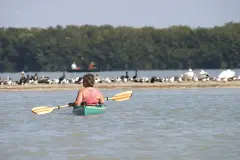
Some tours allow it; check with operator. Most keep guests in the kayak to minimize disturbance.
Is it the same as Puerto Rico's bio-bay?
Similar phenomenon, smaller scale. Puerto Rico's Mosquito Bay has continuous bloom; Yucatán is intermittent.
Photography?
Extremely difficult. Low-light cameras and long exposure required. Phones capture little.
Bio-tour alert
Your dates in Yucatán — we notify if a bloom hits.