🔎 TL;DR
- Three cenotes are genuinely family-friendly in the Riviera Maya: Cenote Azul, Cristalino and Gran Cenote. All open-sky, shallow entry, vest-available, easy walk from parking.
- Avoid with kids under 10: Casa Cenote (resident crocodile briefing), Ik Kil (40 m vertical sinkhole — vest required, intimidating), Dos Ojos cavern entries (overhead environment).
- Life vests are mandatory for minors at most CONANP-managed cenotes — bring or rent on-site ($30–$50 MXN).
- Water is 22–25 °C — kids chill fast. 3 mm shorty wetsuit for any session over 30 minutes, especially for ages 4–10.
- Biodegradable sunscreen only — oxybenzone/octinoxate banned; enforced at entry showers. Kid-safe brands include Stream2Sea, Raw Elements, Babo Botanicals.
- No jumping in cavern entries — only at designated jump points marked by operator. Brief your kids before arrival.
Why cenote snorkel works for families — when you pick the right cenote
Cenote snorkel can be one of the great family experiences in the Riviera Maya. The water is calmer than the open ocean (no waves, no current), the visibility is so good that even nervous swimmers can see their kid clearly, and the geological setting reads as magical to children in a way that beach snorkel does not. But cenote choice matters more than for any other water activity.
The Riviera Maya has roughly 6,000 cenotes mapped (QRSS data) and maybe 30 that are commercially developed for tourism. Of those 30, only about a third are appropriate for kids under 10. The differentiators are open-sky vs cavern, shallow entry vs vertical drop, operator infrastructure (vests, restrooms, lifeguards) and resident wildlife (a placid lagoon with mollies is one thing; a mangrove with a resident crocodile is another).
This guide is the practical playbook: which cenotes work with kids, which to skip, the rules that protect both kids and the site, and the gear list that prevents the trip from turning into a wet-cold-tired meltdown.
Family-cenote table — pick by your child's age
| Cenote | Minimum age | Type | Shallow entry | Vest available | Why it works |
|---|---|---|---|---|---|
| Cenote Azul | 3+ | Terraced open-sky pool | Yes (30 cm) | Yes (rental) | Wading start, jungle shade, snacks on-site |
| Cristalino | 4+ | Open-sky lagoon | Yes (1 m) | Yes (mandatory under 12) | Wooden platform, big mollies schools, calm water |
| Gran Cenote | 5+ | Two open pools + cavern overhang | Yes (1 m staircase) | Yes (mandatory under 12) | Resident turtles excite kids; cavern off-limits to snorkel kids |
| Eden (Ponderosa) | 5+ | Vast open cenote | Yes | Yes | Plenty of room, simple layout |
| Dos Ojos snorkel area | 8+ | Open pool with cavern below | Yes (staircase) | Yes (mandatory) | Dramatic but cavern view can intimidate younger kids |
| Casa Cenote | 10+ | Mangrove channel | Yes | Yes | Crocodile briefing — only confident older kids |
| Ik Kil | 8+ | 40 m vertical sinkhole | No (deep at edge) | Mandatory all ages | Vest mandatory; deep edge intimidating for non-strong-swimmers |
Cenote Azul — the ideal family first cenote
If you have small kids (ages 3–7) and want a low-stress first cenote experience, Cenote Azul is the answer. The cenote is a natural pool with terraced levels: a shallow wading section at 30 cm where toddlers can stand, an intermediate section at 1–2 m for kids who can swim, and a deep middle at 4 m for adult snorkelers. There is no cavern, no overhead environment, no vertical drop into deep water from a cliff — just a jungle-surrounded freshwater pool with limestone overhangs dripping water.
Practical kid-friendly features:
- Jungle shade on three sides — UV exposure managed.
- Small natural cliffs (1–4 m) for older kids who want to jump — only at designated marked points, never into cavern entries.
- Snacks palapa on-site selling fresh fruit, ceviche, water — important when blood sugar drops.
- Changing rooms and restrooms — basic but functional.
- Picnic tables in shade — let the kids eat dry and warm between sessions.
Entrance fee is the lowest of the popular cenotes ($150 MXN per adult, $75 MXN for kids 6–12, free under 5). Combined with the relaxed format, this is the cenote a family of four can spend three hours at for under $30 USD total.
Cristalino — the family backup when Azul is full
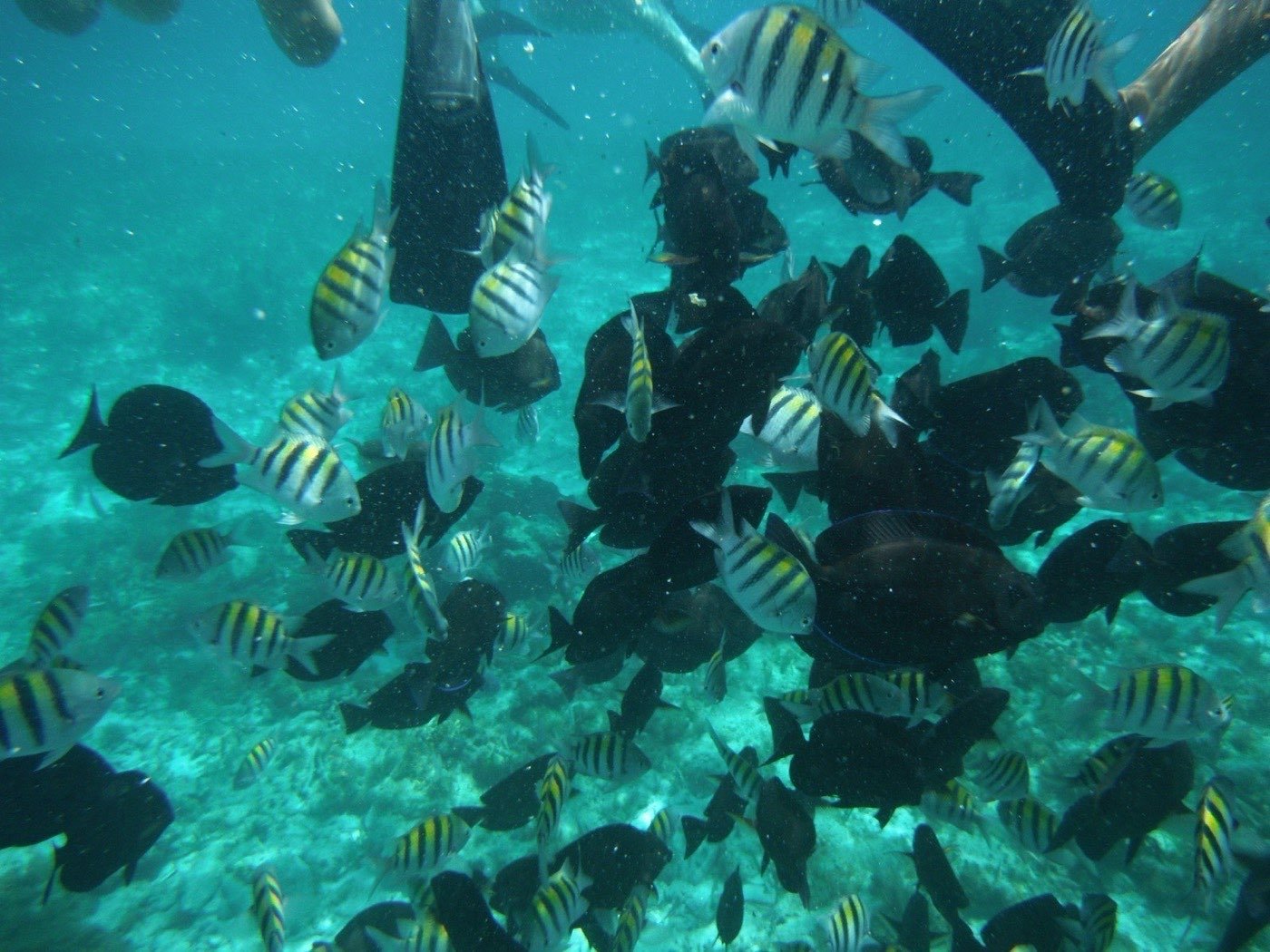
Cristalino is the cenote next door to Azul (same ejido access road, 38 km north of Tulum) and the right answer when Cenote Azul's parking lot is overflowing. It is a larger open-sky lagoon, roughly 150 m by 40 m, with depths from 2 m to 6 m and a wooden swim platform with stairs for easy entry. Kids see large schools of mollies (sometimes 200+ fish moving together) which delights ages 4–10 reliably.
The platform matters with kids: instead of climbing rocks or wading from a beach, the family enters the water via a stable wooden ladder. Parents can sit on the platform with one child while another swims; the platform doubles as a snack and towel base. Vests are mandatory for under-12s and available on-site.
The trade-off vs Cenote Azul: Cristalino has slightly less shallow-water area (no 30 cm wading zone), so it works better for kids 4+ who already swim confidently. For non-swimming toddlers, Azul is the better starting point.
Snorkel cenotes with your family — we plan around your kids' ages. Book family cenote snorkel →
Gran Cenote — the "wow" cenote for kids 5 and up
Gran Cenote is the cenote with the most reliable wildlife payoff for kids: resident Mesoamerican slider turtles (Trachemys scripta venusta) that swim past in the shallow open-sky pool, often within arm's reach. For most kids 5+, "I saw a turtle today" is the trip-defining memory. The site is operated under CONANP rules with vest-mandatory for minors and supervised entry via a wooden staircase.
The cenote has two pools connected by a cavern passage. Snorkelers stay on the open-sky side — the cavern is for divers, who descend through the connector. From the snorkel side, kids can look down into the cavern entrance (it is visible as a darker archway 6 m below) which most find exciting rather than scary because they are clearly on the open-sky platform.
Parental tip: arrive at 8:00 AM. Gran Cenote hits its CONANP-mandated daily cap by late morning in peak season. The first 60–90 minutes have lower visitor density and the turtles are more active before the water gets stirred up by 150 snorkelers.
Cenotes to SKIP with kids under 10
Some popular cenotes are not appropriate for younger children. Skipping them on the family trip is the right call:
- Casa Cenote (Manatí) — the resident juvenile Morelet's crocodile (Crocodylus moreletii, federally protected, listed Least Concern by the IUCN Red List) is ~1.5 m and ignores humans, but the mandatory guide briefing scares kids 4–9. Save this cenote for ages 10+ and confident swimmers.
- Ik Kil — the 40 m vertical sinkhole is visually stunning but the deep edge with no shallow shelf, combined with 600-visitor crowd density at peak hours, can intimidate younger kids. Vest is mandatory for all swimmers regardless of age. Better for confident kids 8+.
- Dos Ojos cavern access — the snorkel pool is fine for 8+, but the cavern circuits and Bat Cave area are for divers only. Some operators bundle snorkel + cavern access in a way that confuses families; clarify in advance that you only need the open-sky pool ticket.
- Angelita (snorkel side) — the surface of Angelita is open but the cenote is a 60 m circular sinkhole with no shallow ledge. Snorkel is technically possible but not enjoyable for kids; this is a diver's cenote.
- The Pit, Carwash, Dreamgate — all primarily cavern-diving destinations with limited or no snorkel zones.
Safety rules — what to brief your kids before arrival
Cenotes are managed under federal protection (CONANP) and the rules are enforced. Brief kids before you arrive so the entry rinse, vest fitting and water entry go smoothly:
- Quick shower at the entry station — removes sunscreen residue, mandatory at most cenotes. Tell kids it is normal.
- Life vest required for under-12s at most CONANP-managed sites. Operators have kids' sizes available. Adjust straps so the vest is snug, not loose.
- No fins inside cavern overhangs — most family cenotes have a clearly marked "no fins past this line" border. Kids find this exciting (treasure-map vibe) rather than restrictive.
- No touching formations — stalactites have a fragile calcite skin that fingerprints destroy. Explain it once at the entrance.
- No jumping in cavern entries — only at designated jump points marked by the operator. Cenote Azul has two marked jump rocks (1 m and 3 m); Gran Cenote has none.
- Stay within arm's reach of an adult — even with vest. Cenote pools look smaller than they are; kids can drift further than they intended.
- If a turtle approaches, stay still — don't chase, don't touch. The turtle is curious; let it pass.
Sunscreen — the rule that surprises foreign families
Most cenotes refuse entry to swimmers wearing standard supermarket sunscreen because the chemical filters (oxybenzone, octinoxate, octocrylene) degrade water quality and harm aquatic life. The rule is enforced via mandatory rinse showers at the entry; some operators visually inspect bottles before allowing entry. The NOAA Ocean Service advisories on these chemicals apply equally to cenote freshwater ecosystems.
Acceptable brands (zinc-oxide or titanium-dioxide based, no oxybenzone):
- Stream2Sea — kids' formula, mineral-based.
- Raw Elements — Eco Formula Lotion, baby+ available.
- Babo Botanicals — Clear Zinc Sunscreen Stick, easy for kids.
- Badger — Active Mineral Sunscreen Cream.
- Thinksport / Thinkbaby — widely available at Riviera Maya pharmacies.
Practical tip: apply 30 minutes before leaving the hotel, not at the cenote. The required rinse before entry will strip surface sunscreen anyway; the goal is to have absorbed protection on the skin underneath. Reapply between cenote sessions.
Water temperature and the "cold kid" problem
Cenote water is 22–25 °C year-round. For adults this is "refreshing"; for kids it can be the difference between a magical trip and a teary one. Children's higher surface-area-to-mass ratio means they cool faster than adults — and the freshwater conducts heat away from the body faster than ocean saltwater.
Practical thermal management for kids in cenotes:
- 3 mm shorty wetsuit for any session over 20 minutes for kids 4–10. Rentable on-site at most cenotes ($100–$200 MXN/day) or buy in Tulum/Playa shops if you plan multiple days.
- Rash guard / UV swim shirt as a minimum even in shorter sessions.
- Towel + dry clothes ready at exit point. Wrap immediately after water exit.
- Hot drink or warm soup at lunch break between sessions if kid is shivering. Most cenote-zone palapas sell hot sopa de tortilla.
- Limit session length. With kids, 25–35 minutes per cenote session is plenty. Two sessions a day with a long warm lunch break beats one continuous 90-minute session.
What to pack — the family cenote bag
- Biodegradable sunscreen (zinc oxide or titanium-dioxide based)
- 3 mm shorty wetsuits (one per kid; rent if not bringing)
- Rash guards / UV swim shirts
- Mask + snorkel set per family member (better fit than rentals; kids hate leaky masks)
- Towels (one per person, plus one spare in car)
- Dry change of clothes
- Flip-flops + closed-toe water shoes (some cenote walkways are rough)
- 2L water per family
- Snacks (fruit, nuts, sandwiches) — sugar-and-protein boost for cold kids
- Dry bag for phones and wallets
- Insect repellent (post-snorkel walk back to car can attract mosquitoes)
- First-aid basics — band-aids for minor scrapes from limestone, antihistamine for any bug-bite reaction. PADI family-snorkel guidance includes basic first-aid recommendation.
- Cash for entrance fees, gear rental, snacks (cards work at some sites but not all; expect to spend $500–$1500 MXN per family day)
Related guides on AquaCore
Frequently asked questions
What is the youngest age you can take a child to a cenote?
For Cenote Azul: 3+ years with parental hold in the shallow wading section. For Cristalino and Gran Cenote: 4–5 years with mandatory life vest and constant parent supervision. Some operators require ages 5+ for formal guided cenote snorkel; check before booking. Babies and toddlers under 3 should skip cenotes — the cold water and required vest make it stressful for everyone.
Do my kids need a life vest if they can swim?
At most CONANP-managed cenotes, yes — under-12s must wear a vest regardless of swim ability. The rule exists because cenote pools have variable depths (toddler-deep in one corner, 6 m in another) and kids can drift unexpectedly. Vests are available on-site for $30–$50 MXN rental. At Ik Kil, vests are mandatory for all swimmers regardless of age.
Is the cold cenote water dangerous for kids?
Not dangerous, but uncomfortable enough to ruin the trip. Cenote water is 22–25 °C; kids cool faster than adults due to higher surface-area-to-mass ratio. A 3 mm shorty wetsuit + 25–35 minute session limit + warm dry clothes ready at exit solves it. Most cenote operators rent kids' wetsuits for $100–$200 MXN/day.
What about the crocodile at Casa Cenote — is it safe for kids?
The resident juvenile Morelet's crocodile (~1.5 m) is federally protected, habituated to ignoring humans, and there has never been a documented attack on a snorkeler in over 20 years of commercial tours. However, the mandatory pre-entry briefing scares kids 4–9. Save Casa Cenote for ages 10+ and confident swimmers; younger kids belong at Cenote Azul, Cristalino or Gran Cenote.
Can my kids jump from the cenote walls?
Only at designated jump points marked by the operator. Cenote Azul has two marked rocks (1 m and 3 m) for kid jumps; Gran Cenote has none (the cavern overhang is off-limits to jump entries by CONANP rule). Never let kids jump near a cavern opening — the underwater rock geometry is unpredictable. Brief this before arrival so the kid does not see "jump rocks" and assume all rocks are jumpable.