🔎 TL;DR
- The Riviera Maya offers two completely different snorkel ecosystems within 20 minutes of each other: freshwater cenote sinkholes and the Mesoamerican Reef diving saltwater system.
- If you only have one snorkel day: reef wins on biodiversity and "classic tropical" payoff; cenote wins on geology, clarity and uniqueness. For a first-time snorkeler, do reef first — easier conditions, more visual reward.
- If you have two days: reef first, cenote second. Build confidence in saltwater, then transition to freshwater silence.
- Costs: reef tour $50–$90 USD/person (boat + guide + gear); cenote tour $40–$120 USD/person depending on transport. Self-drive cenote costs $9–$38 USD entrance only.
- Gear differences: reef snorkel uses standard mask/snorkel/fins; cenote snorkel often adds a 2–3 mm shorty wetsuit (water is 22–25 °C vs reef 26–29 °C). Mandatory CONANP rules at both.
- Best combo itinerary: Day 1 morning Akumal turtle reef snorkel + Yal-ku afternoon; Day 2 morning Gran Cenote + Cenote Azul. Two days, two ecosystems, one trip.
Two ecosystems, twenty minutes apart
The Riviera Maya is the only destination on the planet where you can snorkel a freshwater cenote at 9 AM and the Mesoamerican Reef at 11 AM — radically different ecosystems within a 20-minute drive. Most snorkel destinations on Earth offer one of these two products. Here you get both, and the question travellers ask most often is: which one first?
The honest answer depends on your snorkel experience, what you came to see, and how many days you have. This guide breaks down the practical differences and gives you a sequencing recommendation that actually holds up after the trip is over.
For context: the Mesoamerican Reef is the second-largest barrier reef system in the world, stretching from Mexico through Belize, Guatemala and Honduras. Within the Riviera Maya, key reef-snorkel zones include Akumal Bay, Yal-ku Lagoon, Xpu-Ha and Puerto Morelos — all CONANP-managed protected areas. The cenote network is the Yucatán's flooded cave system, with over 1,600 km of mapped passages (QRSS data) under federal protection within and around the Sian Ka'an UNESCO World Heritage site.
Side-by-side comparison table
| Aspect | Cenote snorkel | Reef snorkel |
|---|---|---|
| Water | Freshwater, 22–25 °C, often with halocline | Saltwater, 26–29 °C, no halocline |
| Visibility | 30–50+ m (steady) | 10–25 m (varies with surge) |
| What you see | Stalactites, light beams, few fish, occasional turtle/crocodile | Colourful fish, coral, turtles, rays, occasional shark |
| Setting | Jungle sinkhole, open-sky pool or cavern overhang | Caribbean coast, boat-access or shore-entry |
| Skill level | Basic swim ability + vest available | Basic swim ability + vest available |
| Gear | Mask, snorkel, optional fins, 2–3 mm shorty recommended | Mask, snorkel, fins, vest mandatory at Akumal |
| Tour cost | $40–$120 USD/person | $50–$90 USD/person |
| Self-drive cost | $9–$38 USD entrance only | $0–$30 USD shore-entry; boat needed for reef |
| Best months | Nov–Apr (clearest), Jun–Oct OK | May–Aug (calm Caribbean), Nov–Apr OK |
| Family-friendliness | Excellent at open-sky sites (Cenote Azul); harder at cavern sites | Excellent at calm bays (Akumal, Yal-ku, Puerto Morelos) |
| Vibe | Geological awe, silence, otherworldly | Classic tropical, colourful, social |
What you actually see in a cenote
Cenote snorkel delivers visual payoffs that the reef cannot match — and lacks ones the reef has in abundance. The cenote "biology" is modest:
- Small freshwater fish — Mayan cichlids, mollies, mosquitofish, small black catfish. Numerous but not colourful.
- Freshwater turtles — Mesoamerican slider turtles (Trachemys scripta venusta), especially at Gran Cenote.
- Crocodile — one resident juvenile Morelet's crocodile at Casa Cenote (federally protected, around 1.5 m, ignores humans).
- Bats — Mexican free-tail bats roost in some cenote air-domes (Dos Ojos Bat Cave area).
What sells the cenote experience is the geology: stalactite formations underwater, light beams through open-sky entrances at midday, halocline blur where freshwater and saltwater meet, and the feeling of swimming in water so clear you cannot tell where the surface is. The Cenote and Karst Ecology research network documents endemic blind cave species in deeper passages — but recreational snorkelers do not see these.
Cenotes also carry archaeological weight. The INAH has documented Maya ceremonial use of cenotes including Ik Kil and several Sac Actun-system openings. Human remains dating 9,000–13,000 years have been recovered from deeper cave passages (out of reach for snorkelers but adding to the site's heritage status).
What you actually see on the reef
Reef snorkel delivers exactly the visual that the word "snorkel" conjures in the average traveller's mind: schools of colourful fish, coral, turtles, rays, occasional sharks. The Mesoamerican Reef is healthy at most Riviera Maya snorkel sites despite climate-driven bleaching pressures, particularly in CONANP-protected zones.
- Akumal Bay — federally protected since 2016, year-round resident green turtles (Chelonia mydas, IUCN Endangered per the IUCN Red List) grazing in seagrass beds. Licensed guides only, 6-snorkeler-per-guide cap, 45-minute water cap.
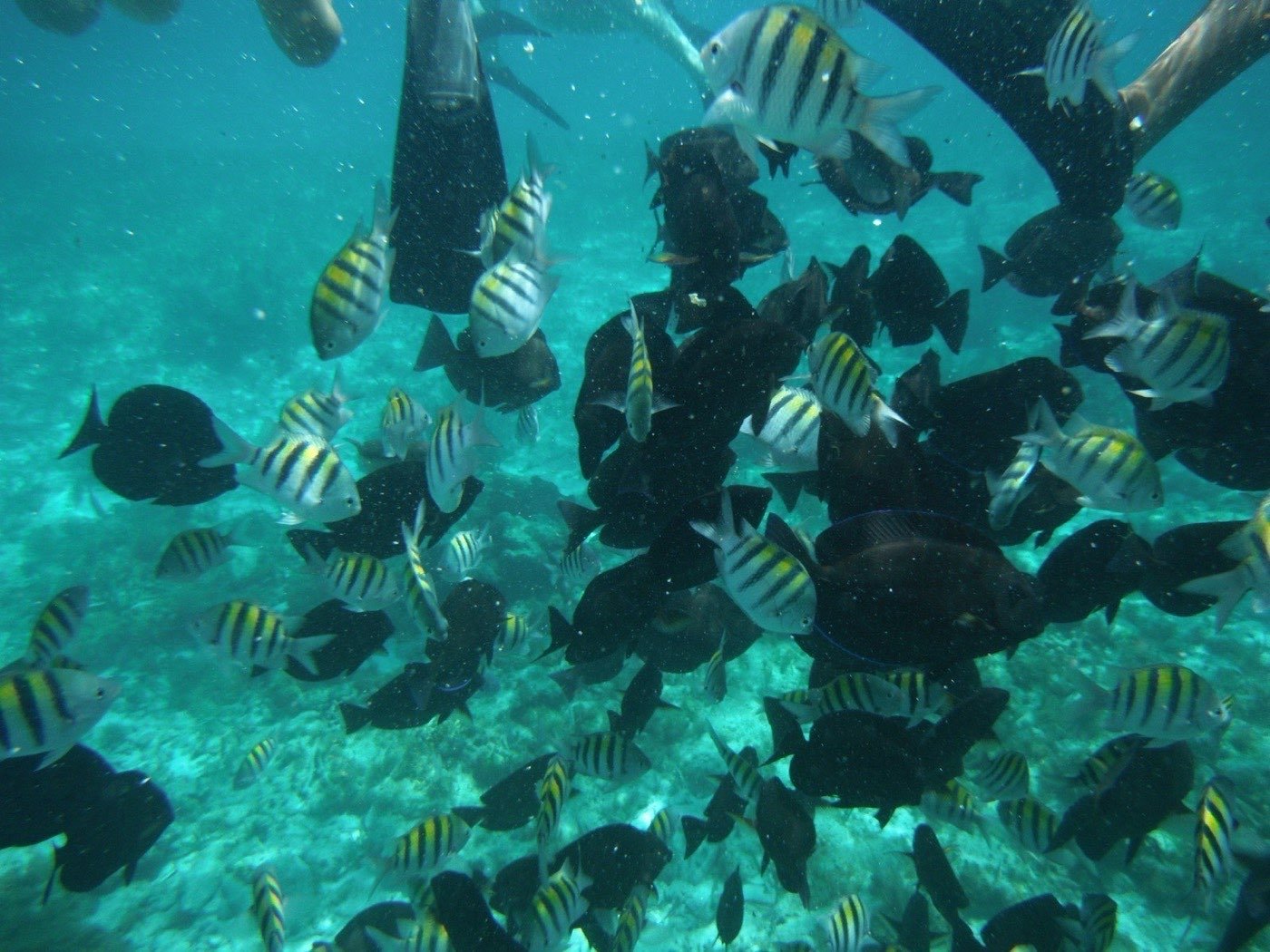
- Yal-ku Lagoon — brackish saltwater lagoon north of Akumal, calm, no boat needed, mix of reef and lagoon fish (parrotfish, sergeant majors, mojarras), occasional small barracuda.
- Puerto Morelos National Marine Park — boat-access, vibrant reef walls 100–400 m offshore, schools of grunts, snappers, eagle rays, occasional nurse sharks. Strict CONANP guide-led-only access.
- Xpu-Ha — half-bay, half-reef-shelf, calm conditions, turtles foraging in seagrass on the bay floor.
The advantage of reef snorkel over cenote snorkel is the biological density: you can see 30–50 species of fish in a single 45-minute Akumal session. The disadvantage is visibility (10–25 m vs 30–50 m at cenotes) and unpredictability — surge from offshore wind can briefly cloud the bay.
Plan the two-day combo — we sequence it for you. Cenote snorkel → · Reef snorkel →
Which to do first — the practical answer
The honest sequencing depends on what kind of snorkeler you are:
- First-time snorkeler, single snorkel day: Do reef. Akumal turtle bay is calm, visually rewarding, and the licensed-guide format walks you through every step. You will leave with photos that look like the brochure. Cenote requires slightly more focus (no fins inside cavern overhangs, etc.) which is easier after you have basic gear comfort.
- First-time snorkeler, two snorkel days: Reef Day 1, cenote Day 2. The reef session functions as an upgraded "pool intro" — gentle conditions, familiar tropical scene. Cenote on Day 2 lands as the "wow, this is completely different" payoff.
- Experienced snorkeler, single snorkel day: Pick by goal. Want classic tropical? Reef. Want geological surreal? Cenote. Both work as a stand-alone.
- Experienced snorkeler, two snorkel days: Cenote Day 1 (cool morning, fresh focus), reef Day 2 (warm, social, social-media catch-up). The reverse also works — there is no wrong order at this experience level.
- Family with kids under 10: Reef at a calm bay (Yal-ku, Puerto Morelos for older; shore-snorkel at Xpu-Ha for younger). Then a family-cenote like Cenote Azul on a different day. Skip Casa Cenote (crocodile briefing) and Ik Kil (deep vertical).
Gear differences — what you actually need
Both activities use standard snorkel gear (mask, snorkel, fins) but the supporting gear differs in two ways:
- Wetsuit for cenotes. Cenote freshwater is 22–25 °C; you cool faster than in 28 °C reef saltwater. A 2–3 mm shorty wetsuit is the standard recommendation for sessions over 30 minutes. Reef snorkel rarely requires a wetsuit — most snorkelers go in a rash guard or t-shirt at most.
- Vest at reef. Akumal Bay requires a life vest for every snorkeler regardless of skill — the CONANP regulation mandates it for turtle-zone access. Yal-ku and Puerto Morelos recommend but do not strictly enforce. Most cenotes require vests only for non-strong-swimmers and minors.
Other gear notes:
- Biodegradable reef-safe sunscreen is mandatory at both — enforced at Akumal rinse stations and CONANP cenote entries.
- Underwater camera or GoPro recommended at both. Cenote light beams are spectacular between 11:00–13:00; reef wildlife photography is best with sun overhead.
- Cenote sites typically have changing rooms and showers (Gran Cenote, Dos Ojos, Cenote Azul); reef beach entries (Akumal) have basic facilities at the public beach.
Cost comparison — what a snorkel day actually costs
Reef snorkel tour (Akumal turtle snorkel, licensed guide, mandatory format):
- Guide fee + bay access permit: ~$35–$50 USD/person
- Gear rental: ~$10 USD/person
- Transport from Playa del Carmen: $15–$25 USD (shared van) or $40 USD (taxi)
- Total per person: $60–$90 USD
Reef snorkel boat tour (Puerto Morelos National Park, 2-stop):
- Boat + guide + park entry: ~$50–$70 USD/person
- Gear: included
- Total per person: $50–$70 USD
Cenote snorkel (self-drive, single cenote):
- Entrance fee: $9–$38 USD (Cenote Azul $9, Dos Ojos $32, Gran Cenote $29)
- Gear rental on-site: $6–$10 USD
- Car rental day rate: $30–$50 USD (split among group)
- Total per person (group of 4): $20–$50 USD
Cenote snorkel guided tour (transport + 2–3 cenotes, lunch):
- Full tour: $70–$120 USD/person depending on inclusions
- Total per person: $70–$120 USD
The cost-per-experience favours self-drive cenote for solo or small groups, and guided tour for families wanting zero logistics.
Best months for each — and why they overlap
Cenote: November to April for peak visibility and warm air, but cenotes are good year-round. The water is the same temperature in any month.
Reef: May to August is the calmest Caribbean — flat water, gentle visibility. November to April also works but cold-front winds (nortes) can rough up the surface for 2–3 days at a time. PADI snorkel-program guidance is to check the morning forecast — if winds are above 15 knots, postpone.
The convergence: March, early April, late November, early December are excellent for both cenote and reef simultaneously. These are the windows when a two-day combo trip works without trade-offs.
Conservation rules at both — and why they exist
Both ecosystems are federally protected and the rules are enforced. They exist because both ecosystems were nearly degraded in the 2010s by under-regulated mass tourism. At Akumal, unlicensed guides were chasing turtles, raising stress markers, displacing the resident population. The 2016 CONANP regulation reset that. At cenote sites, oxybenzone-based sunscreens were measurably degrading water quality in popular pools — the biodegradable-only rule fixed it.
The rules to know:
- Both ecosystems: biodegradable reef-safe sunscreen only (no oxybenzone, octinoxate, octocrylene).
- Akumal: licensed-guide-led only, 6 snorkelers per guide max, 45-min water cap, 2 m turtle distance, no touching.
- Cenotes: no fins in cavern overhangs, no touching formations, no jumping in non-designated areas, life vest for kids and non-strong-swimmers.
- Puerto Morelos NP: boat-access, guide required, mooring lines, no anchor drops on reef.
- Casa Cenote: 4 m distance from resident crocodile, no feeding, no chasing.
Related guides on AquaCore
- Best Cenotes for Snorkeling in the Riviera Maya
- Cenote Snorkel Season Riviera Maya
- Cenote vs Reef Diving in the Riviera Maya
- Akumal Turtle Snorkel — Rules & Season
- Reef Snorkel Riviera Maya — Sites Detailed
- Riviera Maya Week of Water Itinerary
- Cenote Snorkel — Service Page
- Reef Snorkel — Service Page
Frequently asked questions
If I only have one day to snorkel, cenote or reef?
For a first-time snorkeler: reef. Akumal turtle bay or Yal-ku Lagoon is calmer, more visually rewarding and the format walks you through it. For an experienced snorkeler with a "different from the resort pool" goal: cenote. Gran Cenote or Dos Ojos delivers a geological visual you cannot get elsewhere. If you have two days, do both.
Is the cenote really colder than the reef?
Yes — by about 4 °C (cenote 24 °C vs reef 28 °C). But the cenote also feels colder than that gap suggests because freshwater conducts heat off your body faster than saltwater. For cenote sessions over 30 minutes, a 2–3 mm shorty wetsuit transforms the experience. Reef rarely needs more than a rash guard.
Do I need different gear for each?
Mostly the same — mask, snorkel, fins are universal. The cenote may add a wetsuit (operators rent them for $100–$200 MXN). Akumal reef requires a life vest by CONANP regulation; cenotes require vests only for non-swimmers and minors. Biodegradable sunscreen is mandatory at both.
Can I see turtles at both?
Yes, but different species. The reef (especially Akumal) has resident green sea turtles (Chelonia mydas), 80–120 cm shells, year-round, almost-guaranteed sightings. Some cenotes (Gran Cenote, Cristalino) have Mesoamerican slider turtles, 20–30 cm shells, freshwater, less reliable to spot. The reef turtle experience is what most travellers came to the Riviera Maya for.
Which is better for kids?
Both, at the right sites. Reef: Yal-ku Lagoon (calm, brackish, no waves) and Akumal turtle bay (vest mandatory, guide-led) for ages 6+. Cenote: Cenote Azul (terraced, shallow start, no overhead) for ages 4+. Skip Casa Cenote (crocodile briefing scares small kids) and Ik Kil (deep vertical sinkhole) for under-10s.