🔎 TL;DR
- Three Yucatán-peninsula kite bases, three completely different trips. Progreso = quiet Gulf coast, Mérida culture nearby, two wind engines. Cancún / Isla Blanca = highest density of IKO schools in Mexico, biggest scene, easy logistics. Tulum = lifestyle base, weaker wind reliability, you ride 1 hour up the coast for serious days.
- Wind reliability ranked: Isla Blanca (highest density of school-confirmed kiteable days) → Progreso trade season → Tulum (lowest of the three).
- Scene size ranked: Isla Blanca (5+ IKO schools, busy lagoon) → Tulum (Sian Ka'an gateways, smaller scene) → Progreso (1–2 seasonal operators, the empty option).
- Cost ranked low to high: Progreso < Tulum < Isla Blanca/Cancún. Mérida flights are usually cheaper than Cancún flights too.
- Best for first-timer: Isla Blanca for school density and rentals. Best for experienced rider wanting empty water: Progreso. Best for lifestyle traveller: Tulum.
- Forecasts cross-checked on Windguru, Windy, and NOAA NDBC buoy network.
Why these three bases keep getting compared
The Yucatán Peninsula is one of the world's better-kept kitesurf secrets. The trade-wind belt rakes across the peninsula from March to July with consistency that rivals the Caribbean's better-known kite islands, and the cold-front Nortes between November and February deliver short bursts of hard wind that experienced riders chase. But the peninsula is large — roughly 180,000 km² — and the three principal kite bases are spread along three completely different coastlines. Progreso sits on the Gulf of Mexico coast facing north. Cancún and Isla Blanca sit on the Caribbean coast at the north-east corner, facing east. Tulum sits on the Caribbean coast 130 km south of Cancún, also facing east but with a reef line offshore.
The result is that a "trip to Yucatán kite" can mean three very different weeks. You can fly into Cancún and stay on the Caribbean, fly into Mérida and stay on the Gulf, or fly into Cancún and drive 2 hours south to Tulum. Most riders pick one base for their first trip and slot the other two into future plans; some advanced riders run a multi-week trip splitting across two coasts to hedge the wind risk. This article ranks them honestly across the metrics that actually matter — wind reliability, scene size, water character, cost, logistics, and who each one suits.
We have already covered some of the Caribbean side in our Isla Blanca for beginners piece and the Gulf side in our Progreso quiet-cousin guide. This article runs them head-to-head and adds Tulum to the comparison.
Progreso (Yucatán Gulf coast) — what you get
Progreso is the cruise port of the Yucatán Gulf coast, 40 minutes north of Mérida by car on a tolled four-lane highway. The kite zone is not Progreso itself (the cruise pier and the long city malecón are not where you ride) but the chain of launches west of the city: Chelem lagoon for beginners, Chuburná coast for intermediates, Sisal for advanced self-sufficient riders. The geographic split is covered in detail in our launch-spot piece; the wind seasonality in our month-by-month guide.
The character of Progreso kite is quiet, two-engine, culturally rich. Quiet because there are 1–2 seasonal operators and you will routinely have 10 km of beach to yourself; two-engine because you ride Nortes in winter and trades in spring; culturally rich because Mérida is a 40-minute drive south and is one of the safest, most walkable colonial cities in Mexico, with cenotes, archaeological sites and Mayan cuisine 30 minutes inland. A kite week here can credibly include a half-day trip to Uxmal or a cenote and still leave you with 5 ride sessions.
The trade-off is infrastructure. There are no walk-up rentals at the spots; you bring your gear or you book with an operator that supplies. The flight market is smaller — most North American visitors connect via Mexico City to MID (Mérida) — though there are now direct flights from Houston, Dallas and Miami. Accommodation in Progreso town is cheap and basic; in Mérida it is wider and more upscale.
Cancún / Isla Blanca (Caribbean) — what you get
Isla Blanca is the long sandy peninsula north of Cancún town, separating a shallow protected lagoon (Laguna Chacmuchuc) from the open Caribbean. The kite scene is concentrated on the lagoon side: knee-to-waist water, side-shore trade wind from the east, a string of IKO-certified schools running shared launches along a 3 km stretch of beach. This is the densest kite scene in Mexico — on a windy weekend in May you can count 40+ kites in the air at once.
The character of Isla Blanca is busy, school-driven, easy to land in. You fly into CUN (Cancún International), grab a transfer or rental car, and you are at the lagoon in 40 minutes. Rentals are plentiful, schools run daily, English is universal, and the wind reliability is the highest of the three bases — a 75–80% kiteable-day rate in trade season (Mar–Jul) according to the consolidated operator stats we have seen.
The trade-off is crowds and cost. On peak-season weekends the lagoon can feel like a downwind highway; you need basic crowd-management skills (right-of-way, kite priority, lane choice) from day one. Accommodation around Cancún is the most expensive of the three bases, food is more expensive, and the surrounding tourist infrastructure is mass-market beach resort. If your goal is empty water you will not find it here; if your goal is "I want to learn fast in a real school environment," this is the place. For the beginner-focused angle see our Isla Blanca beginners guide; for spot-mechanics we cover Isla Blanca vs Playa Delfines too.
Tulum (Caribbean, south of Cancún) — what you get
Tulum sits 130 km south of Cancún airport. The town itself is divided into the inland pueblo and the beachfront zona hotelera, both of which have grown explosively in the last decade. The kite scene is small, scattered, and concentrated around the strip of public beach south of the Mayan ruins (where wind angle and beach width permit launching) and at small spots up the coast at Akumal and around the Sian Ka'an boundary at Punta Allen.
The character of Tulum kite is lifestyle-driven, less consistent, you-drive-to-the-wind. Wind reliability is the lowest of the three bases for the simple geographic reason that the reef line offshore and the Caribbean fetch profile produce more variable wind than Isla Blanca's protected lagoon. On a 7-day stay in trade season expect 3–5 kiteable days; on the same dates in Isla Blanca you would expect 5–6. The wind angle is also less clean — onshore-shifting and side-on are more common than the textbook side-shore of Isla Blanca's lagoon.
Why pick Tulum then? Because Tulum is Tulum — the beachfront yoga-cacao-pueblo-mágico Caribbean lifestyle is real, the food scene is excellent, the cenotes 15 minutes inland are world-class, and many riders book a Tulum kite trip as "kite when it blows, lifestyle when it does not". If you have a non-kiting partner, Tulum is the easiest sell of the three bases. If you have 10 days and want to ride hard, it is not the right choice.
Head-to-head — the data
The table consolidates operator logbooks, public Windguru and Windy archives, NOAA NDBC buoy network observations, and pricing surveys done by our operations team in early 2026. Day-rate figures are typical mid-season tariffs for IKO-certified lessons including gear and instructor; subject to change.
| Metric | Progreso | Isla Blanca (Cancún) | Tulum |
|---|---|---|---|
| Coast / sea | Gulf of Mexico | Caribbean lagoon | Caribbean open |
| Wind seasons | Trades Mar–Jul + Nortes Nov–Feb | Trades Nov–Jul | Trades Nov–Jul |
| Kiteable days/week (trade season) | 5–6 | 5–6 | 3–5 |
| Water depth (lesson area) | Waist (1.1 m) | Waist (1.0 m) | Chest (1.5 m+) |
| Water state | Flat (lagoon) / chop (coast) | Flat (lagoon) | Chop + small swell |
| IKO schools on-site | 1–2 seasonal | 5+ | 2–3 small |
| Lesson day-rate (USD) | $120–160 | $160–220 | $180–240 |
| Rental day-rate (USD) | $60–90 (limited) | $70–100 | $80–120 |
| Accommodation $/night (mid) | $40–90 | $90–180 | $120–280 |
| Airport | MID (Mérida) | CUN (Cancún) | CUN, 130 km drive |
| Cultural side-trips | Mérida, Uxmal, cenotes (excellent) | Isla Mujeres, Tulum day-trip | Cenotes, ruins (excellent) |
| Crowds on water | None to few | Heavy weekends | Moderate |
Wind-day figures cross-referenced with archive data from Windguru and Windy; live observation network from NOAA NDBC stations (42055 for the Gulf, 42056 and the Caribbean coastal stations for the eastern side). Operator licensing under IKO verified directly with school listings. Coastal regulations and protected-area boundaries per CONANP (Sian Ka'an buffer relevant for Tulum-south launches).
Pick your Yucatán kite base by goal and skill level — we run trips in all three. Start with Progreso →
Who each base actually suits
Reading the table is one thing; matching it to a real traveler is another. Profiles:
- Solo learner, 1 trip to make: Isla Blanca. Highest school density, flat-water lagoon, rentals on the beach, you will accumulate the most hours in a week. Crowds annoy advanced riders but help learners (more eyes on you in trouble).
- Couple where one partner does not kite: Tulum. The non-kiting partner has a full week of beach, cenotes, ruins, yoga, restaurants. Progreso/Mérida is also strong here, but Tulum has the easier "I'm not going kiting, what do I do" answer.
- Advanced rider, wants empty water: Progreso. Drive Chelem → Chuburná → Sisal and you will share the water with 2–4 other kites at most.
- Big-air / freestyle progression: Progreso during Norte season, secondarily Isla Blanca during peak Mar–May. The Nortes deliver harder pulses than the trades anywhere on the peninsula.
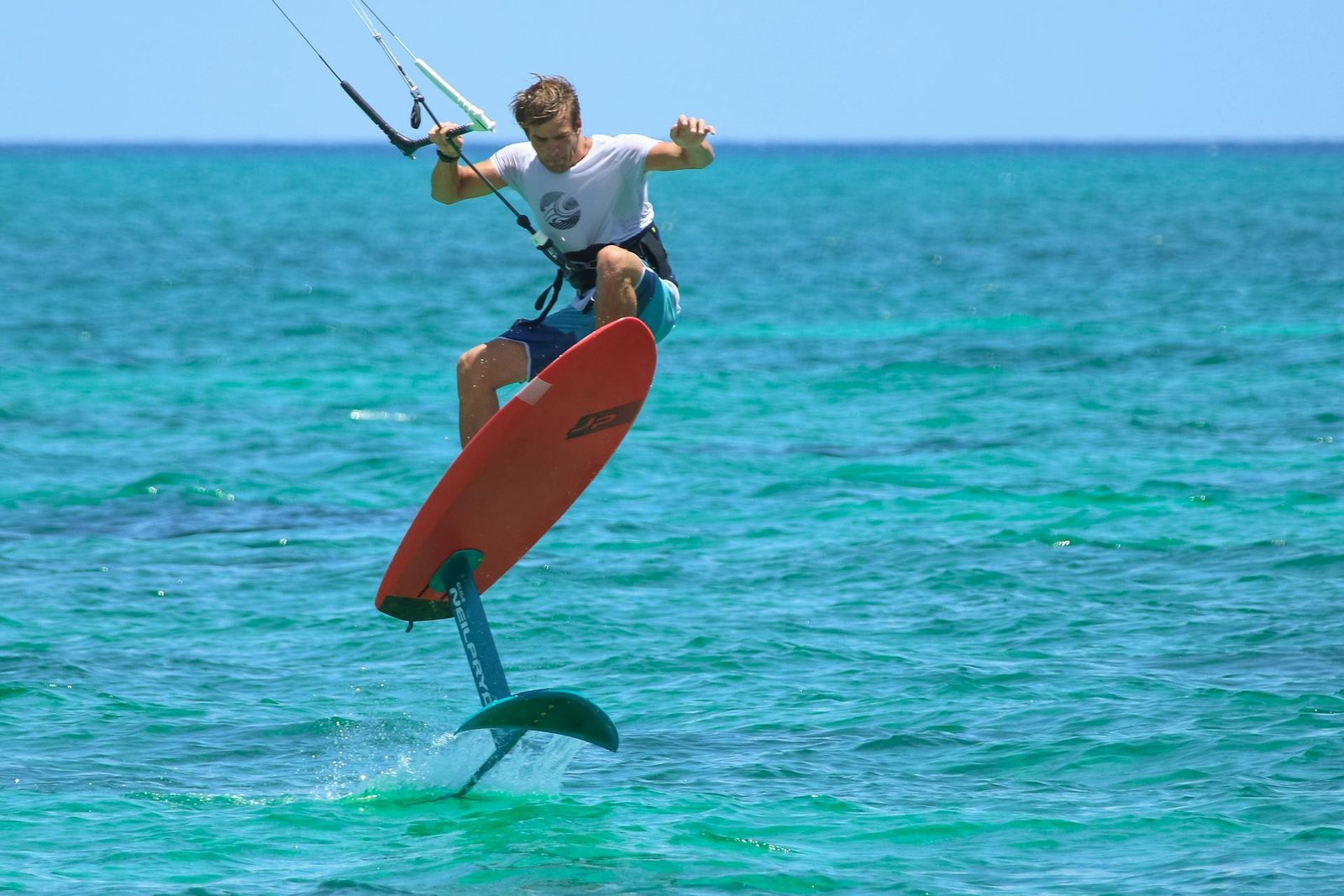
- Foil rider: Isla Blanca lagoon for flat water and shoulder-day winds. Chelem also excellent.
- Family with kids: Progreso. The beach culture is family-driven, prices are lower, the lagoon is shallow enough for kids to swim independently, and Mérida is one of the safest big cities in Mexico.
- Photographer/videographer chasing visuals: Tulum. The Caribbean turquoise of the open coast and the cenotes produces the best frames; the wind reliability is worse but the trip is the point.
- Multi-week trip: 7 days Isla Blanca + 5 days Progreso. The Caribbean and Gulf wind windows do not always line up, so if one coast is dead the other can deliver. Logistics: fly into CUN, ride Isla Blanca, drive 4.5 hours to Progreso, fly out of MID.
Cost — the full picture, not just lessons
The day-rate row in the table above is misleading on its own because the surrounding costs differ wildly across the three bases. Real-week totals for an average 7-day trip including 5 days of lessons, accommodation, food, transport and one rest-day activity:
| Cost item (7-day budget) | Progreso | Isla Blanca | Tulum |
|---|---|---|---|
| 5 days IKO lessons | $600–800 | $800–1,100 | $900–1,200 |
| Accommodation × 7 | $280–630 | $630–1,260 | $840–1,960 |
| Food × 7 | $140–245 | $280–490 | $350–630 |
| Local transport | $70 (rental car 7d) | $140 (rental car/taxi) | $210 (rental, longer drives) |
| One rest-day activity | $50 (cenote) | $80 (Isla Mujeres) | $100 (cenote + ruins) |
| Total range USD | $1,140–1,795 | $1,930–3,070 | $2,400–4,100 |
The ratio is roughly Progreso 1.0 → Isla Blanca 1.7 → Tulum 2.1 on the typical real-world week. Add international flights (CUN tends to have better deals from North American hubs than MID; budget $250–450 difference) and the gap narrows but does not flip.
Logistics — getting there and getting around
Three different logistics realities:
- Progreso: fly into MID (Mérida International). Most flights connect via Mexico City; growing direct service from US hubs. Pick up rental car at the airport — strongly recommended because the multi-spot rotation requires driving 5–50 km between Chelem, Chuburná and Sisal. Accommodation in either Progreso (closer to spots, basic) or Mérida (40 min south, more amenities). The roads are flat, well-marked, and safe to drive at all hours.
- Isla Blanca: fly into CUN. Take a transfer or rental from the airport to Isla Blanca direct (40 min). You can usually walk from your hotel to the school in 5 minutes; rental car optional for non-kite days. The Cancún hotel zone is a 30-min drive south of the kite zone and not where most riders stay; the actual kite hotels are in the village of Bonfil or directly on the dirt road into Isla Blanca.
- Tulum: fly into CUN or the new TQO (Tulum airport). From CUN, rent a car or take the ADO bus (2 h to Tulum). Inside Tulum, the beach hotels are on a long single road that gets jammed in high season — bring patience or a bike. The kite spots are 10–25 minutes from any base; rental car or scooter strongly recommended.
One detail: many riders underestimate the drive between bases if doing a split trip. Mérida (closest to Progreso) to Cancún is 4.5 hours on a tolled highway (~$30 USD in tolls); Cancún to Tulum is 1.5–2 hours on the same highway. The drives are easy but they eat half a kite day each.
Off-water — what each base offers
On non-kite days (and there will be some no matter where you go):
- Progreso: Mérida cathedral and centro, Uxmal archaeological site (1.5 h south), cenotes of the Ruta Puuc, traditional Yucatecan food (cochinita pibil, sopa de lima, papadzules), the Hacienda culture circuit. Strong cultural week.
- Isla Blanca / Cancún: Isla Mujeres ferry day (great snorkeling), Chichen Itzá (2 h drive), the Cancún hotel-zone beach if that is your thing, Riviera Maya day-trips. Less cultural than Progreso, more entertainment-resort.
- Tulum: Tulum ruins (overrated visually, but historically interesting), the cenote belt of the Riviera Maya (Gran Cenote, Dos Ojos, Casa Cenote — all world-class), Sian Ka'an biosphere (UNESCO-listed, per UNESCO World Heritage records, accessed via Muyil or Punta Allen). Strong nature + lifestyle week.
For specific paddleboard side-trips that work as rest-days, see our Celestún flamingo SUP guide (paired with a Progreso trip) and our SUP vs kayak Cancún piece (for Caribbean side rest days).
The honest recommendation
If you have to pick one for a single trip:
- Total beginner, no kite experience: Isla Blanca. The school density is non-negotiable; you will progress faster.
- Already IKO Level 2+, want to consolidate independent riding: Progreso, trade season (April–June). Quiet water, real coastline, the rotation will make you a better rider than another week of crowded lagoon.
- Have done Caribbean kite trips before, want a different vibe: Progreso. The Gulf is genuinely different from the Caribbean.
- Want a lifestyle trip with kite as one ingredient: Tulum.
- Budget-conscious: Progreso, easily.
- Travelling with non-kiters: Tulum or Progreso (Mérida culture).
And if you have done all three? The standard veteran answer is: Progreso for the kite, Mérida for the food, Tulum for one weekend if you can spare it.
Frequently asked questions
Is Isla Blanca really windier than Progreso?
Marginally, in the trade-wind season. The lagoon orientation at Isla Blanca catches the east trade slightly more directly, and the side-shore angle is more textbook for the most common wind direction. Progreso catches up during Norte season (Nov–Feb) when Isla Blanca actually drops off a bit. Over a full year the two coasts are roughly equivalent in total kiteable days.
Can I do Tulum if I have only ridden in lagoons before?
Yes but expect adjustment. Open Caribbean water with reef beyond is more demanding than lagoon water — choppier, deeper, less forgiving of body-drag mistakes. Spend day one with a refresher lesson at a Tulum school before you self-launch.
What about doing all three in one trip?
Doable in 14 days. 5 days Isla Blanca, drive to Tulum, 3 days Tulum, drive back to Cancún, fly to Mérida (cheaper than driving across the peninsula for most travellers), 5 days Progreso, fly out MID. Or skip the flight and drive — the Mérida-Cancún highway is fast and easy.
Which is safest for solo female travellers?
Mérida (paired with Progreso for kite days) consistently ranks among the safest big cities in Mexico per official statistics. Tulum is fine in the day but the road into the zona hotelera at night has had incidents. Isla Blanca is fine but Cancún town itself is uneven. Solo female riders in our experience choose Progreso/Mérida or Isla Blanca with hotel-on-spot.
Are flights cheaper to CUN or MID?
CUN almost always — high volume, more carriers, more competition. MID flights are usually 15–30% more expensive but the trip total still ends up lower because Progreso accommodation and food are cheaper. Run both numbers.
What about hurricanes for trip planning?
Atlantic hurricane season Jun–Nov hits the Caribbean side more often than the Gulf side. Tulum and Cancún have had multiple Cat 1–3 landfalls in recent decades; Progreso has had fewer direct hits. If hurricane risk is part of your decision, the Gulf side is statistically the safer base in the late-summer months, but most riders avoid those months entirely.
Pick your Yucatán kite base
Not sure which Yucatán base fits your trip?
Tell us your dates, skill, budget and travel companions — we will tell you which of the three actually fits.