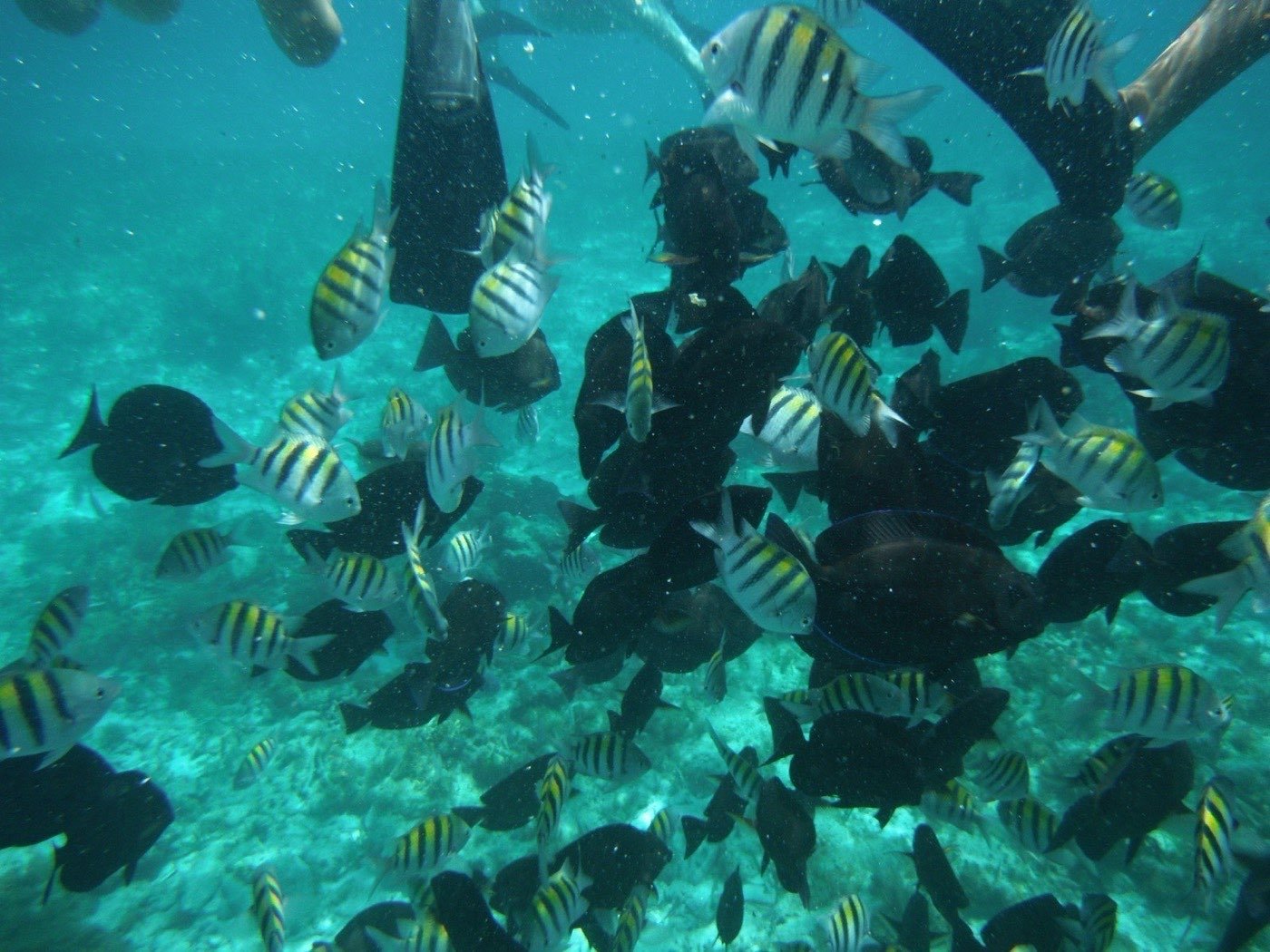
🔎 TL;DR
- Inside CONANP-protected marine parks (which includes every Cancún reef snorkel site), chemical sunscreen with oxybenzone or octinoxate is restricted. CONANP rangers can refuse you boarding or fine operators that allow non-compliant sunscreen on the water.
- Mexican fine framework under SEMARNAT / federal environmental law: fines can reach up to MX$50,000+ per infraction, typically billed to the operator who carries the visitor.
- The "reef-safe" claim on a label is not regulated — there's no official certification. Read the active-ingredients panel, not the front label.
- Real reef-safe sunscreens use non-nano zinc oxide or non-nano titanium dioxide as the only active ingredient. Brands like Stream2Sea, Badger, Sun Bum Mineral, Thinksport, All Good meet the standard.
- The science: oxybenzone causes coral DNA damage and bleaching at concentrations as low as 62 parts per trillion, per NOAA and peer-reviewed research.
- Wear a rash guard. The single most effective thing you can do is cover up — UPF 50+ shirt + leggings replaces 90% of the sunscreen you'd otherwise apply.
Why this matters in Cancún specifically
Every reef snorkel site in Cancún — Manchones, MUSA, Punta Nizuc, El Meco — sits inside the Parque Nacional Costa Occidental de Isla Mujeres, Punta Cancún y Punta Nizuc, a federally decreed Natural Protected Area managed by CONANP (Comisión Nacional de Áreas Naturales Protegidas). Park rules are codified under Mexican environmental law (LGEEPA), Mexican Norma Oficial NOM-022-SEMARNAT-2003 for protected areas, and specific park-management programs published by SEMARNAT.
One of the most consistently enforced rules at all four sites is the prohibition of chemical sunscreens containing oxybenzone (benzophenone-3) and octinoxate (octyl methoxycinnamate). The scientific reasoning is documented by the NOAA Ocean Service: those two compounds cause coral DNA damage, hormonal disruption in fish, and increased coral bleaching at extremely low water concentrations. The international science is endorsed by reef-conservation bodies including the Healthy Reefs Initiative that monitors the Mesoamerican Reef diving year-round.
The Cancún reef has already lost an estimated 50% of its hard-coral cover since the 1980s due to combined stressors (climate change, hurricanes, sargassum, pollution, tourism pressure). Sunscreen runoff is one of the few stressors a tourist can directly control — and CONANP enforces accordingly. This guide walks through the rules, the fines, the science, and the brands that actually comply.
The legal framework — what the rules actually say
The federal layer
Mexico's overarching environmental statute is the Ley General del Equilibrio Ecológico y la Protección al Ambiente (LGEEPA), administered by SEMARNAT. Within LGEEPA, Article 47 BIS establishes the Natural Protected Areas system, and Article 81 provides the legal basis for fines against actors who damage protected areas. CONANP is the operational agency that publishes per-park management programs (Programas de Manejo) which translate the federal law into site-specific rules.
The Cancún park layer
The Cancún marine park's Programa de Manejo explicitly prohibits the use of "protectores solares no biodegradables" (non-biodegradable sunscreens) within the park's waters. In practice, CONANP and reputable operators interpret this to mean: no oxybenzone, no octinoxate, no octocrylene, no ethylhexyl methoxycinnamate, no homosalate, no avobenzone in high concentrations. Mineral sunscreens with non-nano zinc oxide or non-nano titanium dioxide are permitted.
How enforcement actually works
- Operator dock briefing. Reputable operators check sunscreens at the marina before boarding. Non-compliant bottles are confiscated or stay on the dock.
- CONANP ranger patrols. Rangers board operator boats at random to verify guests are using compliant sunscreens. Operators that allow non-compliant products risk having their permits suspended.
- Fines for the operator typically run MX$5,000 to MX$50,000+ depending on the severity. Repeat infractions can cost the operator the right to operate inside the park.
- The visitor generally doesn't get billed personally, but you can be refused boarding, asked to wash off, or denied entry to the site.
NOM-141-SSA1/SCFI-2012 governs cosmetic labelling in Mexico more broadly — it requires accurate ingredient lists but does not specifically regulate "reef-safe" marketing claims. That's why label reading matters: the marketing front is unregulated; the active-ingredients panel on the back is legally accurate.
The science — why oxybenzone and octinoxate are the villains
The chemistry of sunscreen-coral toxicity is well-documented in peer-reviewed marine biology. The headline findings, summarised:
- Oxybenzone (BP-3) at concentrations as low as 62 parts per trillion (a single drop in 6.5 Olympic swimming pools) causes coral larval mortality, DNA damage in adult coral, and accelerated bleaching under heat stress. The 2015 Downs et al. study in Archives of Environmental Contamination and Toxicology is the landmark reference.
- Octinoxate has similar but somewhat less-studied effects on coral and fish endocrine systems.
- Octocrylene accumulates in coral tissue and degrades to benzophenone, a carcinogen.
- Avobenzone in high concentrations is a similar concern, particularly when combined with octocrylene as a stabiliser.
The cumulative concern: an estimated 14,000 tons of sunscreen enter coral reef ecosystems globally each year, per NOAA and academic estimates. The chemistry is the same on the Mesoamerican Reef as on Hawaii's reefs (where Hawaii banned oxybenzone-containing sunscreens in 2021) and Bonaire's reefs (banned 2021).
Mineral sunscreens (zinc oxide, titanium dioxide) act by physically reflecting UV rather than absorbing it chemically. Non-nano versions (particle size > 100 nm) don't penetrate coral cell membranes the way the chemical actives do. They are widely accepted as reef-compatible by NOAA, IUCN, and CONANP.
The "reef-safe" label problem
"Reef-safe" is not a regulated term in Mexico, the United States, or most other countries. Any manufacturer can put "reef-safe" on a label without meeting any specific standard. This has produced a market full of products that contain oxybenzone or octinoxate but are still marketed as reef-friendly because they "biodegrade in seawater" (which is true but irrelevant — the damage happens before they biodegrade).
How to actually read a sunscreen label
- Flip the bottle to the active-ingredients panel. Ignore the front entirely.
- Look for the ONLY active ingredient(s) that should be present: zinc oxide or titanium dioxide. Ideally just one.
- Check for "non-nano" if you can — some brands label particle size, some don't. Non-nano (>100 nm) is the gold standard.
- Reject anything containing: oxybenzone (benzophenone-3), octinoxate (octyl methoxycinnamate / ethylhexyl methoxycinnamate), octocrylene, homosalate, octisalate, avobenzone, 4-methylbenzylidene camphor.
- Be wary of "biodegradable" without the active-ingredient check. Marketing language ≠ chemistry.
Brands that actually comply (2026 verified)
Below is a working list of mineral sunscreens that meet CONANP-compatible criteria (non-nano zinc oxide or non-nano titanium dioxide as the only active, no oxybenzone, no octinoxate). Availability in Cancún varies — most are easier to bring from home than to find locally.
| Brand | Active ingredient | SPF | Notes |
|---|---|---|---|
| Stream2Sea Mineral Sunscreen | Non-nano zinc oxide | 30 | Made specifically for snorkel/dive; biodegradable formula tested on coral cells |
| Badger Mineral Sport Sunscreen | Non-nano zinc oxide (22.5%) | 40 | Long-running B-Corp; family-owned |
| Sun Bum Mineral SPF 30 | Non-nano zinc oxide | 30 | Widely available in U.S. pharmacies; same brand also sells chemical — read label |
| Thinksport SPF 50+ | Non-nano zinc oxide (20%) | 50+ | EWG top-rated for kids |
| All Good Mineral Sunscreen | Non-nano zinc oxide | 30 / 50 | Coral-safe certification |
| Raw Elements Face + Body | Non-nano zinc oxide (23%) | 30 | Lifeguard-developed; thick but works |
| Mama Kuleana / Reef Repair | Non-nano zinc oxide | 30 / 50 | Hawaii-formulated, Caribbean-compatible |
Verify before each trip. Formulations change. Always check the current label on the bottle you actually buy, not what the brand had last year.
Snorkel sites in Cancún enforce sunscreen rules. Book CONANP-compliant snorkel tours →
The strategy that actually works: cover up first, sunscreen second
The single most effective way to comply with CONANP rules and protect both your skin and the reef is to wear a rash guard. A long-sleeve UPF 50+ rash guard plus a pair of UPF leggings or swim shorts covers 85–90% of your skin and eliminates 85–90% of the sunscreen you'd otherwise apply.
For the remaining exposed areas (face, hands, feet, tops of ears), a small amount of mineral sunscreen is enough. A single 100 ml tube of Stream2Sea or Badger lasts a typical traveller a full week of snorkeling.
The kit list for a Cancún snorkel day
- UPF 50+ rash guard (long-sleeve, ideally with thumb loops).
- UPF leggings or board shorts.
- Mineral sunscreen (50 ml is plenty for a day).
- Wide-brimmed hat or buff for the boat ride.
- Lip balm with zinc oxide for sun protection on lips.
- Sunglasses (the boat reflection is intense).
For kids, the rash-guard rule is even more important. Hat + rash guard + leggings makes a 6-year-old's snorkel day workable; chemical sunscreen on a kid in salt water is a recipe for stinging eyes and tantrums.
Application timing — when and how to apply
Apply on dry skin at the hotel, 20 minutes before leaving
Mineral sunscreens take 20 minutes to bind to dry skin. Apply at the hotel, let it set, then put on rash guard and head to the boat. Applying on a wet body at the marina, or worse on the boat, halves the effective protection.
Reapply only after towelling dry
If you reapply mid-day on wet skin, the product washes off into the water — the exact opposite of the rule. Towel dry first, wait 5 minutes, then reapply.
Forehead and nose are the hardest hit
Looking down at the reef for 30 minutes exposes forehead, top of head and back of neck to direct overhead sun. Hat or buff while in the water is more effective than reapplied sunscreen.
The 30-minute rule for ocean entry
CONANP-aligned operators ask snorkelers to apply at least 30 minutes before water entry so the product binds rather than washes off. This is in your interest too — sunscreen washing off in the first 5 minutes provides no protection.
What about the rules at other Mexican marine parks?
The Cancún sunscreen framework matches the rest of Mexico's federally protected marine parks. The same compounds are restricted at:
- Cabo San Lucas Marine Park (Pacific side) — covered in our Los Cabos snorkel sites guide.
- Akumal turtle protection area — covered in Akumal turtle snorkel rules.
- Cozumel Marine Park, Puerto Morelos National Park, Sian Ka'an Biosphere Reserve — all enforce the same sunscreen restrictions.
If you snorkel anywhere in protected Mexican waters, the same rules apply. A single CONANP-compliant tube covers any reef trip in the country.
Frequently asked questions
Can I just buy compliant sunscreen when I land in Cancún?
Sometimes, but stock is patchy. Pharmacies in the Hotel Zone and downtown carry some mineral options, but the brand list rotates and prices are inflated. Bring your own from home if possible — a 100 ml tube lasts a week and weighs nothing in the carry-on. Some snorkel operators stock and sell compliant sunscreen at the dock at a slight markup.
Is "biodegradable" the same as "reef-safe"?
No. "Biodegradable" means the product breaks down in seawater over time, but the coral damage from oxybenzone or octinoxate happens before they biodegrade. A product can be "biodegradable" and still contain oxybenzone. Always check the active-ingredients panel rather than the marketing claim. NOAA has good public education material on this distinction.
Will the operator give me sunscreen if I forget?
Sometimes. Reputable operators stock CONANP-compliant mineral sunscreen on the boat and sell or distribute it. Cattle-boat operators typically don't — they just let everyone aboard with whatever they brought. If your operator is briefing about sunscreen at the dock, that's a green flag.
What's the actual fine if I get caught?
Fines under SEMARNAT / LGEEPA Article 81 range from MX$5,000 to MX$50,000+ per infraction depending on severity. They're typically billed to the licensed operator, not the visitor directly. As a visitor you risk being denied boarding, denied entry to the site, or asked to wash off. Operators with repeated infractions can lose their CONANP permit entirely, which is why the good ones enforce strictly.
Is the reef bleaching really from sunscreen?
Sunscreen is one of multiple stressors — not the only one. The primary driver of Caribbean reef bleaching is ocean heat stress (the 2023–24 heat events caused widespread bleaching across the Mesoamerican Reef per Healthy Reefs Initiative data). Sunscreen amplifies the damage at concentrations near tourism hotspots. Reducing sunscreen pollution is one of the few things tourists can directly control, even if it's not the largest stressor in absolute terms.
Need help packing for a Cancún snorkel trip?
We share dock-tested gear lists and the sunscreen brands our boats actually accept.