🔎 TL;DR
- Cancún's marine fauna is not just whale sharks. Different species peak in different months, and the right snorkel or dive date depends on what you actually want to see.
- Sea turtles nest April–October (greens) and May–September (hawksbills) on the Caribbean coast — protected by CONANP via NOM-162-SEMARNAT.
- Spotted eagle rays aggregate March–May at Punta Nizuc and Manchones reef edges, with mating displays peaking in April.
- Sailfish blitz baitballs offshore January–March off Isla Mujeres — separate fast-action snorkel trip, not a regular reef snorkel.
- Whale sharks aggregate May 15 → September 15 north-east of Isla Mujeres (Afuera + Cabo Catoche), peaking July–August. IUCN lists them as Endangered.
- Manta rays appear less predictably August–October on offshore sites; dolphins (bottlenose, spotted) are year-round in the Hotel Zone–Isla Mujeres corridor.
- The calendar table at the bottom of this article tells you what to target in every month of 2026.
Why a calendar matters — Cancún is not "see everything every day"
The Caribbean coast around Cancún sits at a biogeographic crossroads: the southern arc of the Mesoamerican Reef diving, the western edge of the open Caribbean, the Yucatán Current pulling nutrient-rich water out of the Caribbean Sea toward the Gulf of Mexico, and the offshore upwelling zone where the continental shelf drops into deep water. Different species use this zone in different months for different reasons — feeding, breeding, nesting, migration — and the species you can realistically expect to see on a given day is heavily seasonal.
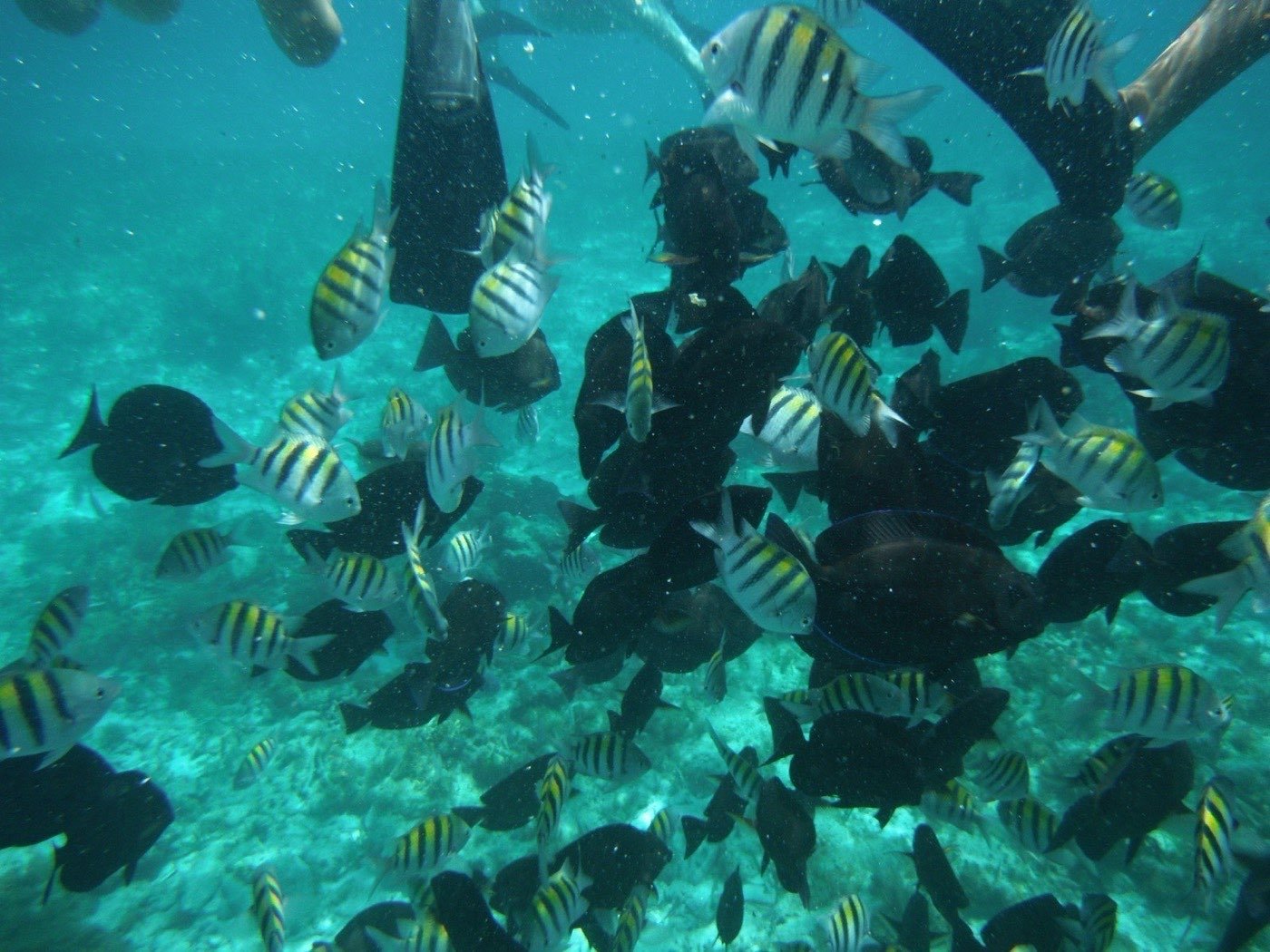
Some species are year-round residents: parrotfish, sergeant majors, snapper, the bottlenose dolphin pods that live in the Hotel Zone–Isla Mujeres corridor, nurse sharks, occasional reef sharks at deeper sites. Others are seasonal aggregators: whale sharks in summer, sailfish in winter, eagle rays in spring. Others are nesters with strict legal protection: the four sea-turtle species that come ashore between April and October. Mexico tracks turtle nesting via NOM-162-SEMARNAT and the CONANP turtle programme; the international science is collated by the State of the World's Sea Turtles network.
For an even-more-detailed deep dive on the headline species, our 2026 whale-shark season guide and whale-shark tour etiquette guide cover the summer star attraction; this article fills in the rest of the year.
January–March: sailfish blitz and the calm-water snorkel window
Winter in Cancún is the most underrated marine season. The cold fronts ("Nortes") push north-east wind, but between fronts the offshore water is the cleanest of the year — visibility on reef snorkels regularly hits the upper end of the 20–25 m range. And offshore, the most spectacular wildlife event in the Caribbean is happening: the Atlantic sailfish (Istiophorus albicans) blitz.
The sailfish phenomenon
From roughly January to mid-March, packs of 10–40 sailfish work baitballs of Spanish sardines 20–40 nautical miles offshore from Isla Mujeres, herding the bait to the surface and feeding cooperatively. For experienced freedivers and snorkelers, this is the only place on Earth where you can reliably get in the water with billfish in feeding mode. Trips are full-day, weather-dependent, expensive ($300–500 USD per person), and most operators cap group size at 4. It is not a casual activity — but for serious wildlife snorkelers it is the headline event of the year.
What reef snorkelers see in winter
- Resident reef fish — parrotfish, snapper, grunts, sergeant majors, blue tang, angelfish. Same census as the rest of the year, but in clearer water.
- Eagle rays begin to show in late February on reef edges (Manchones, El Meco) ahead of their spring aggregation peak.
- Bottlenose dolphins — resident pods are visible from the boat between dives most days.
- Loggerhead turtles are present year-round; sightings on reef snorkels happen but are less predictable than green/hawksbill.
March–May: eagle rays, spring snorkel sweet spot, turtle nesting begins
Spring is the calmest, clearest, most settled stretch of the snorkel year — and for many marine-fauna fans the best three months on the calendar. The Nortes wind down in late March, the summer hurricane season hasn't started, water temperature climbs from 25 to 28 °C, and reef visibility runs 15–25 m on most days.
Spotted eagle rays
The spotted eagle ray (Aetobatus narinari) is technically present year-round but forms aggregations of 10–30+ individuals between March and early May at the deeper edges of Manchones, El Meco and some MUSA sectors. The aggregations are thought to be linked to mating behaviour. Snorkelers on the surface often spot pairs or trios cruising the reef edge in formation; from above, the diamond silhouette is unmistakable. Eagle rays are listed as Endangered by the IUCN Red List, so observation distance is 3 m minimum, no chasing, no flash photography.
Turtle nesting season opens
The Caribbean coast's turtle nesting season opens in late April for green turtles (Chelonia mydas) and runs through October. Hawksbills (Eretmochelys imbricata) start nesting in May. Nesting beaches in the Cancún area are CONANP-protected; the most observable site for tourists is Isla Mujeres' east beaches and the long stretch from Puerto Morelos south. The legal observation framework is NOM-162-SEMARNAT plus park-specific protocols. For snorkelers in the water, this is the start of the season when turtles are visible feeding at Manchones during the day and nesting at night on protected beaches.
For the parallel turtle-snorkel destination on the Riviera Maya, our Akumal turtle snorkel rules and season guide covers the gold-standard observation site.
May–September: whale shark season + the warm-water peak
The headline summer event in Cancún marine life is the whale shark (Rhincodon typus) aggregation north-east of Isla Mujeres, in two zones called "La Afuera" (the deeper offshore zone) and "Cabo Catoche" (the shallower coastal zone). Tours run May 15 to September 15 by law — a CONANP-regulated season inside the federally decreed Reserva de la Biosfera Tiburón Ballena.
Whale-shark numbers and peak window
- May 15 → mid-June: opening days. Sharks present but numbers building; sea state often calmer.
- Late June → mid-August: peak aggregation. Some days bring 100+ individuals to a single feeding zone.
- Late August → September 15: tail of the season. Numbers declining; hurricane risk highest.
Whale sharks are classified as Endangered on the IUCN Red List. CONANP regulates tours strictly: snorkel-only (no diving, no fins for some operators), 2 swimmers per shark at a time, certified permitted operators only, mandatory life vest, 1 m minimum distance, no touching. Read the full etiquette guide at our whale-shark tour etiquette.
Other summer species
- Green turtle nesting peaks June–August on Caribbean beaches.
- Loggerhead turtle nesting peaks May–July.
- Cobia, mahi-mahi, dorado migrate through offshore — relevant for sport-fish trips, occasional reef sightings.
- Bull sharks in deeper water; rare on reef snorkels but seasonal residents.
August–October: mantas, hurricanes, sargassum and the shoulder weather
Late summer through autumn is the trickiest part of the year for marine-life planning in Cancún. The Atlantic hurricane season peaks September–October per NHC, sargassum (pelagic algae) influx is at its highest, and water visibility is more variable. But there are also unique opportunities.
Manta rays
The oceanic manta ray (Mobula birostris) is a less-predictable visitor than the whale shark but does appear on offshore aggregation sites, particularly August through October. Sightings are not bookable as a dedicated trip the way whale sharks are; manta encounters happen as a bonus on whale-shark-season offshore trips or on offshore reef dives. The species is Vulnerable on the IUCN Red List.
Turtle hatching
Turtle eggs laid in April–June begin hatching in July–October, and protected beaches in the Cancún–Tulum corridor host nighttime hatchling releases organised by CONANP-licensed turtle camps. These are public events on many Caribbean beaches and are one of the best low-effort wildlife moments of the year. Stick to organised releases — picking up hatchlings on a regular beach is illegal under NOM-162-SEMARNAT.
Sargassum reality
The sargassum belt influx, monitored by NOAA and University of South Florida satellite data, peaks May–October. It affects beach landings more than offshore snorkel sites — Manchones and MUSA generally stay clean because the prevailing current sweeps around the island. Punta Nizuc near the Hotel Zone gets hit harder. Operators with offshore-only itineraries are the workaround in heavy-sargassum years.
November–December: the calm-water rebound
November is the underrated month. Hurricane season officially closes November 30. Water temperature has dropped to 26 °C, sargassum subsides, and the first Nortes haven't yet arrived in force. Reef visibility is excellent, crowds are at their lowest (between Spring Break and Christmas), and resident reef fauna is in steady year-round mode.
December starts to see the first big Nortes, but between fronts the snorkel days are world-class. This is also the start of the next sailfish season — bait schools start aggregating offshore in late December ahead of the January peak.
The 2026 marine-life calendar — month by month
Numbers below are operational windows used by Cancún operators, cross-checked against CONANP season documentation, IUCN species data, and Healthy Reefs Initiative ecological monitoring.
| Month | Headline species | Water °C | Conditions | Best trip |
|---|---|---|---|---|
| Jan | Sailfish (offshore), reef fish | 25–26 | Nortes between calm days | Sailfish or reef in calm window |
| Feb | Sailfish peak, early eagle rays | 25–26 | Nortes between calm days | Sailfish trip from Isla Mujeres |
| Mar | Eagle ray aggregations begin | 26 | Settling | Reef snorkel + sailfish add-on |
| Apr | Eagle ray peak, green turtle nesting starts | 27 | Calm, clear | Manchones + MUSA combo |
| May | Hawksbill nesting, whale shark season opens May 15 | 27–28 | Calm | Whale shark opening week |
| Jun | Whale shark numbers build, loggerhead peak | 28 | Hot, humid | Whale shark trip |
| Jul | Whale shark peak, green turtle peak | 28–29 | Hot, possible storms | Whale shark + reef |
| Aug | Whale shark peak, occasional manta | 29 | Sargassum risk | Whale shark offshore |
| Sep | Whale shark closes Sep 15, turtle hatching, mantas | 28–29 | Hurricane peak | Final whale shark window |
| Oct | Turtle hatching, mantas, reef | 28 | Variable | Reef snorkel + hatching night |
| Nov | Resident reef life, settled water | 27 | Sweet spot | Reef snorkel ranking tour |
| Dec | Sailfish baitballs forming offshore | 26 | Nortes start | Reef in calm windows |
Pick the right month for the species you want to see. See Cancún snorkeling tours →
Year-round residents — what you'll always see
Independent of season, certain species are reliable on any Cancún reef snorkel day.
- Parrotfish (multiple species: stoplight, rainbow, queen) — keystone reef grazers.
- Sergeant majors, blue tang, surgeonfish — schooling species visible at all four reef sites.
- Yellowtail snapper, French grunt, schoolmaster — patrolling the deeper reef edge.
- Bottlenose dolphins — resident pods in the Cancún Bay corridor.
- Nurse sharks — under ledges, common at El Meco and Manchones.
- Southern stingrays — in sand patches between coral.
- Sea turtles — present every month, but nesting season Apr–Oct is when sightings peak.
For the parallel calendar on the Riviera Maya, our Riviera Maya reef snorkel detail guide covers Akumal, Yal-Ku and Xpu-Ha species lists.
Booking by species — what to target in 2026
- Want sea turtles? April–October. Manchones reef snorkel or, for higher probability, an Akumal turtle snorkel.
- Want eagle rays? March–May. Deeper Manchones edges or El Meco.
- Want sailfish? January–March. Dedicated offshore freedive trip.
- Want whale sharks? May 15–September 15. Mid-July to mid-August for peak numbers.
- Want mantas? August–October on offshore trips (lucky-bonus, not bookable).
- Want best general reef snorkel? March–May or November.
For the dive-vs-snorkel framing of any of these encounters, our Discovery dive vs snorkel guide walks through what you can and can't do without certification.
Frequently asked questions
What month should I visit Cancún for snorkeling?
For general best reef conditions, April or November — calm water, good visibility, no hurricanes, low crowds. For whale sharks specifically, July–August. For sailfish, February. For eagle rays, April. There is no bad month, but each month favours different species and weather profiles.
Is the sargassum really that bad in summer?
It depends on the year. Sargassum belt influx, monitored by NOAA / USF satellite, peaks May–October. It affects beach landings primarily — offshore snorkel sites like Manchones and MUSA generally stay clean because the prevailing currents sweep around the island. Punta Nizuc near the Hotel Zone is hit harder. If your trip is sargassum-sensitive, target offshore operators with deep-water snorkel itineraries.
Can I see a whale shark in October?
By Mexican law, no. The CONANP-regulated whale-shark snorkel season ends September 15. Outside the season, the animals have moved off to other parts of the Caribbean / Gulf and tours do not run. Anyone offering "whale shark tours" in October is operating outside the law and is not insurable. See our whale shark 2026 season guide.
Are turtle hatchling releases organised events?
Yes — and you should only attend an organised release. CONANP-licensed turtle camps along the Caribbean coast run nighttime hatchling releases (July–October) on public beaches with rangers present. Picking up hatchlings on a regular beach without authorisation is illegal under NOM-162-SEMARNAT and the IUCN-listed species protections.
What about whales (humpbacks)?
Humpback whales are present in the broader Caribbean but their main Mexican aggregation is the Pacific (Banderas Bay, Cabo) rather than the Caribbean. Sightings in Cancún waters are very rare. The mainstay large-fauna species in Cancún are whale shark, sailfish, eagle ray, manta and sea turtle.
Plan a 2026 marine-life trip
Tell us which species you want to see — we match dates, sites and operators.