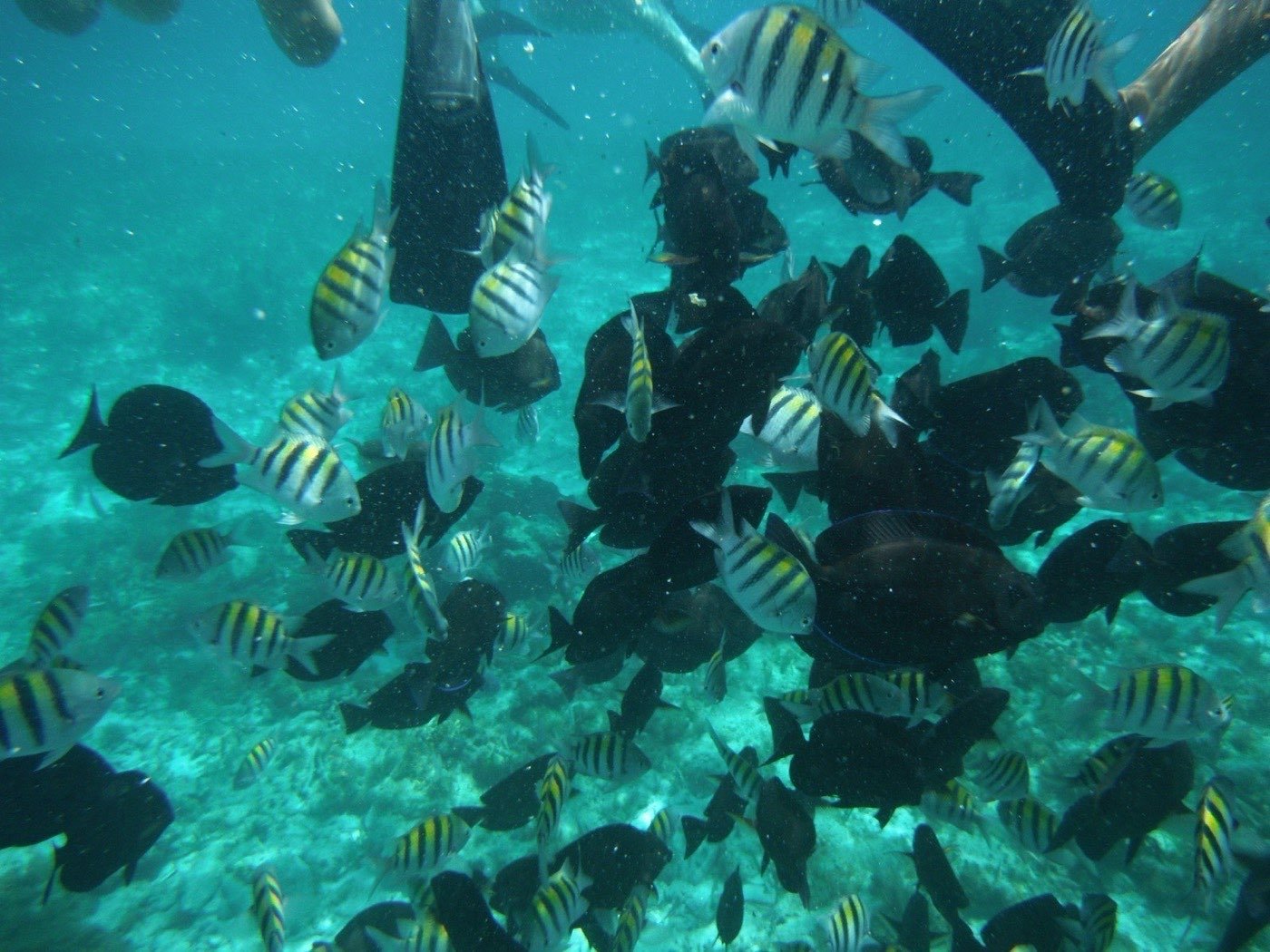
🔎 TL;DR
- A successful family snorkel day with kids ages 6–12 is a half-day, not a full day. Aim for 4 hours total, with no more than 90 minutes total time in the water.
- Manchones Reef (between Cancún and Isla Mujeres) is the best site for this age range — shallow, calm, sea turtles, lifejacket-friendly. Skip Punta Nizuc with kids on busy days.
- The plan: 8:00 am pickup → 9:00 am dockside briefing → 9:30 am water → 10:30 am back on boat → 11:30 am beach club lunch → 1:00 pm drop-off.
- Kid-sized snorkel gear (mask, snorkel, fins, vest) is non-negotiable. Adult-sized mask leaks; kid is miserable; trip is over.
- Mandatory lifejacket for under-12s on most CONANP-permitted operators. Brief the kid on the buddy rule before the boat.
- Pre-trip swim warmup at the hotel pool the day before is the single biggest predictor of a successful snorkel for a 6–8 year old.
Why half-day for the 6–12 age range
The reality of snorkeling with kids: the actual in-water time that delivers wonder is about 30 minutes per stop. Beyond that, kids get cold, get hungry, get bored, get water in their mask one too many times, and the trip turns into a debrief about the broken trip rather than the magical trip. A full-day 8-hour snorkel safari is overkill for a 6-year-old and only marginally more useful for a 10-year-old.
The right format is a half-day with one or two snorkel stops, a beach club lunch, and a drop-off back at the hotel by mid-afternoon. This format works at Manchones reef on the Cancún–Isla Mujeres corridor and uses the same CONANP-licensed operators that run the full-day adult trips, just with a kid-friendly itinerary.
For the deeper site selection question, our Cancún snorkel sites ranked guide walks through all four main sites. The condensed answer for families: Manchones for 6–10, Manchones or MUSA Salón Nizuc for 10–12.
The hour-by-hour family plan
The day before — set up for success
- 4 pm: 30-minute mask + snorkel practice in the hotel pool. Kid wears the mask, breathes through the snorkel, floats face-down, learns to clear water from the snorkel. This single hour saves a stressful boat-side moment the next day.
- 7 pm: Sunscreen check. Confirm the family bottle is mineral / reef-safe per our reef-safe sunscreen guide. Pack rash guards in the bag.
- 9 pm: Kids in bed by 9. Early morning departure works only with rested kids.
Day of — the 4-hour window
- 7:00 am — wake up, breakfast. Light breakfast at the hotel — pancakes / fruit / cereal. Skip the heavy buffet. Kids snorkel poorly on a full stomach.
- 7:45 am — gear check. Swimsuits, rash guards, hats, sunscreen, towel, change of clothes, snacks, water bottles. Apply mineral sunscreen now (20 minutes before sun exposure starts).
- 8:00 am — operator pickup. Most CONANP-licensed small-group operators offer free hotel pickup in the Hotel Zone. 15–30 min drive to the marina depending on hotel location.
- 8:45 am — marina arrival. Bathroom break, snack if needed, kids meet the boat crew, life vests get fitted.
- 9:00 am — dockside briefing. The captain or guide explains the route, the rules (no touching coral / fish, listen to guide signals, stay with the group), gear use, and the buddy-system. This is where kids get the script for the day.
- 9:15 am — boat departs. 35-minute ride to Manchones. Kids on the bow with parents; let them feel the wind and watch for dolphins (resident pods often appear in the corridor).
- 9:50 am — first snorkel stop (Manchones). Mooring buoy at the reef. Kids get fins on standing on the swim platform, jump in (with vest), guide leads to the inner reef. 30 minutes in the water.
- 10:25 am — back on boat. Towel, water, snack (granola bar / fruit). Kids talk about what they saw. Captain repositions to a second mooring or a calm bay.
- 10:45 am — second short stop (optional). Some operators include a 20-minute second swim at a sandy bay or shallower reef section. For 6–7 year olds, skip this — they're done. For 9–12 year olds, this is gold.
- 11:30 am — boat returns to marina or beach club. Kids change out of wet rash guards (bathroom at marina or beach club).
- 11:45 am — beach club lunch. Pasta, quesadillas, fries, simple kid-friendly food. Avoid the seafood spread — wet kids + complex food = mess. Plenty of water.
- 1:00 pm — operator drop-off at hotel. Kids are tired, fed, sunny, and have a story for the rest of the day.
Age-by-age fitness and what to expect
Ages 6–7
This is the youngest age range where structured reef snorkel really works. Mandatory vest, mandatory pool warmup the day before, mandatory child-sized mask (an adult mask leaks; an unhappy 6-year-old will not recover). Stay close (within arm's reach) the whole time in the water. 20–30 minutes is the maximum useful in-water session. The wonder-to-stress ratio works when expectations are kept short.
Ages 8–10
The sweet spot. Most kids in this range can free-dive a metre or two if they want, follow the guide independently within visual distance, and stay in the water for 30–40 minutes. They'll come out with vivid memories of specific fish — "the blue one!" — and want to do it again.
Ages 11–12
Effectively adult-level capable in the water, with kid-sized gear comfort. Can do both snorkel stops, can handle MUSA Salón Nizuc (4 m, sculptures), can free-dive comfortably, can use a GoPro. For this age, a second trip later in the week to a different site is a great upgrade — Manchones + MUSA combo works.
Book a family-formatted half-day snorkel. See family snorkel tours →
Kid-sized gear — what actually matters
The single biggest predictor of a successful kid snorkel is whether the mask and snorkel fit. An adult-sized mask leaks at the temples on a child's face, regardless of how tight the strap is. The child can't see, gets water in the eyes, panics, and the trip is functionally over.
Gear checklist for a 6–12 year old
- Child-sized mask — smaller skirt, narrower forehead. Reputable operators stock these in 3+ sizes.
- Child-sized snorkel — shorter barrel, smaller mouthpiece. Adult mouthpieces tire small jaws.
- Child-sized fins — flexible blade, easy on/off straps. Hard adult fins blister kid feet.
- Properly fitted vest — sized to the child's chest, with crotch strap so it can't ride up over their head if they panic.
- UPF 50+ rash guard, long-sleeve — replaces 80% of sunscreen on the body. See our reef-safe sunscreen rules.
- UPF leggings or rash shorts — same logic for legs.
- Hat for the boat ride.
Bring your own or rent on the boat?
If your kid snorkels regularly at home, bring their familiar mask and snorkel. If this is a one-off, the operator's child-sized gear is fine and well-maintained at reputable shops. Either way, verify the mask seal at the marina before the boat leaves the dock, not at the first snorkel stop.
What kids should know before they get in the water
A 5-minute parent briefing the night before, plus the operator's 10-minute briefing at the dock, sets every kid up for a smooth snorkel. The script:
- The mask creates a window. Breathe through the snorkel, not the nose. If water gets in, lift your head and clear it — it's not an emergency.
- The vest keeps you up. You can't sink with the vest on. Float face-down, look down.
- Don't touch the coral, the sculptures (at MUSA), or the fish. Coral can sting. The reef is alive. Hands off, fins off.
- Stay with the guide. The guide is your dive buddy. If you can't see the guide, surface and call out.
- If you see a turtle: stay still, watch from a distance, never block its path to the surface. Turtles are endangered (the IUCN Red List lists most Caribbean species as endangered or critically endangered).
- If you're scared or cold, signal the guide. Thumb-up means "back to the boat." This is normal and respected.
For older kids (11+), add: don't free-dive too deep, equalise the mask if you go down, watch for boat traffic on the surface.
Picking the right operator for a family day
The red/green flag framework for operators is the same as for adult trips — see Snorkeling Cancún — Beyond the Tours — but with extra weight on kid-readiness:
Family-friendly green flags
- Boats capped at 12–15 guests, with at least one guide per 6 guests when kids are aboard.
- Kid-sized gear available in 3+ sizes — ask explicitly when booking.
- Mooring-buoy access at Manchones (no anchor-drop on coral, faster water entry).
- Bilingual guide who can brief kids in their first language.
- PADI Dive Centre or equivalent credential — even on snorkel-only trips, PADI-affiliated shops follow insurance and safety standards.
- Flexible cancellation — if a kid wakes up sick, the trip reschedules without penalty.
- Beach club lunch included rather than buffet on a 100-passenger catamaran.
Family-unfriendly red flags
- 50+ passenger boats with DJs and open bar by 11 am. Not a kid environment.
- No kid-sized gear — "we have one size for everyone."
- No vest available or vest optional for under-12s.
- Itinerary that includes Cenote diving / cave snorkeling for kids under 8 — these are not kid-appropriate without specific certifications.
Weather backup plans
Cancún weather is mostly cooperative, but cold fronts ("Nortes") in December–March can shut down snorkel boats for 24 hours with sudden notice. Hurricane-season tropical storms (Jun–Nov per NHC) can do the same. Booking with flexible-reschedule operators is the family insurance policy.
If the boat is cancelled day-of
- Glass-bottom boat — see our snorkel vs glass-bottom comparison. These run in conditions snorkel boats can't.
- Aquarium / Interactive Aquarium Cancún — touch tanks, stingray feeding, indoors.
- Hotel snorkel pool / cenote day — many resort areas have a sheltered swim spot where kids can practice gear use.
- Reschedule to the next calm day — most reputable operators allow this without penalty.
Frequently asked questions
Can my 5-year-old come on a family snorkel?
Most CONANP-licensed operators set the minimum age at 5, but the practical floor for an enjoyable experience is closer to 6. A 5-year-old can technically wear a vest and float, but attention span and gear-fit issues usually make the trip stressful. If your 5-year-old has prior pool snorkel experience and is comfortable with a mask, ask the operator; if not, consider the glass-bottom boat option (covered in our comparison guide) until they're 6–7.
What if my kid panics in the water?
Common and recoverable. The vest keeps them up — there's no physical risk. Surface them, get them back to the boat, dry them off, talk it through. Many kids who panic on the first try succeed on the second after a calm break. The CONANP-aligned operators all train guides to handle this. The single biggest preventive measure is the pre-trip pool warmup the day before.
Will my kid see a sea turtle?
At Manchones reef, the probability is around 60% in season (April–October). Sightings are not guaranteed — that's wildlife. But Manchones is the highest-probability Cancún site for turtle encounters. For near-guaranteed turtle viewing, the Riviera Maya site at Akumal is the gold standard — see our Akumal turtle snorkel rules and season guide.
Is sargassum a problem for family snorkel?
It affects beach landings more than offshore reef sites. Manchones is far enough offshore that prevailing currents typically keep it clean. Beach club lunch venues can be more affected — ask the operator about their current lunch spot if sargassum is in the news. For deep-sargassum years (especially May–October), some operators move to longer-distance reefs to avoid the worst spots.
What about whale-shark tours for families?
Whale-shark snorkel tours (May 15–Sep 15) accept kids 5+ on most operators, but the experience is more demanding: open-water swimming, current, larger animals. For kids 6–10, the reef snorkel at Manchones is a better introduction. For 11+ confident swimmers, whale shark season can be a once-in-a-lifetime trip — see our 2026 whale shark guide and the etiquette guide.
Plan a family snorkel day in Cancún
Tell us ages, kid swim level and hotel — we match the right operator, site and timing.