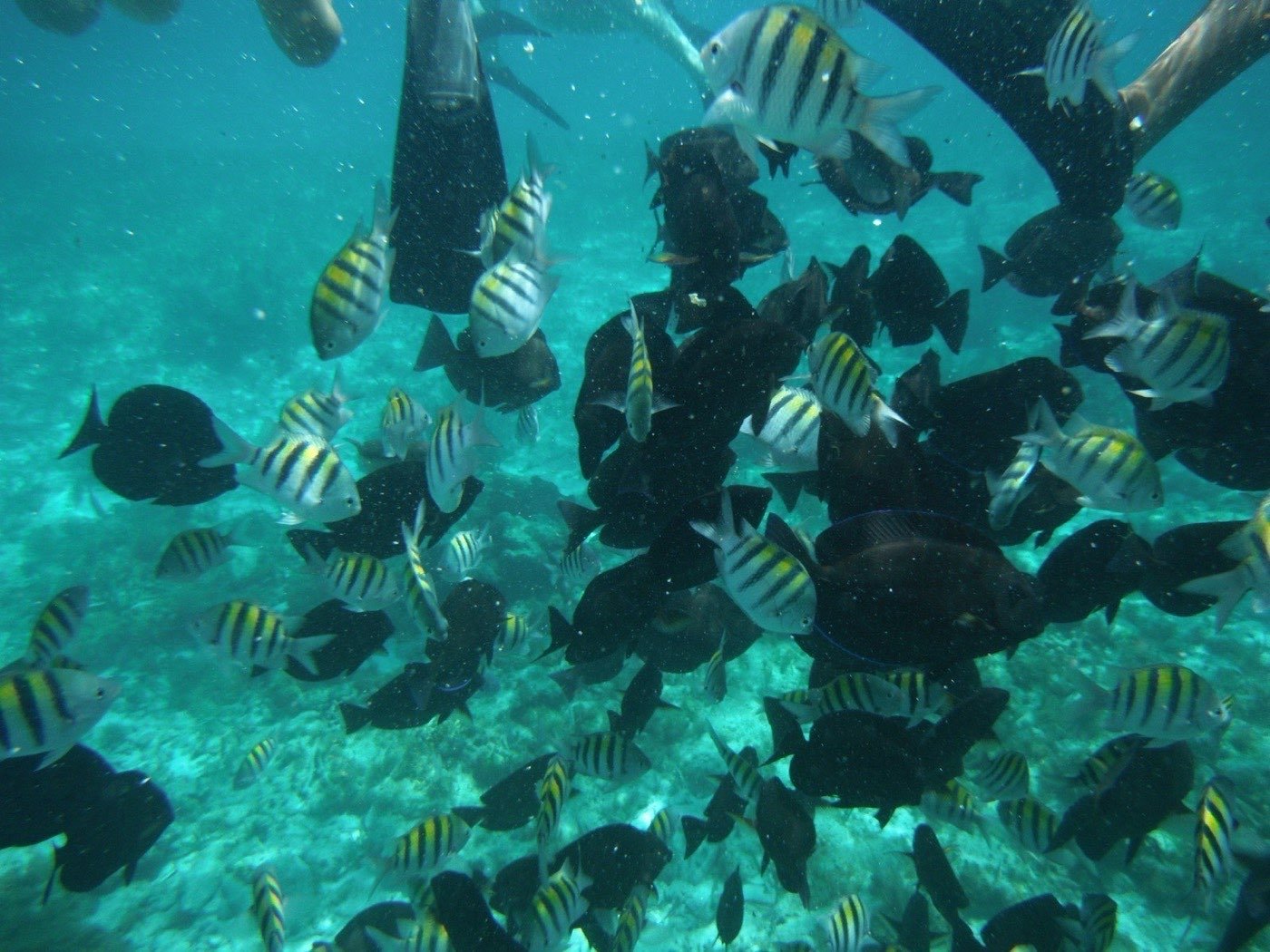
🔎 TL;DR
- The Riviera Maya reef sits inside federal protected areas administered by CONANP — rules are enforced, not just suggested.
- At Akumal Bay, snorkeling requires a licensed cooperative guide and a life vest. Solo entry is illegal.
- Only reef-safe sunscreen (no oxybenzone, no octinoxate) is allowed. Operators check bottles.
- Minimum distance from any turtle: 3 m. No touching, no chasing, no feeding.
- CONANP brigade inspections are real — fines for guests and operators run from MXN 5,000 to over MXN 50,000 depending on offense.
- Don't fight the rules — they're the reason the experience still exists.
Who CONANP is and why this matters
CONANP — Comisión Nacional de Áreas Naturales Protegidas is the Mexican federal agency that manages 226 designated natural protected areas covering roughly 11% of the country's land and marine territory. The Riviera Maya holds five of CONANP's flagship marine units: Parque Nacional Arrecife de Puerto Morelos, Refugio de Pesca Bahía de Akumal, Parque Nacional Tulum, the broader Mesoamerican Reef diving corridor, and — south of Tulum — the Sian Ka'an UNESCO Biosphere Reserve.
Inside each of these zones, what you can do as a snorkeler is regulated. The rules are a mix of federal Mexican law (NOM-059-SEMARNAT for protected species), CONANP-issued management plans for each unit, and site-specific cooperative agreements. The result is a layered set of rules that visitors find confusing — partly because each site has its own variations on top of the federal baseline.
This article cuts through that. We'll cover the rules that actually get enforced, the fines that actually get issued, and the things first-time visitors get wrong.
The baseline rules — apply everywhere
- No touching coral, fish, turtles, rays or any marine organism. Includes accidental brushes.
- 3 m minimum distance from any turtle. No swimming toward, following, or above.
- No feeding any marine animal. Includes bread, fish food, or scraps from a boat.
- No collecting shells, coral fragments, sand, sea fans, sea urchins. Even loose pieces on the sand belong to the protected area.
- Reef-safe sunscreen only. Active ingredient restrictions detailed below.
- No glass containers on regulated beaches.
- No drones over the marine park areas without a CONANP permit.
- No fishing or spearfishing inside park boundaries.
- Pack out all trash — and pick up other people's, where reasonable.
Site-specific rules — the variations that matter
| Site | Licensed guide | Life vest | Sunscreen check | Water-time cap | Group size | Special rules |
|---|---|---|---|---|---|---|
| Akumal Bay | Mandatory | Mandatory | Yes — bottles inspected | ~45 min | Max 6 / guide | 3 m from turtles, no fins on seagrass |
| Puerto Morelos Marine Park | Recommended (most ops require) | Recommended | Yes — operator-enforced | Tour-defined | 10–15 / boat | Designated snorkel buoys, no anchoring on reef |
| Xpu-Ha (offshore) | Operator-led | Recommended | Yes | Tour-defined | 10–12 / boat | Operator handles park-fee collection |
| Yal-ku Lagoon | Optional | Provided / rental | Yes — entry inspection | Lagoon hours | N/A | No fins (rocky shallows) |
| X'cacel sanctuary | None offered | N/A | Yes — beach check | Daylight only | N/A | Nesting closures May–Oct, no night access in season |
| Tulum hotel beach | None | None | Hotel-dependent | None | N/A | Night brigades, do not approach nests |
Akumal — the mandatory licensed-guide rule
Akumal is the strictest site on this coast and the one most likely to fine you for breaking the rules. Since 2016, accessing the Akumal Bay snorkel zone requires:
- A CONANP-licensed guide. The local cooperative (CESiAK / Akumal cooperative operators) holds the licenses. You cannot enter the protected zone with a friend who "knows the bay" — that friend needs a license.
- A life vest. The vest is mandatory because it keeps your fins horizontal and away from seagrass and turtles. People resist the vest if they're strong swimmers; the rule applies anyway.
- Group size of six. Max six guests per guide. Cooperative-enforced.
- ~45 minute water cap. Once the cycle ends, the next group enters. This is how the bay handles 800+ guests/day without crushing the turtles.
- 3 m distance from turtles. The guide indicates the approach line.
- No fins kicking on seagrass. Float, breaststroke, glide.
Fines for unlicensed guiding run in the MXN 20,000–60,000 range and have actually been issued. Guests caught entering without a licensed guide can also be fined and ejected. This isn't a soft rule.
Reef-safe sunscreen — what passes and what doesn't
The big one most travelers get wrong. Standard supermarket sunscreens (Banana Boat, Coppertone, Hawaiian Tropic, most Neutrogena lines) contain oxybenzone and/or octinoxate. Both are documented as toxic to coral reproduction and turtle development. NOAA's Ocean Service publishes the science backing this — even very low concentrations damage coral larvae and bleach symbiotic algae.
What's allowed at CONANP sites:
- Sunscreens with active ingredients limited to non-nano zinc oxide or non-nano titanium dioxide (mineral / physical sunscreens).
- Brands operators recognize as compliant: Stream2Sea, Raw Elements, Badger, Thinksport, All Good, ATTITUDE, Suntegrity, Manda. These are sold in some Riviera Maya pharmacies but at marked-up prices — buy at home before flying.
What is not allowed:
- Any sunscreen with oxybenzone (BP-3), octinoxate (octyl methoxycinnamate), octocrylene, 4-MBC, homosalate or parabens.
- "Reef-friendly" marketing on bottles that still contain banned actives. Read the label, not the front.
- Spray sunscreens — even mineral. The propellant is the problem.
Akumal cooperative and Puerto Morelos park entrances inspect bottles. Non-compliant bottles get held at the entrance. You don't get fined for owning the wrong sunscreen — you get told to wear long sleeves instead and leave the bottle in your bag.
Snorkel ethically with a licensed operator. Book Akumal turtle snorkel →
Turtle interactions — what 3 m actually means
Federal Mexican law (NOM-059-SEMARNAT) lists all four Riviera Maya sea turtle species as protected — green, loggerhead, hawksbill and leatherback. The IUCN lists hawksbills as critically endangered (IUCN Red List); greens as endangered; loggerheads and leatherbacks as vulnerable. The 3 m minimum distance rule isn't arbitrary — it's based on observed stress thresholds in tagged animals.
What this means in practice:
- Don't swim toward a turtle. Float, let it come to you, or pass it laterally at 3 m.
- Don't swim above a turtle. Especially when it's surfacing to breathe — you block the breathing path.
- Don't follow. If it swims away, let it.
- Don't form a circle. Group dynamics ("everyone has to see it") are the worst stressor — turtles can't escape.
- Don't touch, ever. Even gentle. A turtle's shell isn't dead bone — it's living tissue with nerve endings.
- No flash photography. Disorients the animal.
CONANP and partner orgs like The State of the World's Sea Turtles document harassment as the third-largest threat to Caribbean turtle populations after bycatch and habitat loss. Following the rules is the single most important thing snorkelers can do.
CONANP brigade inspections — what they look like
You'll see CONANP rangers in uniform (typically tan/khaki with a CONANP patch) on the beach at Akumal, on patrol boats at Puerto Morelos, and walking nesting beaches at X'cacel and Tulum after dark. Their job is real enforcement. What they check:
- That you entered the protected zone with a licensed guide.
- That you're wearing your mandated equipment (vest in Akumal).
- Sunscreen at entry points.
- Group size and operator credentials.
- That night-beach visitors during nesting season aren't disturbing nests.
- No collecting (shells, sand, etc.).
- No fishing inside park lines.
Inspections at Akumal happen daily in peak season. If your guide has credentials and the group is following rules, the interaction is a 30-second check. If something's off, the brigade can fine the operator and order the group out of the water.
Fines — what people actually get charged
Fines under NOM-059 and CONANP management plans are calculated in UMAs (Unidad de Medida y Actualización — a Mexican fine-calculation unit, around MXN 113 in 2026). Real-world ranges:
- Unlicensed guiding: MXN 20,000–60,000+ plus operator license loss.
- Touching a turtle: MXN 5,000–15,000, can rise if intent/repeat.
- Collecting protected material (shells, sand, coral): MXN 2,000–10,000.
- Drone without permit: MXN 5,000+.
- Spearfishing inside park: MXN 15,000+ and gear confiscation.
- Approaching a turtle nest at night during nesting season: MXN 5,000–20,000.
Operators carry their own insurance. Guests don't. If you get fined personally, you pay personally — and the fine has to be paid before leaving the country in some cases.
How to verify your operator is licensed
- Ask to see the CONANP authorization. Real operators carry a laminated copy.
- Check for fixed prices. Licensed cooperatives at Akumal charge published rates; "negotiate" pricing on the beach is a red flag.
- Designated entry points. Akumal has a specific entry channel. Unlicensed "guides" will take you in via undesignated points.
- Branded gear and uniforms. Cooperatives identify themselves clearly.
- Group cap of six. If a guide claims to take 10 people into Akumal, they're unlicensed.
- Insistence on the vest. No vest, no license.
If anything is off, walk away. There are licensed operators waiting two minutes away.
What about PADI-affiliated dive operators?
Many of the same operators that run Akumal turtle snorkels also run Puerto Morelos and Cozumel reef dives under PADI affiliation. PADI's environmental program (Project AWARE) overlaps significantly with CONANP rules — no-touch, no-collect, no-chase, neutral-buoyancy discipline. A PADI-affiliated operator running a snorkel trip will be operating under the same conservation framework. It's a useful sign of operator quality, though not a CONANP license substitute.
Quick-reference cheat sheet
- Reef-safe mineral sunscreen, no oxybenzone or octinoxate. Buy before you fly.
- Long-sleeve UPF rash guard — better than sunscreen for back/shoulder protection.
- Cash for park fees and tips.
- Don't touch anything. Ever.
- Stay 3 m from turtles. Always.
- Don't follow, chase, or surround marine animals.
- Take photos, leave shells.
- Use a licensed operator at Akumal — period.
Related guides on AquaCore
Frequently asked questions
What sunscreen brands actually pass CONANP inspection?
Stream2Sea, Raw Elements, Badger, Thinksport, All Good, ATTITUDE, Suntegrity and Manda are the brands operators recognize as compliant. Active ingredients must be limited to non-nano zinc oxide or non-nano titanium dioxide. Buy in your home country before flying — local supply is thin and expensive. Source: NOAA reef-safe sunscreen guidance.
Can I legally snorkel at Akumal without a guide?
No. Since 2016, the Akumal Bay snorkel zone is regulated under a CONANP refuge designation; entry requires a licensed cooperative guide and a life vest. Fines apply to both unlicensed guides and individual guests caught inside the zone without authorization.
What happens if I accidentally touch a turtle?
If genuinely accidental and you immediately back off, your guide will issue a verbal correction. A CONANP brigade observing repeated or deliberate contact can fine you on the spot (MXN 5,000–15,000 typical) and order your group out of the water. Operators take this seriously because it threatens their own license.
Are drones allowed over the reef?
Not without a CONANP permit. The Mexican federal protected areas system requires advance authorization for any commercial or recreational drone use over marine parks. Casual hobbyist drone footage is the most common violation and CONANP does seize equipment.
Why is the life vest mandatory at Akumal?
Two reasons. First, it keeps your fins horizontal so they don't kick the seagrass beds, which are the turtles' food. Second, it floats you above the turtles so you can't accidentally descend onto an animal. Strong swimmers don't need the buoyancy but the rule applies to everyone — it's about behavior, not safety.
Choose a licensed operator. Conservation works when we follow the rules. Book Riviera Maya reef snorkel →