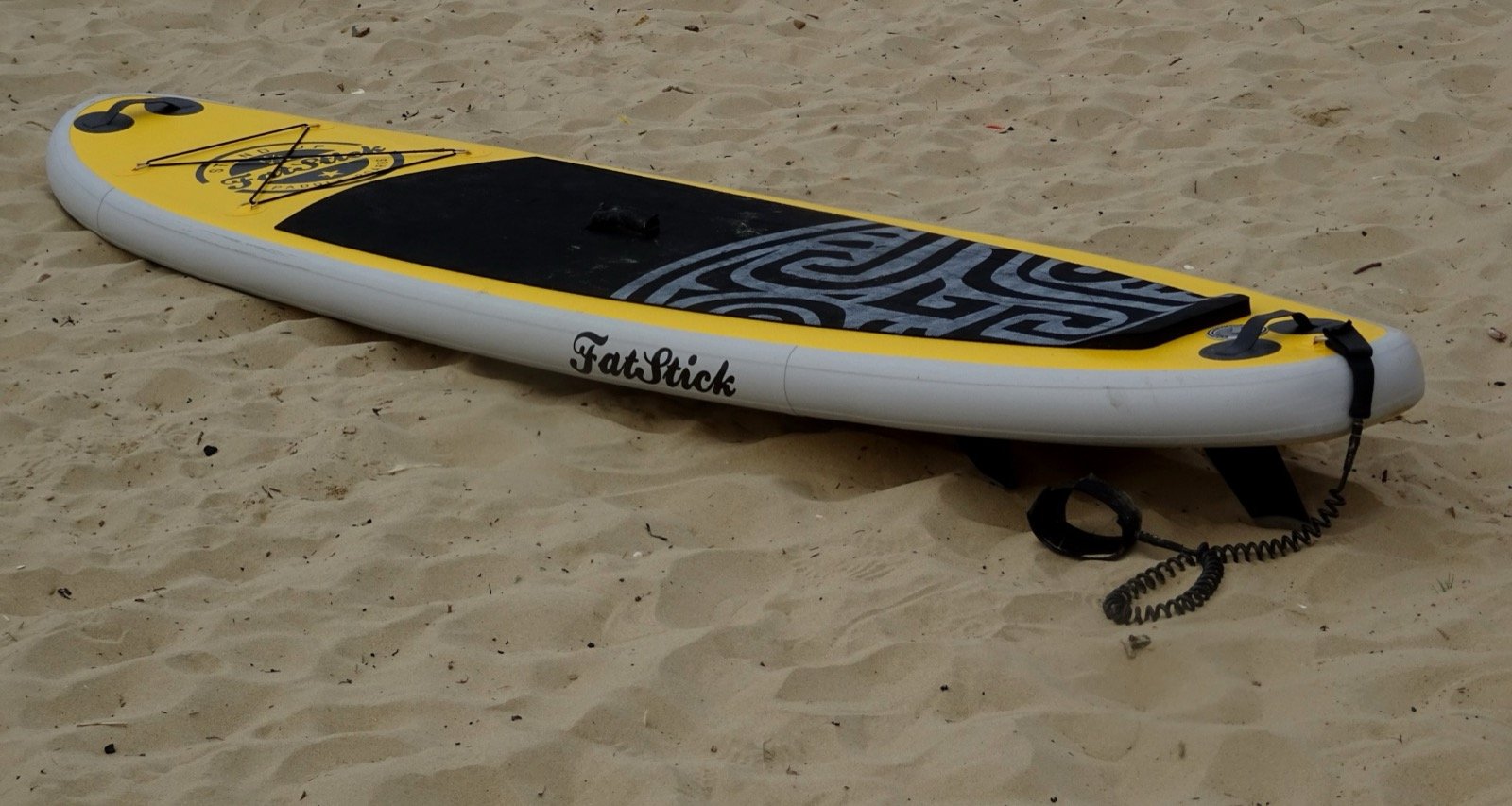
🔎 TL;DR
- Yucatán Gulf SUP looks easy because the water is warm and shallow — but the Gulf has real diurnal tides (0.5–0.9 m range) that produce real currents in mangrove channels and harbour inlets. Most Caribbean SUP rentals do not prepare you for this.
- The three current types you actually meet: tide flush in narrow channels, wind-driven drift on open coast, and inlet jet at harbour mouths (Yucalpetén).
- Self-rescue: the SUP-specific version is "lay down, hand-paddle back, kneel up if you can," not the kayak's roll-up.
- Always wear a board leash on the calf or ankle — losing the board means losing your flotation.
- Phone in waterproof pouch + inflatable PFD = standard kit for any out-of-Malecón paddle.
- Tide tables: SEMAR Mareografía Progreso station, free.
Why this matters more in Yucatán than in the Caribbean
Most paddleboard renters arriving in Yucatán have one previous SUP experience: a Caribbean rental in Cancún, Tulum, or somewhere similar. Caribbean SUP is forgiving in a very specific way — the tides are almost flat (3–10 cm range in many spots), the currents are weak, the wind is the dominant variable, and the water is deep enough that you do not have to think about the bottom. The Yucatán Gulf coast is different. The tides are real (0.5–0.9 m range, occasionally 1.0 m per NOAA Ocean Service), the bottom is shallow enough that tide changes the water in meaningful ways, and the geography of mangrove channels and harbour inlets concentrates current into specific corridors that a SUP rider needs to understand.
None of this makes Yucatán SUP dangerous. It makes Yucatán SUP different, and the difference is what catches Caribbean-trained paddlers off guard. This article runs through the specific patterns: when tides matter, where currents form, what to do when you get caught out, and how to self-rescue on a SUP (which is not the same as self-rescue on a kayak). For the seasonal context see our month-by-month SUP guide; for the routes themselves see the four classic Progreso routes and the hidden routes piece.
The Gulf tide — actual numbers and what they mean
The Yucatán Gulf coast tide is mostly diurnal, meaning one main high and one main low per day, with a smaller secondary cycle nested inside. The range averages 0.5–0.9 m on neap (quarter-moon) cycles, expanding to 0.8–1.0 m on spring (new/full moon) cycles. NOAA Ocean Service publishes the Gulf shelf data; SEMAR Mareografía publishes the Progreso station data, in Spanish, free, refreshed hourly.
What 0.7 m of tide actually does:
- Open Malecón beach: the waterline moves 5–10 m horizontally on a flat slope; mostly invisible to a paddler.
- Chelem mangrove channels: water enters or drains the lagoon system; current builds to 0.5–1.0 knots in narrow channels, occasionally 1.5 kn on spring tides.
- Yucalpetén harbour inlet: water funnels through the breakwater channel; current can reach 2–3 knots on a hard outgoing tide.
- Telchac ría: the channel between the estuary and the open Gulf flushes with the tide; current 0.5–1.5 kn.
- Sisal coast: minor longshore current driven by tide-plus-wind; usually under 0.5 kn but noticeable.
A SUP rider can paddle against a 1 knot current comfortably for 30 min, against 2 knots only briefly, and not at all against 3+ knots. So at Yucalpetén harbour mouth on a strong outgoing tide, you do not cross the inlet — you wait. Plan with the tide.
Wind-driven currents — when wind matters more than tide
On the open Malecón and the Chuburná coast, the wind matters more than the tide for SUP. A 15-knot easterly trade wind pushes the surface water westward at roughly 2–3% of wind speed (0.3–0.5 knots) as Ekman drift. This is the same physics that drives all open-ocean surface currents; in the shallow Gulf it manifests as a subtle but real westward drag on anything floating, including your board.
What this means: if you launch from the Malecón centre and paddle east toward Chicxulub, you are working against the current. If you turn around and paddle west toward Yucalpetén, the current helps. Plan the out-and-back so you fight the current going out and ride it home. If you are tired at the end of the paddle, you want the easy direction.
The corollary: if you are floating without paddling (e.g., taking photos or just resting), the current will move you. Half a knot is half a nautical mile per hour, just under 1 km/h. In 20 minutes of inattention you can drift 300 m. This matters less near shore in shallow water, more if you have drifted into deeper coastal water on a longer paddle.
Inlet jets and harbour mouths — the high-current zones
The single most concentrated current zone in the Progreso area is the Yucalpetén harbour inlet — a 200 m channel between two breakwaters where the harbour basin connects to the open Gulf. On a strong outgoing tide (high water draining out to low), the channel can run 2–3 knots. On a strong incoming tide it reverses. Slack water (1–2 hours either side of high or low) is the only safe window for SUP traversing.
If you are paddling inside the Yucalpetén harbour basin (a great Norte-day route), do not paddle to the inlet mouth. Stay inside the breakwaters. The inlet zone is also working shipping water for the local panga fleet and occasional Mexican navy patrol; you do not belong in the lane.
Similar dynamics apply at Telchac ría mouth, Chelem-Yucalpetén connection points, and the Celestún ría mouth (much further west). Each has tide-driven currents at the mouth and calmer water inside. Local guides know the windows; if you are paddling solo, check the tide table and plan around slack water.
SUP self-rescue — different from kayak
The kayak self-rescue you learned in a flat-water course (paddle float, wet exit, paddle scull) does not apply to a SUP. The SUP self-rescue is simpler in principle but requires different reflexes:
- If you fall: hold onto the paddle. Reach for the board (your leash should keep it within 2 m of you).
- If you cannot stand back up: lay down on the board prone, paddle with your hands, treat it as a long surf-style swim back.
- If wind/current is pushing you offshore: kneel on the board (lower centre of gravity), paddle with the SUP paddle in a kayak stroke (one hand at the top of the shaft, one near the blade), grind upwind/upcurrent.
- If you are too tired to make it back: sit on the board, raise the paddle vertically as a signal, call 911 on your phone (it should be in a waterproof pouch on a deck leash).
- If the board flips upside down: right it by reaching across to the far rail and pulling.
The American Canoe Association SUP curriculum builds versions of these into Level 1 and Level 2 training. None of them is hard; all of them require muscle memory, which is why a 30-minute self-rescue practice on a calm day is worth doing before any long paddle.
The single most important detail: the board leash. A loose SUP in 15 knots of wind moves faster than a swimming human. If you lose the board, you lose your flotation, your transport home, and your visibility from shore. Calf or ankle leash, always.
Learn safe paddling habits on Yucatán's tide-driven shoreline — book a guided SUP intro that includes the safety brief. Book SUP Progreso →
The SUP-specific safety kit for Yucatán Gulf
What every paddler should have on the board for a Progreso paddle beyond the Malecón:
| Item | Why |
|---|---|
| Board leash (calf or ankle) | Keeps the board within 2 m if you fall |
| Inflatable PFD (waist belt) or foam vest | Mandatory practice for open-water paddles per ACA guidance |
| Phone in waterproof pouch, deck leash | 911 works on all Mexican networks |
| Whistle on PFD | Sound carries further than voice |
| 1.5–2 L water + electrolyte | Heat + sun + exertion add up fast |
| UPF 50 long-sleeve top | Sun protection + cooler-water comfort |
| Reef-safe sunscreen | Reapply every 90 min |
| Wide-brim hat with chin strap | Hat will not blow off in trade wind |
| Small dry bag with cash + ID | For emergency taxi/medical |
| Tide table for the day | Plan around slack water in channels |
The kit weighs under 2 kg total. None of it interferes with paddling. All of it makes the difference between a casual rental and an actual paddle plan.
Pre-paddle checklist — the 6 questions
- What is the wind forecast for the next 4 hours? If wind is forecast over 15 knots and rising, choose a sheltered route (Yucalpetén basin) or shorten the paddle.
- Where is the tide in its cycle? Avoid inlet crossings within 1.5 h of strong outgoing tide. Plan estuary paddles for the 1–2 h after low tide so you ride the incoming.
- Is today a cruise day? Check the Puerto de Progreso schedule; avoid the Malecón centre if yes.
- Does anyone on land know my plan? Operator, hotel desk, paddling buddy — give a launch time, route, expected return.
- Is the kit on the board? Leash, PFD, phone, whistle, water, sun protection. Six items, 30 seconds to verify.
- How am I feeling? Fatigue, dehydration, alcohol from last night — all of these reduce your safety margin. If you are not ready, shorten the route or skip the day.
Reading the water — observation skills
Specific things to watch for, by route:
- Open Malecón: look upwind. If you see whitecaps starting on the horizon, the wind is building — head back to shore. Trade-wind onset is roughly 10:30–11 AM in spring; the shift can be sudden.
- Yucalpetén harbour basin: watch for returning panga traffic in the channel. Stay on the south side of the basin, out of the central channel lane.
- Chelem mangrove channels: watch the water surface for current direction. Drifting leaves, foam lines and surface ripples all indicate flow direction. If the current is faster than your paddling speed, turn around.
- Chuburná village beach: watch for offshore-pulling rip-currents at the western end where the beach drops into deeper water. Stay east of the rocky outcrop.
- Telchac ría: the ría mouth has tidal flow; the inner ría is calm. If you cannot paddle out against the outgoing tide, wait it out at the inner ría — it will reverse in 4–6 hours.
- Sisal coast: watch for sargassum mats and old fishing-net debris on the bottom. Visibility is usually good (1–3 m) and bottom-reading skills help.
Reading the water is the unteachable skill. A good guide spends 30 seconds scanning surface conditions before launching every time, and that habit is what prevents 90% of paddle accidents. If you are paddling solo, learn the habit; if you are paddling with a guide, watch what they do.
If something goes wrong — escalation ladder
The right responses to common SUP problems:
- Drifting offshore in wind: kneel, paddle in kayak stroke, head perpendicular to the wind toward nearest land. Do not fight the wind directly — you will tire before you make ground.
- Caught in current you cannot paddle against: drift with it to where it weakens (typically inside an eddy or in shallower water), then paddle out.
- Cramp: sit on the board, hydrate, stretch the cramped muscle. Resume slowly.
- Lightning / approaching thunderstorm: head to shore immediately. Do not stay on the water during a thunderstorm under any circumstance.
- Tired to the point of unsafe: sit on the board, hydrate, eat, rest. Wait 15 min before continuing. Distance-paddling is a 4-hour-plus event for inexperienced paddlers; pace yourself.
- Emergency: 911 on the phone. SEMAR has a Coast Guard role and will coordinate marine rescue if needed.
Specific tide-related route recommendations
| Route | Best tide window | Avoid |
|---|---|---|
| Malecón out-and-back | Any | Spring low at noon (long walk to water) |
| Chicxulub jetty loop | Slack high or slack low | Strong outgoing through jetty gap |
| Chelem inner lagoon | 1–2 h after low (rising flow) | Spring low (grounded on flats) |
| Chuburná mangrove channels | 1–2 h after low | Strong outgoing (drains channels) |
| Telchac ría | 1–2 h after low | Crossing ría mouth at strong outgoing |
| Yucalpetén harbour basin | Any (inside breakwaters) | Approaching the inlet mouth |
| Sisal coast | Slack high preferred | Strong onshore wind days |
The principle: plan your paddle to start at low tide, go out, and return with the rising tide. Channels are most navigable in the 1–2 h window after low water, and the slack water either side of high tide is the safest crossing window for harbour inlets.
Frequently asked questions
Is the Gulf tide really 0.7 m? My Caribbean SUP was almost flat.
Yes. The Yucatán Gulf coast is in a different tidal regime than the Caribbean coast 200 km to the east. The Caribbean has very small tides (5–30 cm range typically) while the Gulf has meaningful diurnal tides (0.5–1.0 m range). The same paddler can be surprised at how much the water moves in Yucatán vs Tulum.
How do I know the slack tide window for a given day?
SEMAR Mareografía publishes hourly tide predictions for Progreso. Slack water is roughly 1.5–2 h either side of high or low. Your phone tide app (Tide Charts, Tides Near Me, etc.) will calculate it automatically.
Can I SUP in a Norte?
Only in the Yucalpetén harbour basin or the inner Chelem lagoon. Open coast and estuary mouths are unsafe in 20+ knot wind. Use the harbour as your Norte-day fallback.
Is a leash really necessary in waist-deep water?
Yes, because the moment you cannot touch bottom (past 200 m offshore at most launches), the leash is what keeps you connected to your flotation. Even in waist-deep water a strong wind can move the board faster than you can swim.
What if I do not speak Spanish and need help?
911 has English-language dispatcher capability in Yucatán. Your hotel or operator will have a Spanish-speaker who can relay. SEMAR and clinic personnel in Progreso and Mérida typically have basic English. Keep your operator number programmed.
Is sargassum a hazard on SUP?
More of a nuisance than a hazard. Floating mats of sargassum on the open Gulf can be paddled through (slower); they do not damage the board. The bigger sargassum issue is on the Caribbean side; Yucatán Gulf gets less.
SUP Progreso, safely
Get a proper Yucatán SUP safety briefing
Tell us your dates and your route plan — we run the brief, lend the kit, and ride the right tide window.