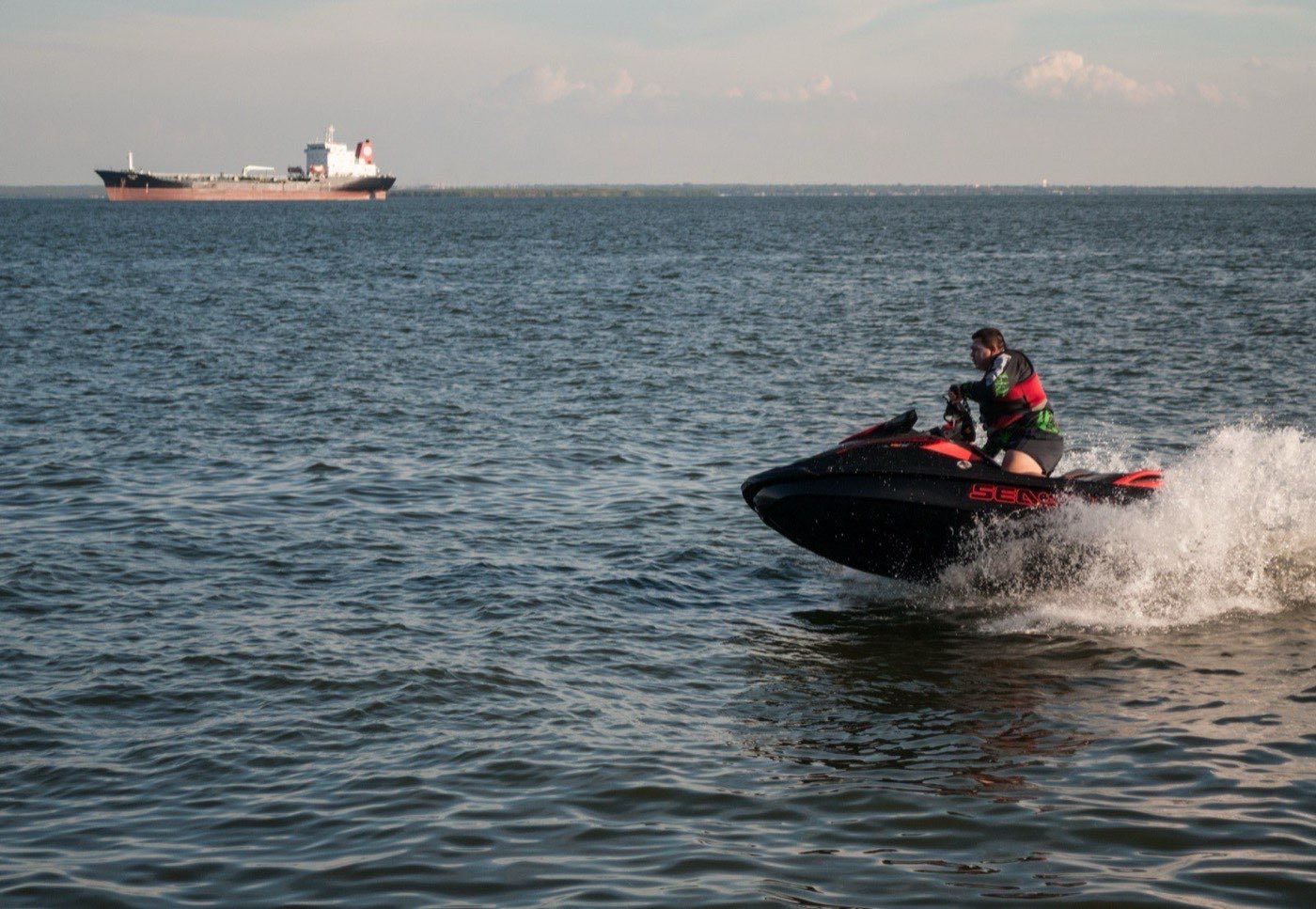
🔎 TL;DR
- Different oceans, different products. Cabo waverunner rides happen in the open Sea of Cortez from Médano Beach, with a scenic loop to the Arch. Cancún waverunner rides happen in the protected Nichupté lagoon with optional open-Caribbean extensions to Isla Mujeres.
- Cabo route: 8–10 nm bay loop, photo-stop driven, scenic. Cancún route: 30–60 min lagoon corridors or 4-hour open-sea Isla Mujeres crossing.
- Cabo: per-hour rentals run ~$120–180 USD (1 h) and $200–280 (2 h). Cancún: per-hour rentals $120–180 (lagoon 1 h) and $250–350 (2 h with Isla Mujeres crossing).
- Cabo: no protected-area zoning inside the bay — open ride above the marine park boundary. Cancún: strict CONANP mangrove zoning with speed corridors.
- Cabo: hazards are open-ocean swell, El Norte afternoon wind, hurricane season. Cancún: hazards are crocodile zones in the lagoon, sargassum on the open Caribbean side, occasional north winds Dec–Feb.
- Same waverunner hulls (Yamaha VX / Sea-Doo GTI 130) but completely different riding experiences. Choose by what you want to see, not by brand of craft.
Why these two are not the same product, even though they look similar
Both destinations rent waverunners. Both run guided 1- and 2-hour tours. Both use the same Yamaha and Sea-Doo hulls. Brochures from both places will show a smiling couple on a jet-ski with turquoise water behind them. After that, the resemblance ends.
Los Cabos sits at the very tip of the Baja peninsula, where the Pacific Ocean and the Sea of Cortez meet. The waverunner product is an open-ocean bay loop: you launch from Médano Beach, ride into the protected south-east-facing bay, loop around to The Arch and Land's End, see sea lions, return. The whole route is 8–10 nautical miles and you are always in real ocean water with a fetch of hundreds of kilometres to the south. We cover the full route in Los Cabos waverunner routes.
Cancún sits on the Mexican Caribbean coast on a barrier sandbar between the open sea and the Nichupté Lagoon. The standard waverunner product happens inside that lagoon — a flat, protected, mangrove-edged water body managed as a federal protected area by CONANP under the APFF Manglares de Nichupté designation. The lagoon has marked corridors, speed limits, and 4,257 hectares of protected mangrove that motorised craft cannot enter. The 1-hour Cancún product loops the lagoon; the 2-hour product extends out through the Bocana channel to the open Caribbean and sometimes to Isla Mujeres. We cover the lagoon side in our Cancún waverunner Nichupté guide and the Isla Mujeres crossing in Waverunner to Isla Mujeres.
The result: two products that look identical in the brochure but feel fundamentally different on the water. Cabo is "scenic ocean ride with a destination." Cancún is "lagoon playground with the option to commit to a real open-water crossing."
Side-by-side comparison table
| Aspect | Los Cabos | Cancún |
|---|---|---|
| Water body | Open Sea of Cortez, bay loop | Nichupté lagoon + optional open Caribbean |
| Launch | Médano Beach (one beach, ~12 concessions) | Multiple marinas inside the lagoon + Bocana |
| Route length | 5–10 nm bay loop | 2–4 nm lagoon corridors / 26 nm Isla Mujeres |
| Standard tour | 1 h ($120–180) / 2 h ($200–280) | 1 h ($120–180) / 2 h crossing ($250–350) |
| Scenic highlight | The Arch, sea lions, Lover's Beach | Mangrove channels, Isla Mujeres Playa Norte |
| Sea state | 0.4–2.0 m by season | Lagoon: 0–0.3 m / Caribbean: 0.5–2.0 m |
| Wind risk window | El Norte afternoon Nov–Apr | "Norte" cold-front winds Dec–Feb |
| Hurricane season | Aug–Oct (Pacific basin) | Aug–Oct (Atlantic basin) |
| Protected area zoning | CONANP marine park boundary at Pelican Rock | CONANP APFF Manglares strict corridor system |
| Beginner friendly | Yes for 1 h loop; chop demanding in winter PM | Yes for lagoon; Isla crossing is intermediate |
| Best month | May–July | April–June, October |
| Min age (driver / passenger) | 16 / 5 | 16 / 5 |
| Briefing length | 15–20 min | 15–20 min lagoon / 30+ Isla crossing |
Want the open-ocean ride to The Arch? Book Los Cabos waverunner →
The ride experience — what each one actually feels like
Forget the brochure. Here is what happens when you actually drop into each ride.
Cabo bay loop — the open-ocean feeling
From the second you clear the no-wake zone off Médano you are in 30–50 m of water with the cape's deep canyon dropping away beneath you. The water is dark blue, not turquoise. Chop is real but predictable — the bay is sheltered from the prevailing south swell by Land's End but takes the El Norte wind chop on the surface. You feel the swell roll through under the waverunner; it is a more "ocean-y" sensation than a lagoon ride. Photo stops happen at Pelican Rock (slow pass, no anchor) and Lover's Beach (anchor or beach). The visual reward is huge: The Arch is one of the most photographed natural features in Mexico, and you are sitting on a waverunner 20 m from it.
What you do not get in Cabo: the playground freedom to throttle hard in safe space. The bay is busy with cruise tenders, sport-fishing pangas, snorkel boats, and dive boats all morning. Captains keep groups in a tight escort line for safety. If you came for the adrenaline of running flat-out on water, Cabo is not the place — it is a sightseeing product on a fast platform.
Cancún Nichupté loop — the playground feeling
The lagoon side of Cancún is the opposite. Water is flat. Visibility is limited (it is brackish mangrove water, not Caribbean clear), but the riding surface is genuinely glassy almost every morning. The marked corridors run through wide-open water away from the mangroves, and captains can let groups throttle up to 25–30 knots in segments. You can carve, you can splash, you can do the figure-eight thing — it is more "jet-ski playground" than "scenic ride." Photo opportunities are weaker than Cabo — you do not have an arch or sea lions — but the riding itself is more fun for the speed-focused traveller.
The 2-hour upgrade to the open Caribbean changes the product entirely. Once you exit Bocana, you are in the same Caribbean Sea where sargassum drifts, where cruise ships sit at anchor, where Isla Mujeres rises 13 km north-east. The crossing is a 20–30 minute open-water run at 30–40 knots in 0.5–1.5 m chop. This is a real ride — physically demanding, exhilarating, and a much more serious open-water experience than the Cabo bay loop. We break down the crossing in detail in our Isla Mujeres crossing guide.
Hazards by destination — different oceans, different lists
The hazards on a waverunner ride are not abstract. Each destination has its own profile, and both Mexican SEMAR port authorities and the US Coast Guard recreational safety guidance apply the same baseline rules (lifejacket, briefing, sober operation, no riding after dark).
Cabo hazards
- Open-ocean swell. The Sea of Cortez has fetch from the south and the bay is open to that direction. Background swell in summer runs 0.5–1.0 m even on "calm" days.
- El Norte afternoon wind (Nov–Apr). Builds to 20–30 knots fast; bay becomes choppy and uncomfortable.
- Cruise ship and sport-fishing traffic. Cabo San Lucas is a major cruise port. Tenders, sportfishers, and panga taxis cross the bay constantly.
- Hurricane season. Aug–Oct, Pacific basin. Tropical storm impact closes the bay 24–48 hours before landfall.
- The marine park boundary. You cannot wander into Pacific waters around Land's End — both protected-area rules and Pacific swell make it dangerous.
Cancún hazards
- Crocodile zones in the lagoon. Nichupté has a healthy Crocodylus moreletii population. Designated swim and beach areas are clear; do not get off the waverunner outside them.
- Sargassum on the open Caribbean side. Worst Apr–Aug; the brown algae mat can foul the jet intake.
- Mangrove channel obstacles. Closed to motorised craft, but the boundary is not always obvious. Stay in marked corridors.
- "Norte" cold-front winds Dec–Feb. Can shut down the open-Caribbean extension; lagoon side stays flat.
- Atlantic hurricane season (Aug–Oct). Same risk profile as Cabo but Atlantic basin.
Both destinations enforce SEMAR rules — licensed operator, registered craft, lifejacket, briefing, sober rider, no night riding. The IMO COLREGS rules of the road also apply on the open-water portions (give way to right-side traffic, sailing vessels have priority, etc.) — operators brief on these.
Cost reality — what you actually pay in 2026
The headline numbers look similar but the value calculation is different.
Cabo: $120–180 USD for the 1-hour bay loop (one or two riders on the same waverunner), $200–280 for the 2-hour version with Lover's Beach beach time. Prices include lifejacket, briefing, guide escort, water. Insurance optional add-on $20–40. New vs older craft tier adds 20–30%. Bottom line for a couple, the standard 1-hour ride lands at around $150 with tip.
Cancún lagoon: $120–180 for the 1-hour rental (same hull, two riders allowed), with optional waiver-based solo riding in the central corridor. Briefing length, helmet rental, and CONANP entry fee bundled. Total for a couple ≈ $140 with tip.
Cancún Isla Mujeres crossing (2 hours): $250–350 per waverunner including escort boat, lifejackets, snorkel gear at Playa Norte, water. This is the more expensive product because it includes the escort boat infrastructure that the lagoon does not need.
Cost-per-minute of actual riding is similar in both places — but the value calculation depends on what you came for. If you came for the photo of you and The Arch, the $150 in Cabo is the answer. If you came for the longest, most adventurous ride your money buys, the $300 Isla Mujeres crossing in Cancún is the better trade. The 1-hour Cancún lagoon ride is the weakest of the three options on a scenic basis — you are paying the same for a less interesting view.
Who should choose which
Two destinations, two completely different ideal customers. Let's be direct about it.
Choose Cabo waverunner if…
- You are already going to Cabo for other reasons (yacht charter, dive trip, golf, hotel).
- You want the iconic photo at The Arch with sea lions and Land's End in frame.
- You prefer a scenic, sightseeing-driven product at a moderate pace.
- You are riding with a passenger (kids, partner) and the scenery matters more than the throttle.
- You can time your ride for a morning window in winter or any time May–July.
Choose Cancún waverunner (lagoon) if…
- You are already going to Cancún for other reasons.
- You want flat-water playground riding and have no specific scenic target.
- You are a first-timer who wants the most forgiving conditions.
- You have small kids on the waverunner and want zero swell.
Choose Cancún waverunner (Isla Mujeres crossing) if…
- You want a real open-water ride — 30+ knots in chop for 25 minutes each way.
- You can commit a half-day (4+ hours) and the extra cost.
- You want to combine the ride with a destination beach stop at Playa Norte.
- You ride confidently and want a physical challenge, not a slow scenic loop.
If you cannot pick — and you have the trip flexibility — the honest split is: Cancún for the playground / Isla Mujeres adventure, Cabo for the scenic photo product. Different vacations, both legitimate. The longer comparison of the destinations as a whole is in Los Cabos vs Cancún — which trip.
Stacking other water sports — how the calendars compare
Both destinations have a full menu of water-sports products that complement the waverunner. The seasonality is the differentiator.
- Diving: Cabo has Pelican Rock and Cabo Pulmo year-round (see our cape diving guide); Cancún has Mesoamerican Reef diving + cenotes year-round, with whale-shark season Jun–Sep.
- Yacht charters: Both run year-round. Cabo charters work well when waverunners are wind-shut in winter (yacht handles the chop). Cancún yacht to Isla Mujeres complements the waverunner crossing.
- Snorkel: Both have it. Cabo at Pelican Rock and Chileno Bay; Cancún at MUSA underwater museum and the reef park.
- Whale watching: Cabo Dec–Apr (humpback breeding); Cancún does not have a winter whale season but has whale-shark snorkel Jun–Sep.
One practical implication: if you are visiting Cabo in winter, plan the waverunner for the morning and a yacht charter for the afternoon — the El Norte wind that closes the waverunner usually does not close the yacht. In Cancún the equivalent move is the waverunner Isla Mujeres crossing in the morning and snorkelling MUSA in the afternoon.
Frequently asked questions
Which is safer — Cabo or Cancún waverunner?
Statistically, the lagoon-side Cancún product has the lowest incident rate because it runs on flat water in a protected zone. The Cabo bay loop is next — open ocean but inside a sheltered bay with constant escort supervision. The Cancún Isla Mujeres crossing has the highest hazard profile because it includes a real open-water Caribbean crossing. All three are safe when run by SEMAR-licensed operators with proper briefings, but the risk gradient is real.
Can I do both on the same trip?
Different cities — Cabo and Cancún are at opposite ends of Mexico, 2,500 km apart with no direct flights under 4 hours. You would not combine them in a single short trip. The realistic answer is to pick one for this trip and the other for the next.
Which has better photos?
Cabo, by a clear margin. The Arch, Lover's Beach, sea lions at Land's End — all in the same 8 nm route. Cancún's scenery is the turquoise water at Playa Norte (the open-Caribbean tour) or the mangrove edge of the lagoon (the inner loop). Both are pretty; neither has Cabo's iconic rock formation.
Which is better for first-timers?
Cancún lagoon if you want zero swell. Cabo if you can handle 0.5 m chop and want a more interesting ride. Both have qualified instructors who can teach throttle and steering in 15 minutes; neither is inherently difficult to operate.
Can I rent a waverunner solo without a guide?
Cancún lagoon: yes, some operators offer solo rentals inside a marked corridor with no escort. Cabo: no — the bay has too much commercial traffic for unguided solo rentals. The Isla Mujeres crossing is always escorted in both destinations.
Cabo or Cancún — which one?
Tell us your dates and what you want from the ride — we recommend the right destination and book the right operator.