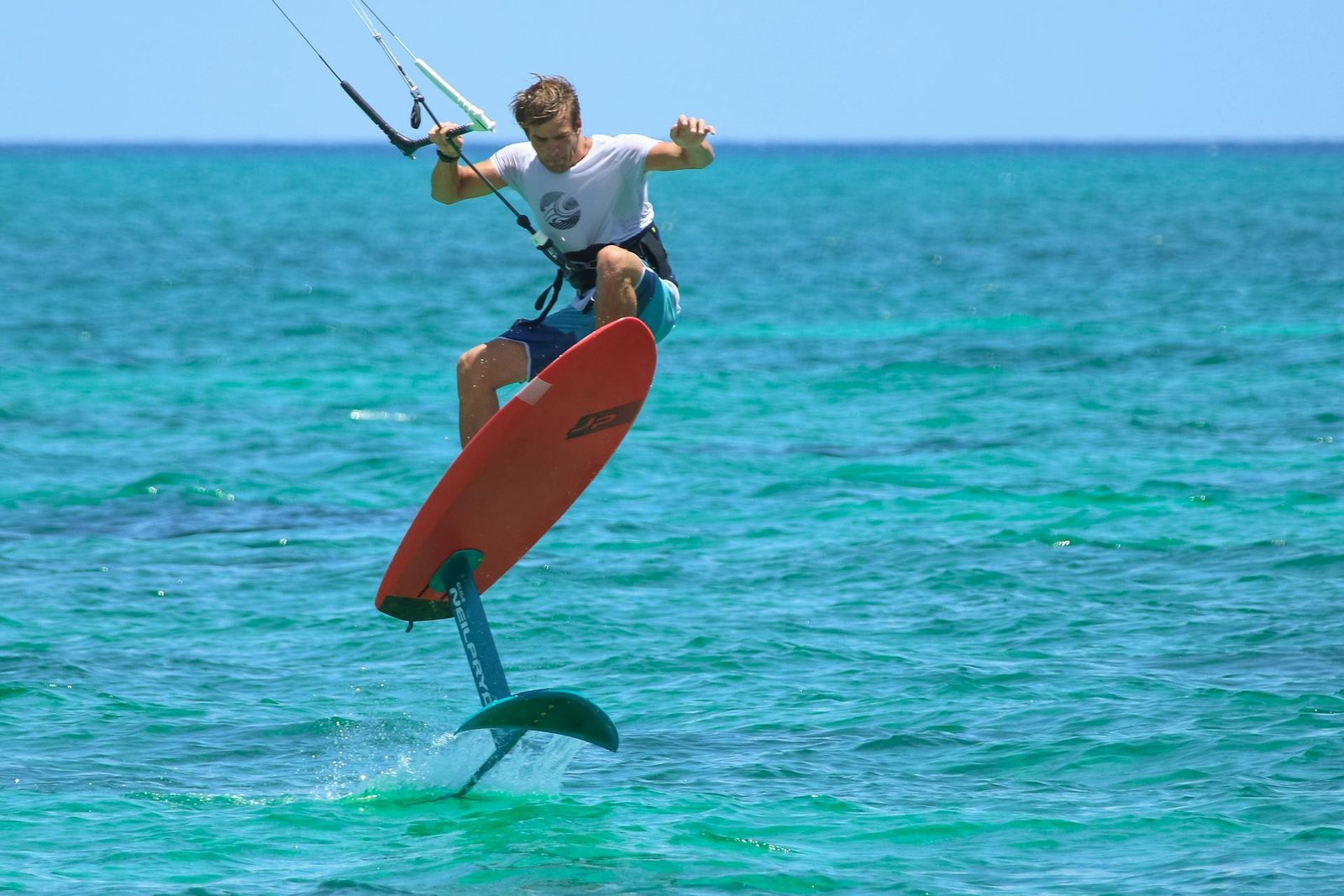
🔎 TL;DR
- Los Barriles gets the fame, but the East Cape is a constellation — La Ventana, Vinorama, La Ribera, Cabo Pulmo, Punta Arena and Cerritos all run on the same El Norte thermal engine that funnels south through the Sierra de la Laguna gap from November to April.
- La Ventana (180 km north of San José del Cabo, technically in La Paz municipality) is the world-class daily-thermal spot — 17–25 knots side-shore from the north, 85–95% wind days Dec–Mar. Pro scene, big school cluster, flat-to-light-chop water inside Bahía de la Ventana.
- Los Barriles is the original — slightly stronger wind, slightly more chop, smaller crowds than La Ventana, with Punta Arena (4 km south) as the flat-water beginner annex.
- Vinorama is the East Cape's quiet intermediate spot — long sand beach, side-on wind, fewer kites, no school infrastructure. Bring your own gear.
- Cerritos (Pacific side, 1 h west of Cabo San Lucas) is wave-kite territory — strong NW swell Nov–Mar, on-shore wind, advanced only.
- Plan a multi-spot week: base in La Ventana or Los Barriles, day-trip the rest. Rental car is non-negotiable.
Why the East Cape is a kite constellation, not a single dot
The El Norte synoptic system is one of the most reliable thermal wind machines in the Americas. Cold continental air masses pushing south from the US Pacific Northwest pile up against the Sierra de la Laguna and accelerate through the topographic gap that opens onto the Sea of Cortez. The acceleration is so consistent that wind-statistics platforms such as Windguru and the global animations on earth.nullschool.net show the corridor lighting up almost every winter afternoon between Punta Pescadero in the north and Los Frailes in the south.
That corridor is roughly 80 km long and 20 km wide. Inside it, half a dozen distinct beaches each get the same wind but with different orientations, hazards and water states. Treating Los Cabos kitesurf as one spot ("Los Barriles") is missing the point — you can ride a different beach every day for a week and never repeat conditions.
The Pacific side of the cape (Cerritos, Todos Santos, San José del Cabo) runs on a different engine: thermally driven NW sea breeze layered over hurricane-remnant or extratropical NW swell. Different rules, different gear, different season.
Spot-by-spot — the East Cape (Sea of Cortez side)
La Ventana
The cult spot. Bahía de la Ventana is a 12 km crescent facing north, which means the prevailing N to NNW wind blows side-on to side-shore from rider-left. Inside the bay the water is flat-to-light-chop, depth chest-to-head for the first 50 m, then opens to deep water. Wind is most reliable from 12:00 PM to sunset, with the thermal ramping faster than at Los Barriles because La Ventana sits closer to the Sierra gap.
Launch is from "the main beach" (just north of Hotel Palapas Ventana) or "Captain Kirk's" (a few hundred meters south). Both are sand, both crowded in peak season. Hazards: anchored pangas in the middle of the bay, a rocky point on the south end, and downwind drift to Isla Cerralvo if you blow your last-resort self-rescue. Level required: intermediate+. Beginners learn at the dedicated school zones on the inside (more on this below).
Los Barriles (main bay)
The OG of the East Cape. Wind enters the bay more east-of-north than at La Ventana — closer to side-on from the right when launching from the main palapas. The water has more open Sea of Cortez fetch behind it, so chop is moderate (40–80 cm) and small swell wraps in on big-norther days. Launches: the main beach in front of Hotel Palmas de Cortez, the public access by Smokey's, and the southern stretch by Hotel Los Barriles.
Wind hours mirror La Ventana but tend to start 30–60 minutes later and blow 1–2 knots stronger on northeasterly days, because the bay sits further east of the topographic gap. Hazards: shallow rocky reef on the immediate inside of some launches at low tide, fishing pangas, and a downwind shore that turns rocky south of the bay. Level required: intermediate.
Punta Arena
Four kilometers south of Los Barriles, accessed by a dirt road. This is the flat-water beginner and foil paradise of the East Cape. A long sandy hook creates a wind-shadowed shallow lagoon behind it — knee-to-waist deep, glassy, with the main wind hitting the outside. Foilers ride the open side, beginners and intermediates work the inside.
The catch is access: rough dirt road, no services, no shade, no rescue. Bring water, sunblock, and ideally a buddy. Most schools shuttle students out for half-day blocks. Level required: beginner to advanced (for foil). One of the most underrated kite spots in the Americas.
Vinorama / Bahía de los Frailes / La Ribera
The southern East Cape — between La Ribera and Cabo Pulmo — has a string of long sandy beaches with side-on wind, no operators, no schools, and almost no other kiters. Wind quality is slightly less consistent than at Los Barriles (the topographic acceleration is weaker this far south), but on a good day you can ride 5 km of empty beach.
Hazards: this is wild coast. No safety net, intermittent cell signal, hard-to-reach by road. Cabo Pulmo itself is a CONANP-protected national park — kiting inside the park boundary is restricted, so the legal launches are north (La Ribera, Buena Vista) and south (Los Frailes). Always check current park rules before launching. Level required: intermediate with full self-sufficiency, ideally with a kite buddy.
Want to ride the East Cape spots without driving a rental Jeep on your first trip? Book Los Cabos kitesurf →
Spot-by-spot — the Pacific side
Cerritos
One hour west of Cabo San Lucas on Highway 19. Cerritos is a Pacific beach break, not a Sea of Cortez flat-water lagoon. The wind comes from the NW (sea breeze stacked on synoptic NW), arriving on-shore to side-on-shore. Swell is the main attraction — winter NW long-period swell delivers playful 1–2 m waves with good shape.
This is wave-kite territory. Twin-tip riders can have fun on glassy days, but the spot rewards a directional/surfboard setup and a kiter comfortable jumping breakers. Hazards: shore-break (it dumps hard at high tide), strong rip currents, rocky point at the north end. Wind hours: usually 1:00 PM to sunset. Level required: upper intermediate to advanced.
San José del Cabo Estuary
Local riders occasionally launch from beaches near the estuary mouth on light-wind days. It is not a recommended spot — variable wind, shifting sandbar, and frequent fishing pangas. Skip unless you are with a local who knows the conditions.
Todos Santos area
Famous surf town with kiteable wind in shoulder months. Playa Punta Lobos and Playa Las Palmas can fire on stronger NW days. Same hazards as Cerritos (shore-break, currents) plus more remote launches. Level required: advanced wave kiter only.
Side-by-side comparison
| Spot | Wind direction | Water | Wind days Dec–Mar | Level | Best for |
|---|---|---|---|---|---|
| La Ventana | N / NNW side-shore | Flat to light chop | 85–95% | Beginner+ (schools), intermediate (free ride) | Daily thermal, social scene |
| Los Barriles main bay | NE side-on | Light chop + small swell | 80–90% | Intermediate | Free riding, freestyle, big air on norther days |
| Punta Arena | NE side-on | Glassy inside, chop outside | 80–90% | Beginner / foil / advanced | Lessons, foil, learning new tricks |
| Vinorama / La Ribera | N / NE side-on | Open chop, occasional swell | 60–75% | Intermediate self-sufficient | Solitude, downwinders |
| Cerritos (Pacific) | NW on-shore | Waves 1–2 m | 40–60% | Advanced wave | Surfboard kiting |
Wind probabilities aggregated from Windguru historical data and NOAA NDBC buoy archive (station 46028, Cape San Martin). Probabilities here are "≥15 knots, ≥4 hours per day".
Practical logistics — riding multiple spots in one trip
- Rental car is non-negotiable. Distances are real: SJD airport → Los Barriles 70 km, Los Barriles → La Ventana 80 km, Los Barriles → Cerritos 130 km. Pick up at SJD, return at SJD. A 4WD opens up Punta Arena, Vinorama and La Ribera without drama.
- Base in La Ventana for a more compact rig. 7-day trips can stay one place and day-trip Los Barriles, Punta Arena (1 h), and Cabo Pulmo for rest days. Cerritos is 2 h+ and a bigger commitment.
- Base in Los Barriles for less crowded launches and easy Punta Arena access — but the town is sleepier than La Ventana once the wind dies.
- Wind-check tools to bookmark: Windguru Los Barriles, Windy.com ECMWF layer, and earth.nullschool.net for the synoptic picture. Local school WhatsApp groups are the fastest morning intel.
- Bring two kite sizes. A 9 m for typical Dec–Feb afternoons (18–22 knots) and a 12 m for shoulder days and lighter mornings. Riders under 70 kg should swap that to 7/10 m.
- Wetsuit: water is 21–23 °C Dec–Feb. A 2 mm shorty or top is comfortable; full 3/2 only if you chill easily.
Mistakes to avoid
- Don't drive to Los Barriles from Cabo San Lucas daily. It is 1.5 h each way and you will miss morning windows. Stay east.
- Don't launch at Vinorama without a phone + buddy. Cell signal is patchy and there is no rescue boat.
- Don't kite inside Cabo Pulmo park boundaries. Federal law, enforced by CONANP. The reef is one of the most successful no-take recoveries on the planet — respect it.
- Don't underestimate Cerritos. Pacific shore-break has hurt experienced kiters. Walk it first, watch the surf for 20 minutes before you launch.
- Don't show up in May–September expecting wind. The El Norte system shuts off; you'll get hot, humid, mosquito-loaded days with a 30% wind probability and hurricane risk. Wind-sport seasonal climatology for Baja Sur is unambiguous on this.
Frequently asked questions
Is La Ventana really better than Los Barriles, or is it just hype?
Different, not strictly better. La Ventana has slightly more reliable thermal hours and a denser pro/instructor scene. Los Barriles has slightly stronger wind on northeasterly days and less crowded launches. For lessons, La Ventana wins on school density. For free riding with elbow room, Los Barriles wins.
Can a beginner safely learn at any of these spots?
Yes — at Punta Arena (flat-water annex of Los Barriles) and at the dedicated school zones inside Bahía de la Ventana. Both are shallow, side-shore and instructor-supervised. Do NOT try to learn at Los Barriles main bay (chop + traffic) or anywhere on the Pacific side.
How does Los Cabos kitesurf compare to Cancún / Isla Blanca?
Different season, different water. Cancún (Isla Blanca) runs April–July trade winds in a shallow tropical lagoon. Los Cabos runs November–March El Norte thermals in a deeper open bay. If you can only pick one trip per year, choose by your calendar. We compare them in detail in our Los Cabos vs Cancún guide.
Do I need a 4WD rental?
Not strictly — a standard sedan reaches Los Barriles, La Ventana and Cerritos on paved roads. A 4WD or high-clearance SUV opens Punta Arena (dirt road) and Vinorama / La Ribera (long sandy access roads) without drama. If your trip is just main spots, save the money.
Are there enough rental kites and schools at La Ventana / Los Barriles?
Yes in peak season — La Ventana has 8–10 IKO-affiliated operations (International Kiteboarding Organization). Los Barriles has 3–4. Reserve gear in advance for Dec–Feb peak weeks; walk-up rentals routinely sell out around Christmas and Lord of the Wind week.
Plan your East Cape kite trip
Build your East Cape kite week
Tell us your skill level and dates — we map you to the right base (La Ventana vs Los Barriles) and the right rest-day spots.